
Curtain bangs are the one fringe that never asks you to commit. Split down the middle, longer at the edges, and cut to melt into the rest of your hair, they frame the cheekbones, soften a strong forehead, and grow out without an awkward phase. This fall the shape shows up everywhere: feathered and seventies-inspired on long layers, short and blunt-edged in the Birkin style, swept into bouncy blowouts, and left wispy on fine hair. The twelve styles below cover every length and texture, with the exact lengths, parting, and styling details to show your stylist or recreate at home.
1. Classic Long Curtain Bangs with Feathered Layers

This is the reference point for the whole trend: bangs that start around the nose, open at the center part, and lengthen until they blend into feathered layers at the collarbone. The feathering separates it from a basic grown-out fringe. Your stylist point-cuts the ends so each section flicks outward instead of hanging in one sheet, which gives the hair that swept, windblown movement. It works on straight to wavy hair and suits oval, heart, and longer faces because the longest pieces land at the jaw and balance proportions. Ask for the shortest point just below your cheekbones when dry, never shorter. Style by blow-drying the fringe forward first, then back away from the face with a large round brush. A pea-sized amount of Living Proof Perfect Hair Day cream through the ends keeps feathers separated without weighing down the swoop. Expect a trim every five weeks to keep ends flicking properly.
2. Birkin Bangs with a Soft Curtain Split

Birkin bangs take their name from Jane Birkin’s famous fringe, and the 2026 update gives that blunt French edge a gentle center split. The fringe sits shorter than classic curtain bangs, ending around the eyebrows, with the middle pieces a touch shorter than the corners so it naturally falls open rather than straight across. Corners taper into longer strands at the temples, keeping the look soft instead of severe. It suits straight and slightly wavy hair, and flatters smaller foreheads that longer bangs can overwhelm. It needs a trim every three to four weeks to stay sharp. Ask your stylist for a dry cut if your hair has any wave, since wet cutting can leave Birkin bangs a full centimeter shorter than planned once dry. At home, blow-dry with a flat brush side to side, then finish with your fingers rather than a round brush, since too much curve makes it rounded, not French.
3. Bouncy Blowout Curtain Bangs

If your saved photos feature big, swooping fringe that curves away from the face like a wave, this is your style. The cut is a standard mid-length curtain bang, shortest at the cheekbone, but the finish does the work: a full blowout with root lift and ends curled away from the center. The Dyson Airwrap with its large barrel attachment made this the season’s most requested salon finish, often called the Sabrina-style curtain fringe. It needs medium to thick hair to hold the volume, though fine hair can get there with mousse and velcro rollers while it cools. Ask for front layers so the bang connects to the rest of the blowout instead of sitting on top of it. Style roots with volumizing spray, dry the fringe forward, then sweep each side back and pin until cool. That cooling step is non-negotiable; warm hair released immediately falls flat within the hour.
4. Wispy Curtain Bangs for Fine Hair

Fine hair does not need to sit out this trend; it just needs a lighter hand. Wispy curtain bangs use far less density, only a shallow triangle from the hairline, with ends point-cut to feather into nothing. The result is a soft veil across the forehead that opens at the center and never looks stringy by midday. Keep the shortest pieces around the nose so there is enough weight to lie flat without product. It suits round and heart-shaped faces well because the airy texture adds length without covering the forehead. Ask your stylist to cut them dry and keep the section shallow, since a thick triangle makes fine bangs look heavy. A dry shampoo like Batiste sprayed at the roots before bed keeps them fresh, and a tiny flat iron pass, curved slightly at the ends, restores the sweep in under a minute each morning. Nothing else is needed.
5. Shaggy Curtain Bangs with a Modern Wolf Cut

The wolf cut’s curtain bangs are the undone cousin of the classic version: fringe chopped shorter at the center, around the brow bone, with razored ends, dropping quickly into shaggy, disconnected layers. Short crown layers push volume upward while lengths stay thinned out, so the shape reads deliberate rather than grown out. This is the most forgiving version for wavy, thick hair, since the texture you usually fight becomes the point. It suits square and oval faces, where forehead softness balances a stronger jaw. Ask for a razor or heavy point-cutting through the fringe, and bring photos, because one stylist’s shag is another’s mullet. Styling is deliberately low-effort: work a curl cream or sea salt spray through damp hair, scrunch, and air-dry or diffuse on low heat. Skip heavy oils, which collapse the piecey separation this cut depends on for its shape. A matte paste on dry ends sharpens the texture on day two.
6. Side-Swept Curtain Bangs for a Softer Part

Not every curtain bang splits evenly. Moving the part off center and sweeping both sections to one side keeps the face-framing benefit while softening the mood. The longer side drapes across one cheekbone and tucks behind the ear; the shorter side opens the forehead. This asymmetry flatters round faces well, since the diagonal line creates an impression of length. It is also the smartest option when growing out a full fringe, since the sweep disguises uneven lengths. The cut matches a classic curtain bang, just longer to allow the sweep, so ask for the shortest point at the cheekbone rather than the nose. Style by blow-drying the fringe toward the heavy side with a round brush, then setting with a light flexible hairspray and one flat clip while it cools. Retrain a stubborn center part by drying roots flat against the new direction for two full weeks after the cut happens.
7. Curtain Bangs with Face-Framing Balayage

Color can do half the framing work. This style pairs a classic mid-length curtain bang with balayage placed through the front sections, one to two shades lighter than the base, starting at the fringe’s shortest point. The lighter pieces trace the curve of the bang and continue down the front layers, brightening the face and making the curtain shape visible even in low light. It works on brunettes, blondes, and redheads; on brunettes, ask for caramel ribbons rather than ash tones, which can read gray against skin. Placement matters more than lightness, so ask your colorist to paint the money pieces last and keep them fine, not chunky. Front pieces sit against skin oils and makeup, so they dull faster than the rest. A purple or blue toning gloss every six weeks and a heat protectant like Color Wow Dream Coat before styling will keep the brightness where it belongs.
8. Curly Curtain Bangs, Cut Dry and Worn Natural

Curly curtain bangs were considered risky for years because they were cut wet and shrank into a surprise. Cut dry, curl by curl, they become one of the most flattering options here. The shape follows the classic map, opening at the center and lengthening toward the cheekbones, but each curl is shaped individually so the fringe falls in defined spirals. Length is everything with this style: ask for the dry length to sit at the cheekbone at the shortest point, since most curl patterns spring up two to five centimeters as they dry. It suits type 2C to 3C curls and round or heart-shaped faces, where forehead volume balances narrower chins. Arrive with hair washed, styled, and fully dry so your stylist cuts the pattern you actually wear. At home, refresh with water and a fingertip of gel scrunched upward; never brush the fringe dry, which separates curls into frizz.
9. Curtain Bangs with a Sleek Center-Part Lob

The long bob gives curtain bangs a sharper setting. On a lob ending between chin and shoulders, the fringe is cut longer and sleeker, blending into the blunt perimeter so the cut looks like one continuous line. With no layers through the back, the front framing carries all the softness, so this version reads polished enough for formal workplaces while still feeling current. It suits fine to medium hair that struggles to hold long layers, and the blunt base makes thin ends look thicker. Oval and longer faces wear it best; round faces may prefer more layering at the jaw. Ask for the longest pieces to meet the lob at the jawline. Style with a flat iron using a slight inward curve at the ends rather than a hard flip, and finish with a shine spray before leaving the house. The perimeter needs dusting every eight weeks to keep its edge.
10. Bottleneck Curtain Bangs, Narrow at the Top
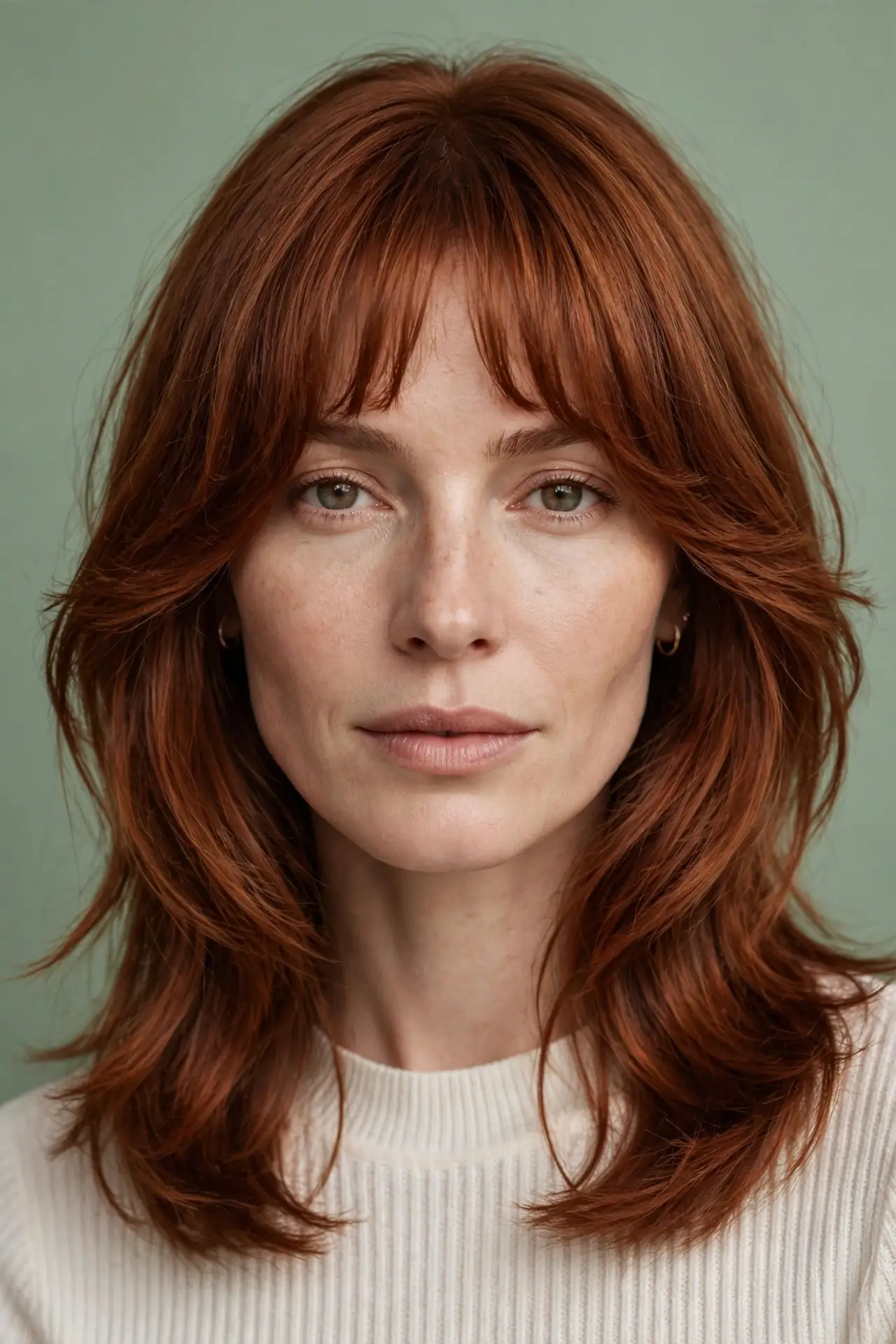
Bottleneck bangs borrow their shape from a bottle’s neck: narrower and shorter across the forehead, then widening outward past the cheekbones. The difference from a classic curtain bang is the starting width: the section is slimmer, so more of the natural hairline stays visible at the corners, and the fringe transitions into face-framing pieces rather than full layers. The effect reads lighter and more editorial, popular this fall on long hair and bobs. It is an excellent first fringe: less hair is committed, and grow-out is nearly invisible. It suits most face shapes, particularly wider foreheads, since the exposed corners soften the hairline. Ask your stylist to start narrow; width can always be added next appointment, but it cannot be taken back once cut. Style like a classic curtain bang, drying forward then sweeping back, keeping the center pieces flatter so the curve, not volume, defines the shape clearly and cleanly every time.
11. Extra-Long Curtain Bangs with Mermaid Waves
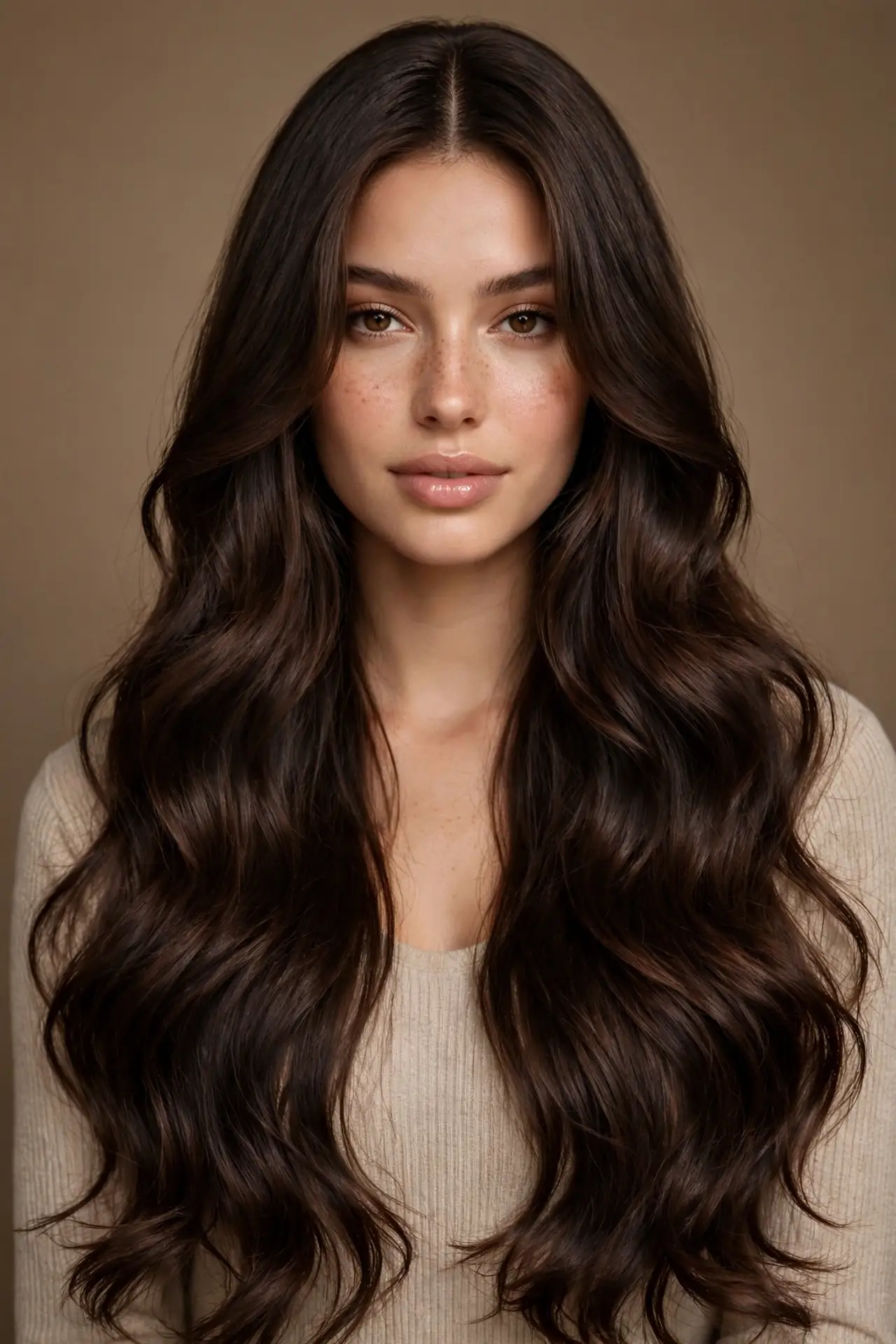
On hair past the chest, curtain bangs need real length to stay in proportion. This version starts at the chin rather than the cheekbone, then blends into cascading layers and mermaid waves. The longer fringe behaves almost like a face-framing layer worn open, but still gives that center-parted sweep, and it pins back completely on days you want it gone. This is the lowest-commitment style here and the easiest grow-out by far. It suits thick, wavy hair that would overwhelm shorter fringe, and balances long faces by drawing attention to the center. Ask for front layers to begin at the chin and long layers only through the last third of the length, so the top keeps its weight. Style waves with a large-barrel iron, alternating directions, then brush through once cooled. If shorter cuts tempt you later, compare this length against the feminine pixie cuts trending this fall before a full chop.
12. Curtain Bangs with a Blunt French Bob

Short hair gets its own version. On a chin-length French bob, curtain bangs open just above the cheekbones and curve into the bob’s rounded silhouette, softening a cut that can otherwise read severe. The fringe keeps the bob from reading too round by adding a vertical line down the center of the face, and its curved corners show off the jaw. This pairing anchors Paris-inspired fall styling because it looks intentional with almost no daily effort: the bob’s shape does the work. It suits straight and wavy hair of fine to medium density; thick hair needs internal layering so the bob does not triangle out. Ask for the bang cut slightly longer than you think, since bob-length fringe springs up noticeably when it dries. Air-dry with a smoothing cream, or add one bend with a flat iron through the fringe. It pairs with this season’s relaxed tailoring in our fall outfits for women.
How to Style Curtain Bangs at Home
The two-minute method works for most versions above. Start on damp hair, since curtain bangs reset only when roots get wet. Apply heat protectant, then blow-dry the fringe forward, brushing side to side to kill any cowlick. Once dry, place a large round brush under one side, pull forward, then roll back and away from your face, holding the heat for five seconds. Repeat on the other side. Let both sides cool completely before touching them; setting the curve while warm makes it last past noon. A velcro roller worn while you do makeup does the same job hands-free. Finish with a light mist of flexible hairspray. Heavy spray collapses the sweep and makes fringe look glued by afternoon.
Pro Tips for Curtain Bangs That Last All Day
First, always cut and judge bangs dry. Hair shrinks as it dries, and fringe judged wet is the main cause of too-short regret. Second, wash only the fringe on second-day hair: lean over the sink, shampoo the front section, and restyle it in two minutes. Third, keep forehead skincare and foundation off the hairline, since fringe absorbs oil fastest. Fourth, sleep with the fringe clipped loosely up or in a silk scarf so it does not set in odd directions. Finally, book fringe trims every three to five weeks. Most salons offer them cheaply between cuts, and a five-minute dusting keeps the curve reading as a style.
Frequently Asked Questions
How long should they be at first?
Ask for the shortest point just below the cheekbones when dry. That length opens correctly at a center part, blends into layers, and tucks behind your ears.
Do curtain bangs work on a round face?
Yes, especially longer versions. Keep the shortest point at the cheekbone or lower, with corners angling toward the jaw. The diagonal lines lengthen the face instead of widening it.
How often do curtain bangs need trimming?
Every three to five weeks keeps the shape precise, though longer styles stretch to six. A missed appointment shows only as extra length.
Can I get curtain bangs if my hair is thin?
Yes, with a shallower section. Your stylist takes a smaller triangle from the hairline and point-cuts the ends so the fringe stays airy, as in the wispy version above.
Final Thoughts
The right curtain bang is mostly a question of length. Choose Birkin or bottleneck if you want a visible fringe with a short grow-out, the classic feathered version for maximum styling range, and the chin-length version if you are only fringe-curious. Bring dry-hair photos, agree on the shortest point before scissors come out, and save the styles here that match your texture. A fringe you understand is a fringe you will actually style, and that is what makes it look good.