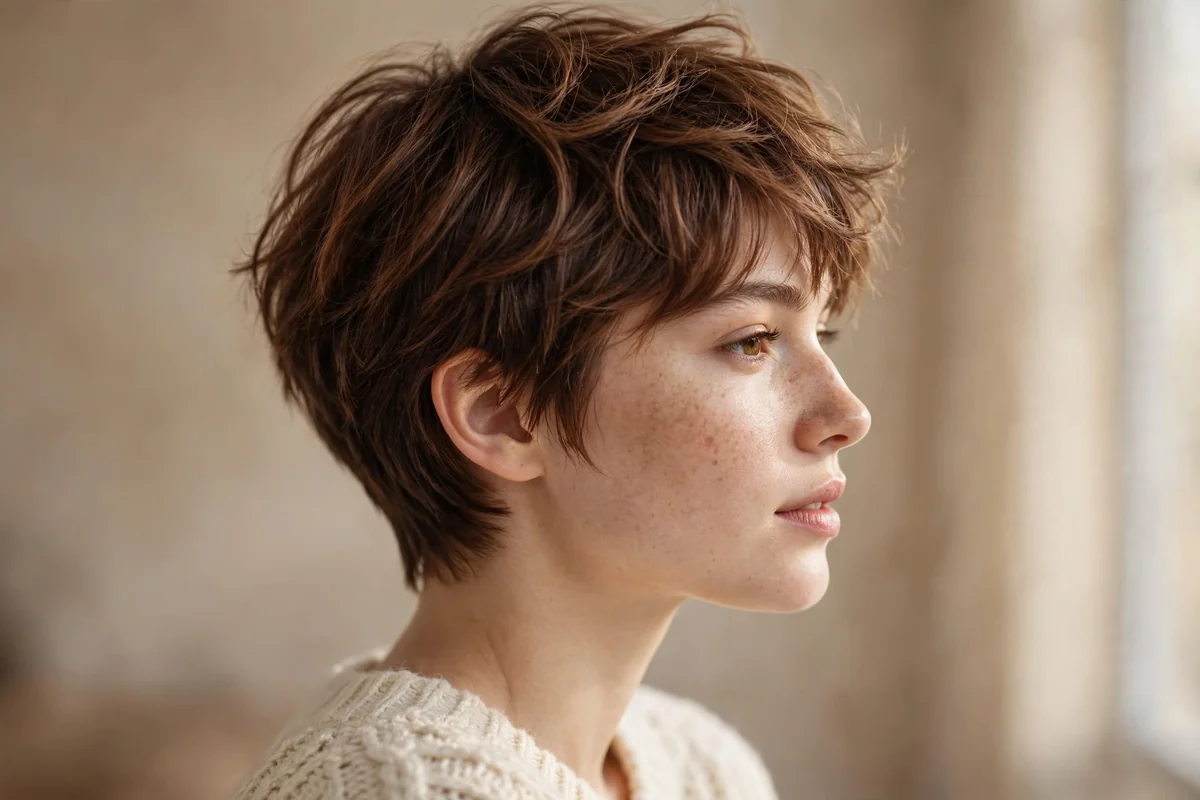
There’s a particular confidence that comes with a pixie cut — the kind that has nothing to do with hiding and everything to do with choosing exactly what to show. This fall, feminine pixies are having a genuine moment: feathered edges that move in the wind, curls left gloriously unpressed, nape lines tapered clean. These twelve ideas cover straight, curly, thick, and fine hair — plus the fall color pairings that make short hair look deliberate, not just convenient.
1. The Soft Tousled Crop
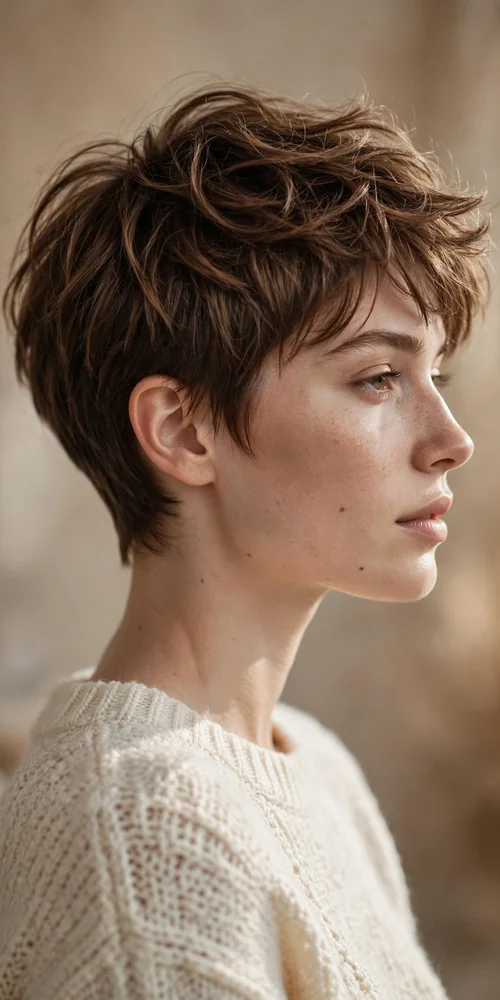
The “woke up interesting” pixie: about two inches on top with lived-in, piecey texture, soft (not buzzed) sides, and a neckline that fades into the hairline. Separated pieces catch light differently across the crown — creating the illusion of density on fine hair and taming bulk on thick hair.
It suits nearly every face shape since the stylist controls where fullness lands: extra crown height for rounder faces, a brow-skimming fringe for longer ones. Blow-dry roughly with your fingers, then work a pea-sized amount of Oribe Rough Luxury Soft Molding Paste through the ends, twisting a few pieces for separation. Ask for point-cut ends and “disconnected but blended” layering — and bring a photo, because “tousled” means different things to different stylists.
2. The Feathered Long Pixie

The pixie-bob hybrid keeps three to four inches through the top and crown while the back and sides stay short and feathered. Razor- or point-cut ends taper into wispy layers that move like feathers — chic from the front, airy from the side.
The longer top balances a strong jawline or wider forehead, and it’s the perfect grow-out destination or first step into short hair. Flattering on oval, square, and heart-shaped faces. Blow-dry the top forward with a small round brush, then finish with Bumble and bumble Thickening Dryspun Texture Spray — its invisible hold keeps feathered ends from collapsing by midday. Ask for “razor-textured layering with a soft perimeter,” and pair it with a warm brunette root shadow for fall.
3. The Curly Feminine Pixie
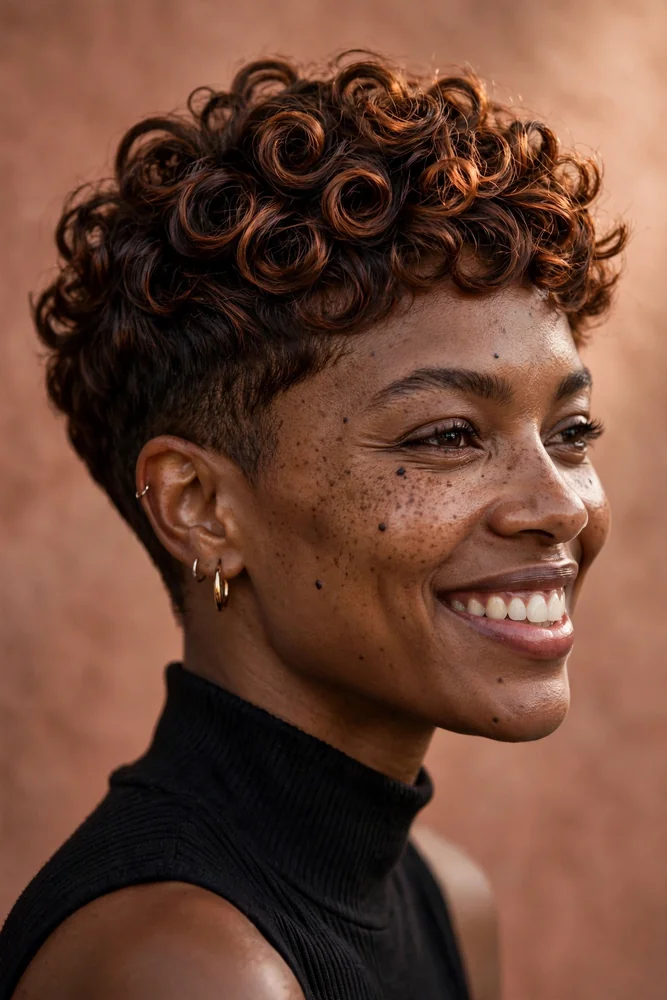
Curly hair and pixies were once called incompatible — this fall’s most joyful trend proves otherwise. Two to three inches of curl on top, sides tapered close, cut dry curl by curl so each ringlet lands exactly right. Sculptural and soft at once.
Short sides make the curls look deliberate and kill the triangle effect that widens longer curly hair. Works for curl patterns 3A through 4C, and it’s genuinely low-manipulation: wash, define, go. Use Kérastase Curl Manifesto Crème de Jour as a leave-in, scrunch defining gel into soaking-wet hair, diffuse on low heat. Book a curl specialist and plan trims every six to eight weeks — curly pixies lose shape fast. Copper highlights make each curl catch the fall light.
4. The Undercut Pixie with a Long Fringe
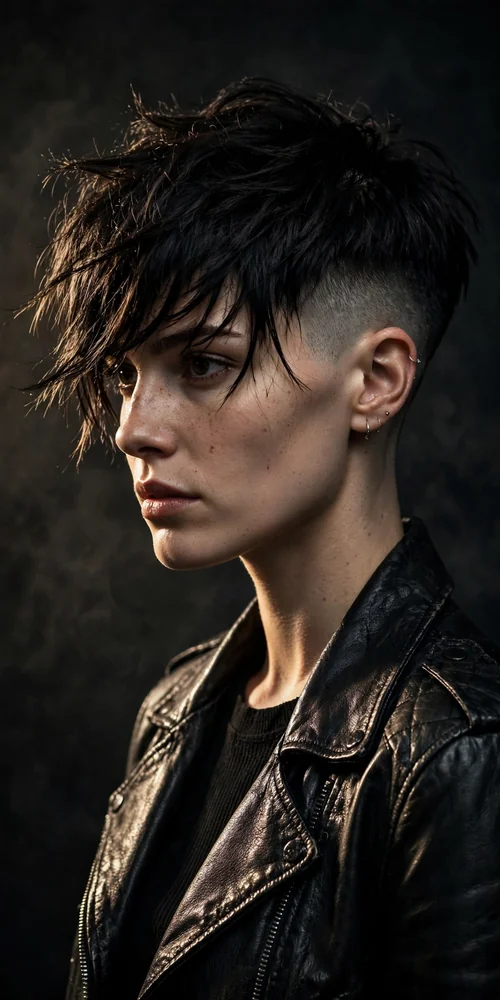
Edge without sacrificing softness: clippered sides and nape against a four-to-five-inch fringe sweeping the forehead. The tension between cropped sides and long, piece-y fringe is the whole point — bold from a distance, delicate up close.
Short sides slim the face; the long fringe gives options: sweep it across, push it back, let it fall forward. Best for thick, straight-to-wavy hair. The trade-off is maintenance — refresh the undercut every three to four weeks or the contrast goes muddy. Style the fringe with a flat-iron bend and Redken Wax Blast 10 for piece-y separation. Ask for a “disconnected undercut with a long textured fringe,” and discuss height: temple-high reads fashion-forward, lower reads subtle. Deep espresso or black-cherry on top for fall.
5. The Side-Swept Romantic Pixie
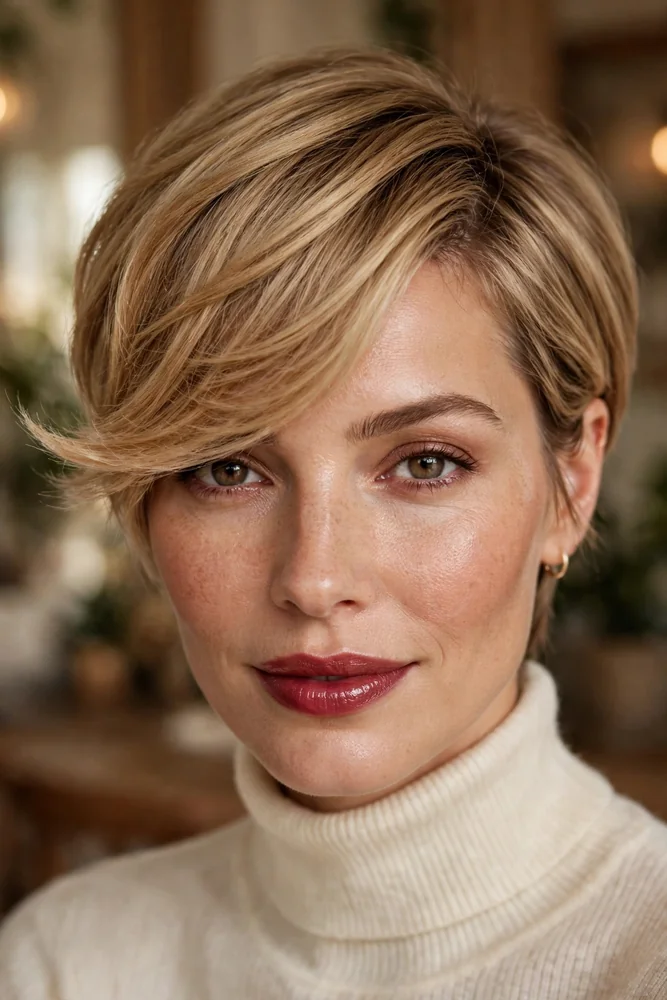
The timeless one, refined: length swept from a deep side part, fringe flowing diagonally across the forehead into longer temple pieces, back kept neat. One diagonal line of hair, instant asymmetry — and asymmetry photographs beautifully.
The most universally flattering pixie here: the deep part adds volume, the diagonal fringe narrows wide foreheads and softens strong jaws. Best on fine to medium hair (thick hair needs internal thinning so the sweep lies flat). Blow-dry the fringe across with a paddle brush, set with Oribe Superfine Hair Spray, tuck one side behind the ear, add a gold earring. Ask for “a deep side part with long sweeping fringe, graduated back.” It begs for a berry lip — the cozy-knit season’s romantic cut.
6. The Shaggy Textured Pixie
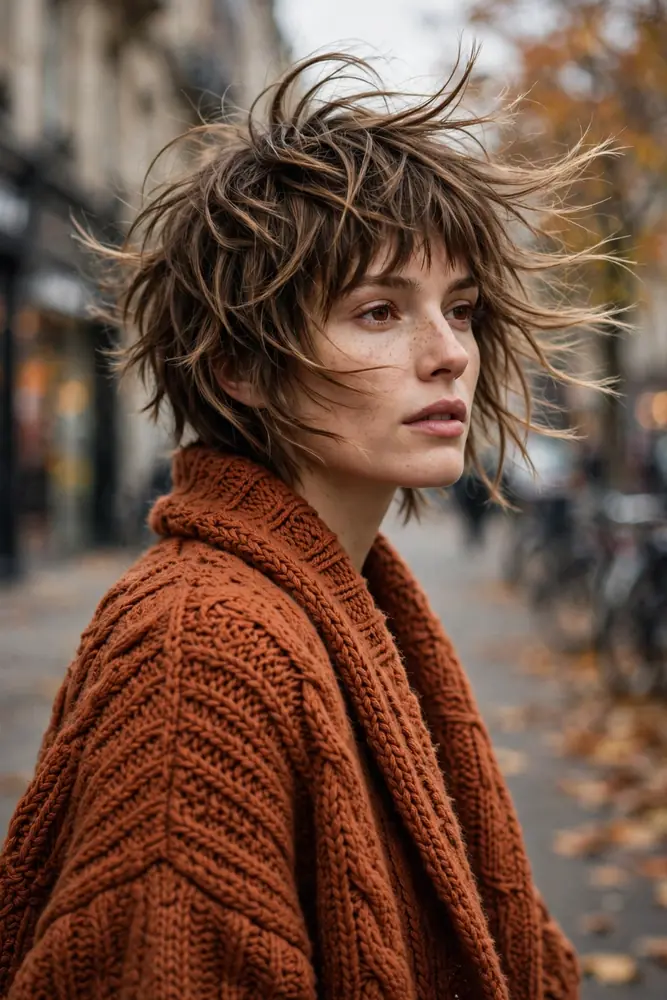
Borrowed from the wolf cut and refined: choppy layers of different lengths, a heavily textured crown, wispy ends that flick outward, a piece-y fringe between brow and lashes. Nothing uniform — that’s the design. It reads as effortless cool, which is why it dominates street-style shots.
Made for wavy hair and air-dryers; thick hair benefits most since choppy layering removes bulk. Work Davines This Is A Sea Salt Spray into damp hair, scrunch, let it dry — a pea of matte paste on dry ends finishes it. Ask for “heavily textured, choppy layers with a flicked-out perimeter,” cut with a razor or deep point-cutting (blunt scissor layers won’t shag). Grow the fringe slightly longer than feels safe — the overgrown fringe separates this from a regular textured crop.
7. The Sleek Polished Pixie
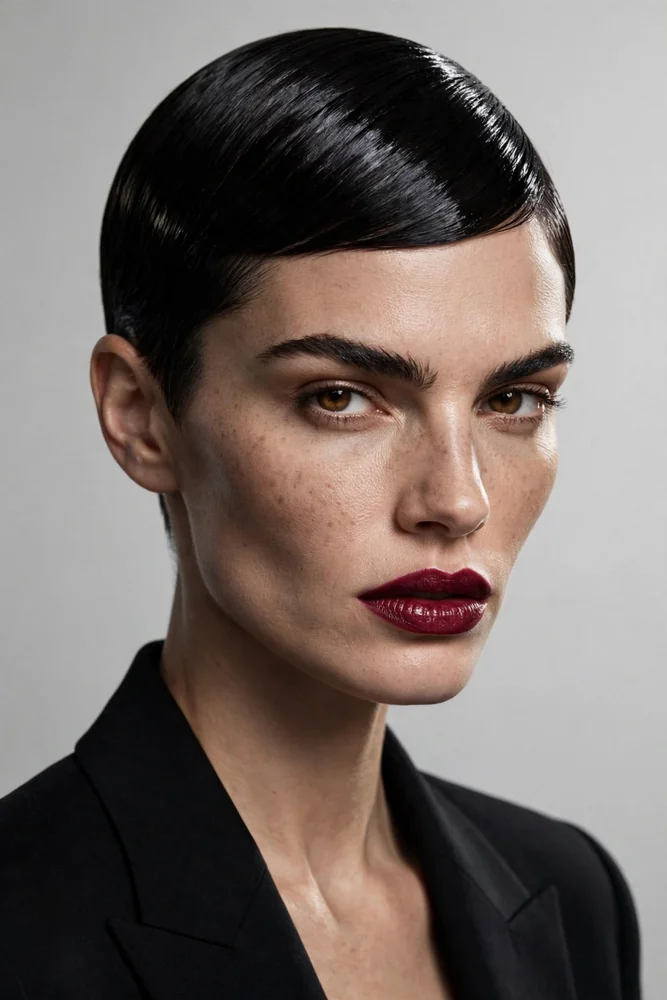
Minimalism, but make it hair: close, precise sides hugging the head, a molded top, every edge intentional. No texture spray, no deliberate mess — shine is the entire aesthetic. The pixie equivalent of a sharp blazer.
Precision reads as confidence: it elongates the neck and spotlights bone structure, moving from office to evening without a costume change. Best on straight, fine-to-medium hair; striking on oval and heart-shaped faces. Smooth with a flat iron like the BaBylissPRO Nano Titanium, press Verb Ghost Oil through for liquid shine. Ask for “a precision cut with clean lines, minimal texturizing” — and be honest about daily flat-ironing, because this cut only works smooth. Trims every four weeks; precision shows growth immediately.
8. The Pixie with Wispy Curtain Bangs

Curtain bangs had their long-hair era — now they’ve gone short. Cropped back and sides with a center-parted fringe skimming the brows and tapering longer at the temples. The gentlest entry point for anyone who finds traditional pixies too exposing.
The center part draws the eye vertically (lengthening rounder faces); longer temple pieces erase harsh lines. Fine hair wears it beautifully, and it’s the most forgiving fringe during grow-out. Blow-dry bangs forward with a small round brush, part in the center while warm, mist with flexible hairspray. Ask for “curtain bangs on a pixie base, graduated longer at the temples.” Soft dimensional color — bronde or mushroom brown — keeps wispy ends from looking sparse.
9. The Copper Pixie

Fall belongs to copper, and short hair shows it best. Any classic shape drenched in dimensional copper — burnt sienna roots melting into penny tones, or deep auburn with golden reflects. On a pixie, color is the main event: every tone shift visible, texture multiplying the dimension.
Match the undertone to your skin: deeper auburn for fair cool skin, brighter golden copper for warm and olive tones. Copper fades fast — budget gloss refreshes every four to six weeks and wash with Davines Alchemic Copper conditioner. Texture is essential (blunt copper looks flat); ask for “dimensional copper with a deeper root melt.” Style simply with shine serum — the color does the talking. Nervous? Start with a copper gloss over your natural base; it washes out gradually.
10. The Platinum Frosted Pixie

The cool opposite of copper: bleached icy blonde, usually with a shadow root for grow-out sanity, cut sleek or softly textured. Without length weighing it down, the color looks brighter and the cut sharper — one deliberate statement.
Bleaching short hair is gentler than long (less overlap, faster processing), but use bond-building care — Redken Acidic Bonding Concentrate — plus Fanola No Yellow purple shampoo weekly. Suits cool and neutral skin tones best. Schedule cut and color together: ask for “a textured pixie designed for platinum, with a soft shadow root.” Style with Oribe Dry Texturizing Spray for lived-in separation. Strand-test first if your hair is fragile — no color is worth breakage.
11. The Tapered Nape Pixie
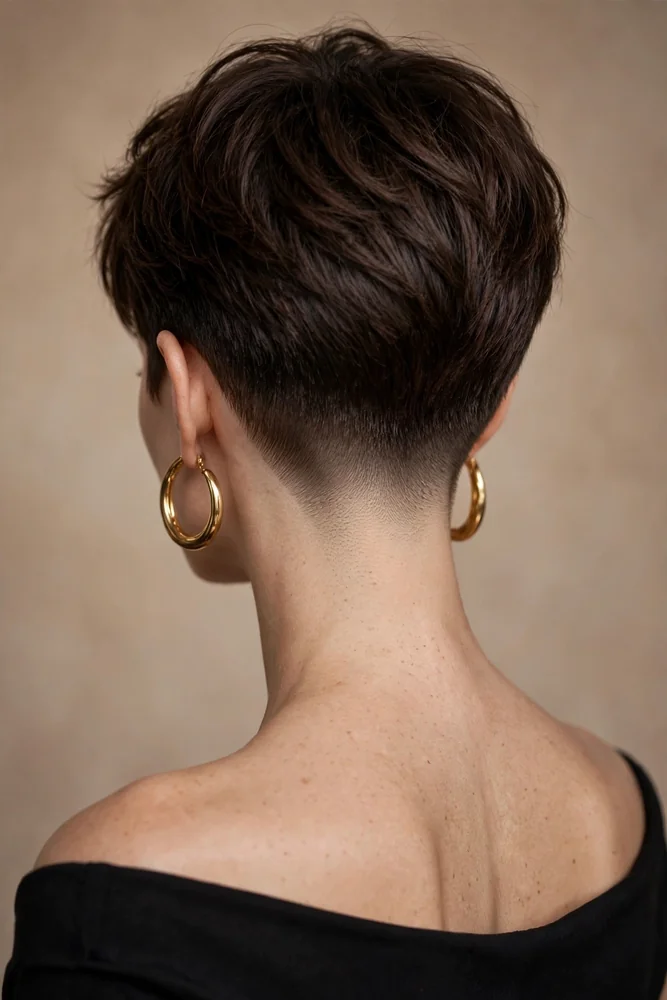
The nape is the pixie’s signature, and this cut makes it the star: a softly faded or scissor-tapered back dissolving into the skin, with a textured crown and soft fringe up top. Architectural from behind, soft from the front — photogenic from every angle.
A clean taper draws the eye down, elongating the neckline and silhouette. Ideal for fine hair (removes wispy thin ends), active lifestyles, and statement earrings — a bare nape is their perfect backdrop. The catch: tapers show growth within three to four weeks, so this needs the most frequent trims on the list. Ask for a “soft scissor taper, not a hard fade” (clipper fades read masculine), and pick your neckline shape — rounded for soft, squared for sharp. Style the top with Aveda Thickening Tonic for body.
12. The Face-Framing Layered Pixie
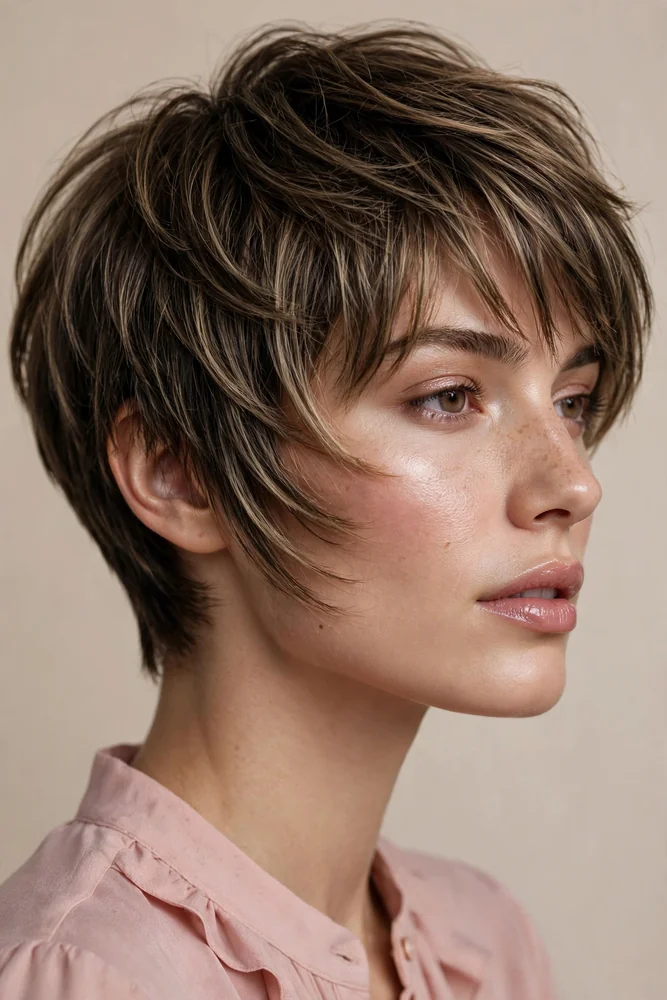
The quiet showstopper: layers falling at the brow, cheekbone, and jawline so the hair traces your face’s own structure. Soft full top, close sides, deliberate framing pieces that do what contouring does for makeup — they sculpt. It’s the most photogenic pixie here.
Every face shape works because the stylist places layers to correct: longer framing for round faces, brow-skimming pieces for long faces, one-sided asymmetry for edge. Blow-dry framing pieces forward and slightly under with a small round brush, pinch Bb. Hairdresser’s Invisible Oil through the ends. Ask for “face-framing layers at brow, cheekbone, and jaw on a pixie base.” And finish the face to match — our roundup of 10 Fall Makeup Looks You’ll Want to Try in 2026 has the berry lips and glowing skin that complete a short cut.
How to Ask Your Stylist for a Pixie Cut
The gap between the pixie you imagine and the one you leave with is almost always communication. Save three to five photos of the exact cut — same general shape, front, side, and back views. Pixies are three-dimensional; the back is where disappointments hide.
Learn five terms: point cutting (softening ends), razor texturizing (wispy separation), disconnection (unblended contrast, as in undercuts), graduation (stacked volume at the back), and taper (shortening toward the neckline). Be honest about maintenance — a precision cut on a six-week trim schedule is a recipe for regret — and about your real morning routine. Coordinating hair color with fall nails pulls the whole look together: see our 12 Bambi Nail Designs You’ll Want to Try This Fall 2026 for short-nail inspiration.
Pro Tips for Wearing a Pixie Cut This Fall
Less product than you think. A pea of paste, one pump of serum — overloading a pixie is the fastest route to greasy. Layer lightest to heaviest.
Day-two hair is the goal. Pixies look better with a little natural oil. Dry shampoo on day one — Kérastase Fresh Affair or Batiste Original — skips the wait.
Wash color gently. Copper, platinum, and brunette all fade fast on short hair. Cool water, two to three washes a week, color-depositing conditioner in the shower.
One accessory, max. Earrings and headbands read louder on short hair. Sculptural hoops or a velvet headband is enough — two competes with the cut.
Book trims early. The line between intentional and grown-out is about ten days. Four weeks for precision cuts, six for textured — schedule it when you leave the salon.
Silk pillowcase. Less friction overnight means the shape and color survive until morning.
Frequently Asked Questions
Will a pixie cut suit my face shape?
Almost certainly — the “difficult cut” reputation is outdated. Crown height lengthens round faces, a side-swept fringe narrows wide foreheads, soft temples flatter square jaws. Bring photos of pixies on similar face shapes to your consultation.
How often does a pixie cut need trimming?
Sleek and tapered cuts: every three to four weeks. Textured, tousled, and curly: five to six, sometimes seven for shaggy shapes. Book before you leave the salon — waiting until it looks grown out means waiting too long.
Can I get a feminine pixie with thick hair?
Thick hair is ideal — density gives the cut something to sculpt. The key is interior weight removal: point cutting, razor texturizing, or thinning shears through the interior. Avoid blunt one-length shapes; the shaggy and feathered pixies are the most thick-hair-friendly.
How do I keep it feminine?
Softness: point-cut ends, a tapered (not squared) neckline, length through the fringe and crown. Even an undercut stays feminine with a long, piece-y fringe. Bring photos and use the terminology from the how-to section above.
What if I’m not a morning person?
Pick a low-effort shape — tousled, shaggy, or curly pixies need under five minutes. Keep dry shampoo, texture paste, and flexible hairspray by the mirror; sleep on a silk pillowcase. Two-minute refresh: dampen the fringe, blow-dry into place, pinch product through the ends.
Final Thoughts
The right pixie doesn’t ask you to become someone else — it reveals the version already there, minus the curtain of hair. Every length, layer, and tone chosen on purpose. Save the ideas that stopped your scroll, bring them to a stylist you trust, and give the cut two weeks before judging — pixies, like good decisions, get better once you commit.