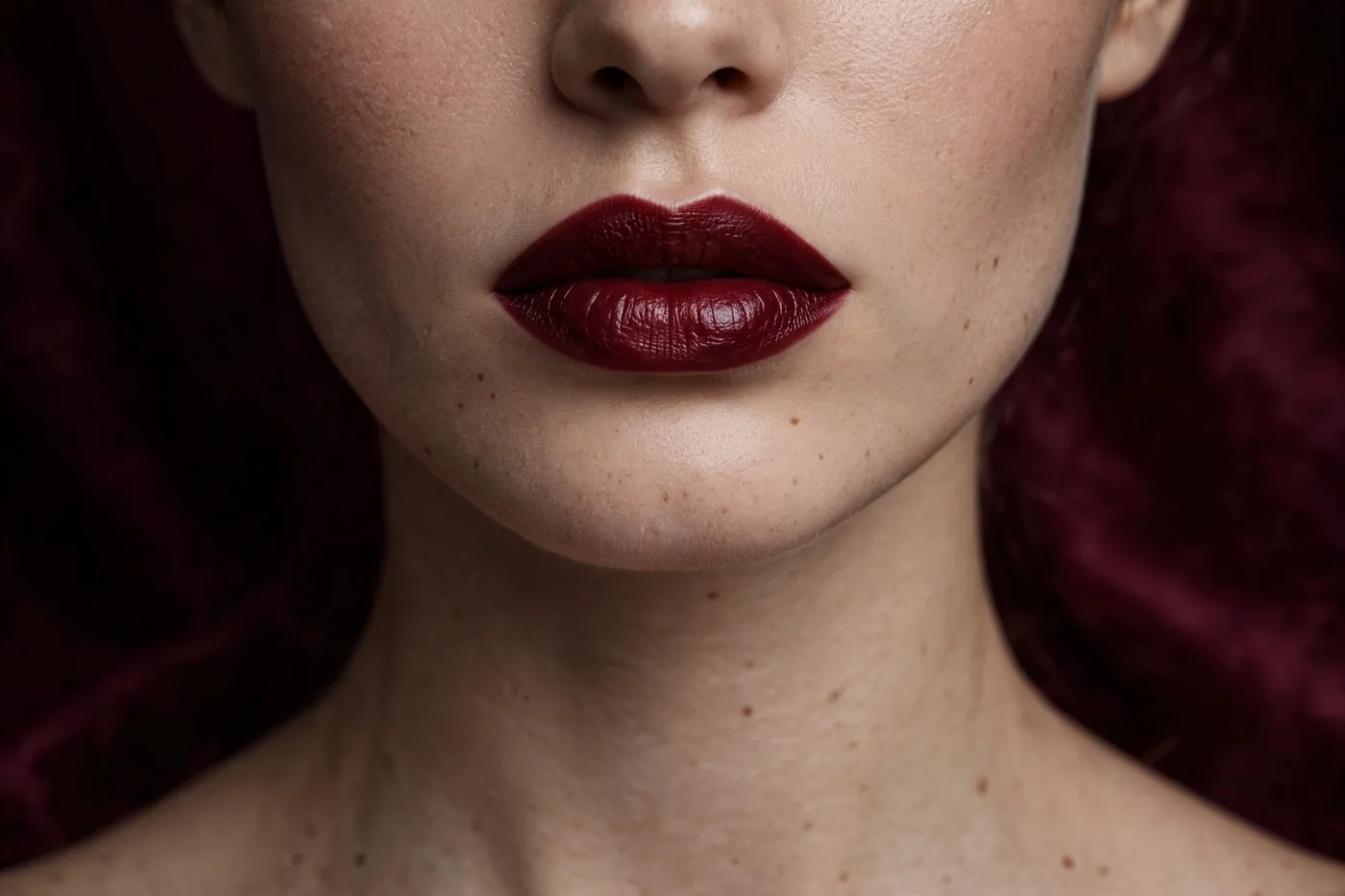
Dark red lipstick is fall’s hardest-working beauty move. One swipe elevates a plain sweater-and-jeans outfit, and the shade range this season is wider than it’s been: blue-based reds that make teeth look whiter, wine-stained burgundies, oxblood vamps, and high-shine cherry vinyls all belong to the same family. The twelve looks below cover every version worth wearing — a crisp MAC Ruby Woo matte, a blurred Korean gradient, a glossy vinyl red, a 90s brown-red, and more. Each one breaks down the finish, the undertone, and who it flatters most, so you can choose the dark red that fits your face, your outfit, and your day.
1. Blue-Red Matte, Worn Crisp

This is the dark red lipstick in its most iconic form: a true blue-based red with a flat matte finish and razor-sharp edges. The blue undertone is what makes it universally flattering — it cancels yellow in the teeth and brightens the whites of the eyes, which is why shades like MAC Ruby Woo and MAC Russian Red have survived every trend cycle. Start with a lip primer or a thin layer of foundation pressed through the lips to kill the natural pink at the edges, then trace the full lip line with a matching red liner like MAC Cherry before filling in with the lipstick straight from the bullet.
Blot once on a tissue and press a second layer on top — that sandwich is what keeps a matte from cracking or feathering. Because the finish is completely flat, any asymmetry shows, so take the extra minute on the cupid’s bow. This look suits fair to medium skin tones best and pairs with minimal eye makeup: the lip is the entire statement.
2. Deep Oxblood Satin
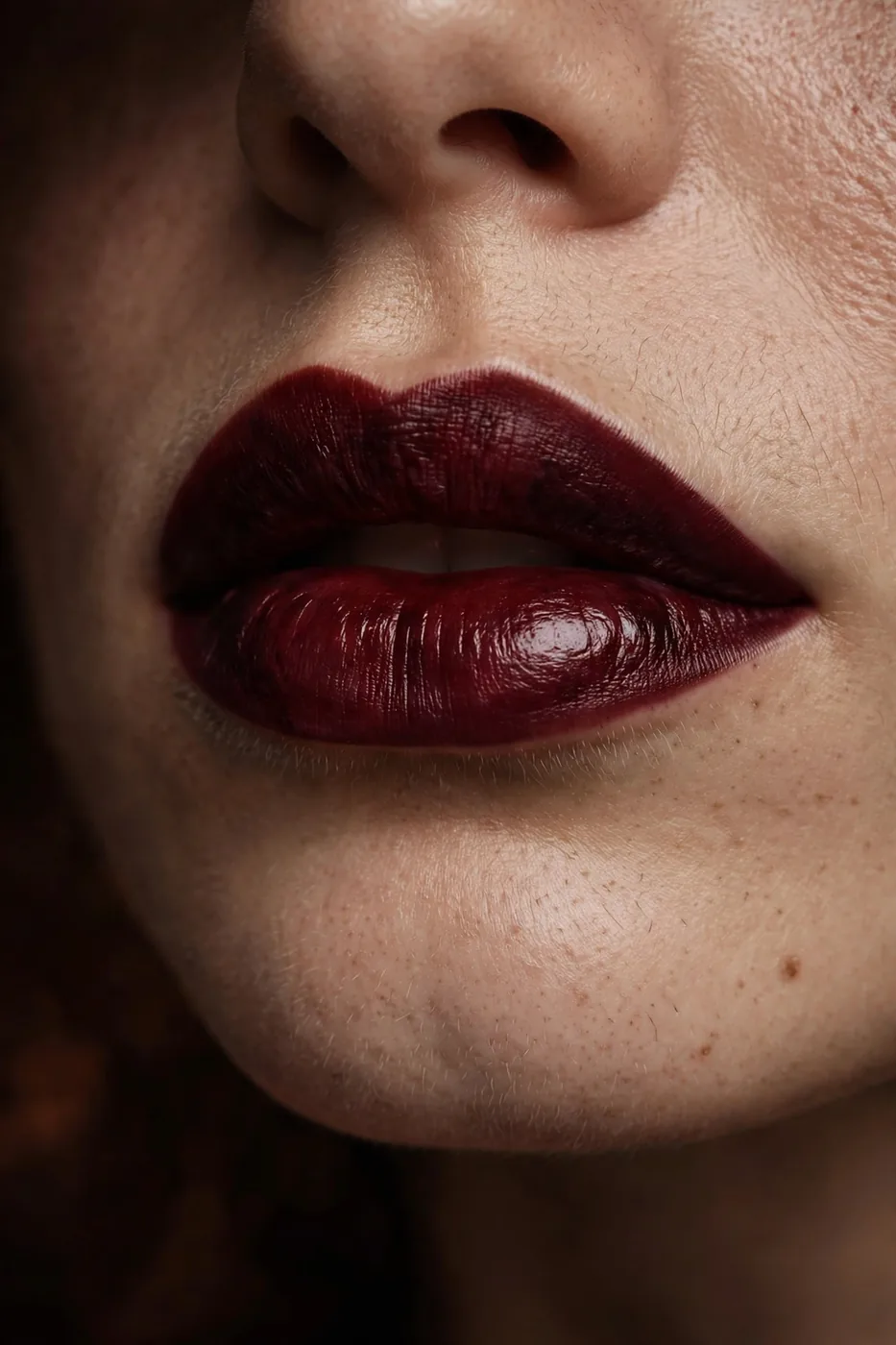
Oxblood is dark red at its most grown-up: a blackened wine shade with a satin finish that reflects just enough light to keep it from reading flat. Unlike a matte, the satin texture forgives dry lips and fine lines, which makes this the easiest dark red for anyone nervous about the intensity. The shade sits between red and burgundy with a strong berry pull, so it flatters olive and deep skin tones — the wine undertone harmonizes with warm complexions. Pat McGrath Labs and Charlotte Tilbury both do this finish well.
Application is forgiving. Skip the liner or use a deep berry liner only at the outer corners, fill the lips with the bullet, then press the color in with a fingertip to soften the edge slightly. This is the dark red to reach for at dinner or the office holiday party: it reads polished in low light and doesn’t demand touch-ups every hour the way a gloss does.
3. Cherry Vinyl Gloss
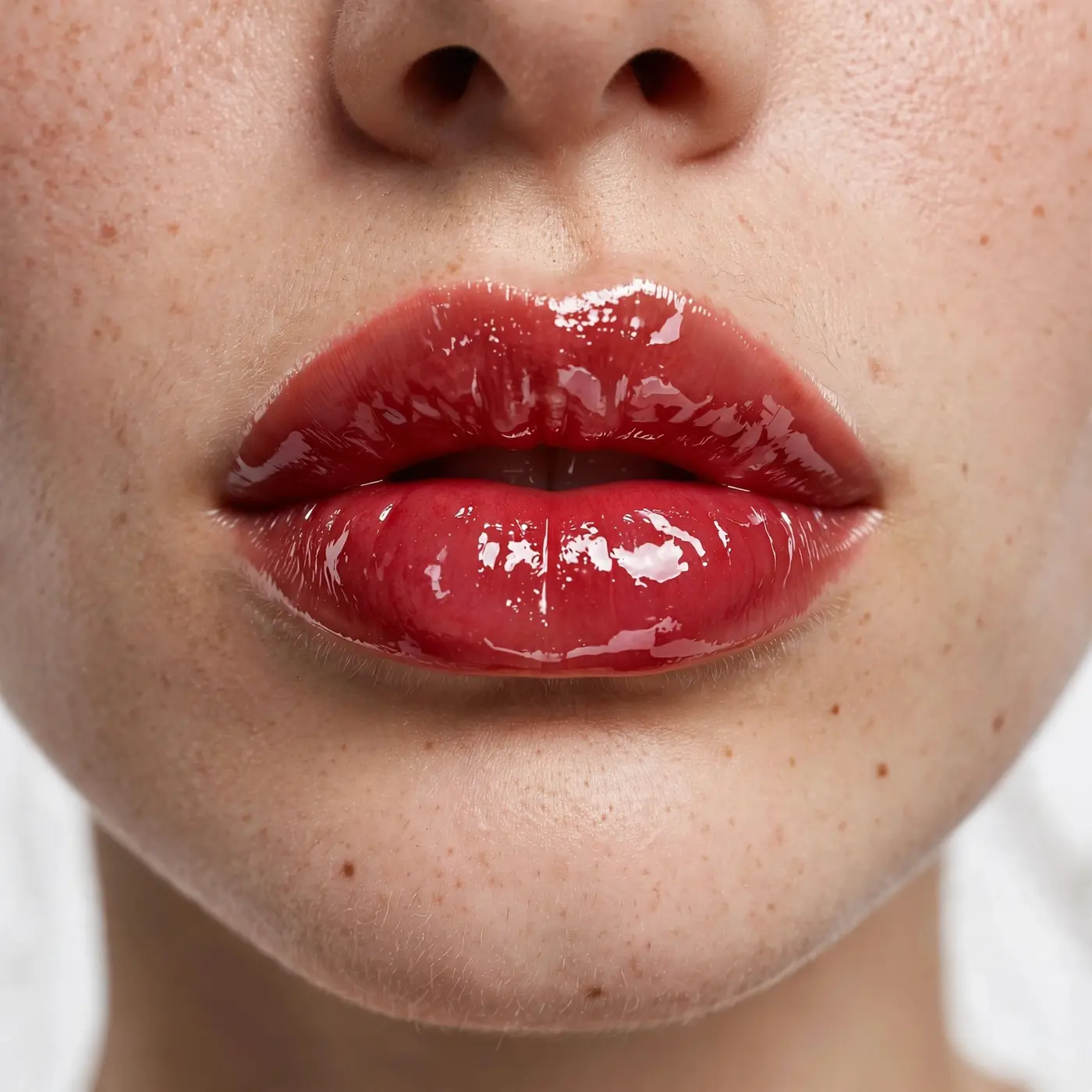
Vinyl is the loudest finish in the dark red family: a cherry-red lip with a glass-like, almost wet shine that catches light from across the room. The trick to making it wearable is keeping the color itself slightly sheer — a vinyl gloss layered over a thin stain base gives the lacquered effect. The high shine plumps the lips visually, so this is a strong choice for thinner lips that disappear under matte formulas. Blot the inner lip once before heading out so the color never transfers onto teeth. Apply a cherry lip stain first and let it set, then press the vinyl gloss on with the doe-foot applicator, starting at the center and pushing outward.
Vinyl lips plus heavy eyes compete; a vinyl lip plus brushed brows and one coat of mascara looks intentional and modern. Hair pulled back keeps the gloss from migrating onto strands. Reapply the gloss layer — not the stain — through the night.
4. Brick Red Velvet Matte
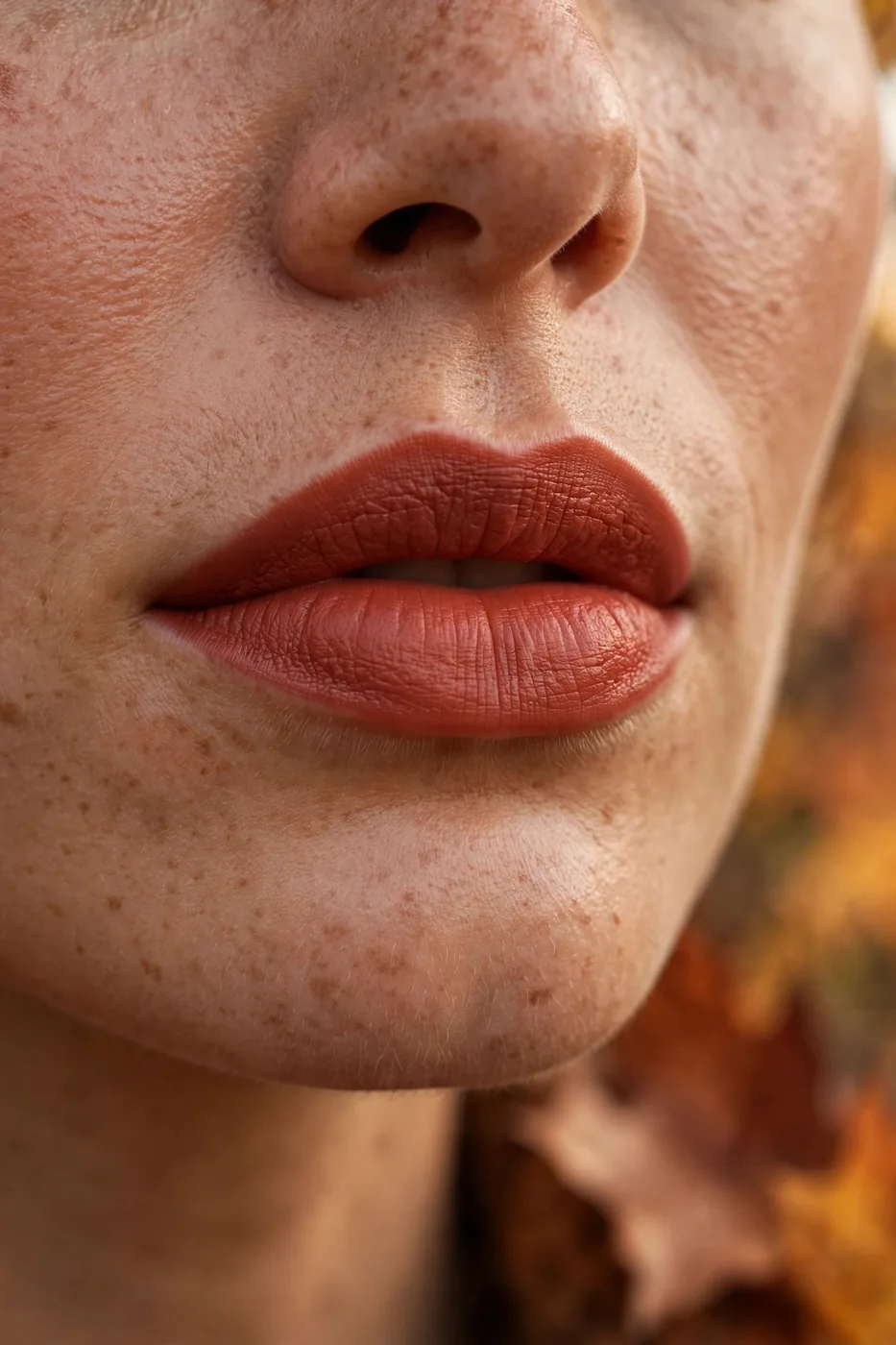
Brick red sits on the warm side of dark red — think terracotta deepened with brown — and the velvet-matte finish gives it a soft-focus, powdered texture that looks expensive in daylight. This is the dark red for warm and golden undertones: the brown in the shade echoes the warmth in the skin instead of clashing with it. The velvet finish is a middle ground between flat matte and satin — it blurs lip lines slightly, so it’s kinder to mature lips than a true matte.
Apply with a dense lip brush rather than the bullet; the diffused application creates the velvet effect. Line just inside your natural lip line with a warm brown-red liner to keep the edges from bleeding. This look belongs with the season’s bigger beauty picture — it sits beautifully next to the smoky eyes and berry blush in our roundup of fall makeup looks you’ll want to try in 2026. A camel coat and gold hoops finish the styling.
5. Black Cherry Ombré
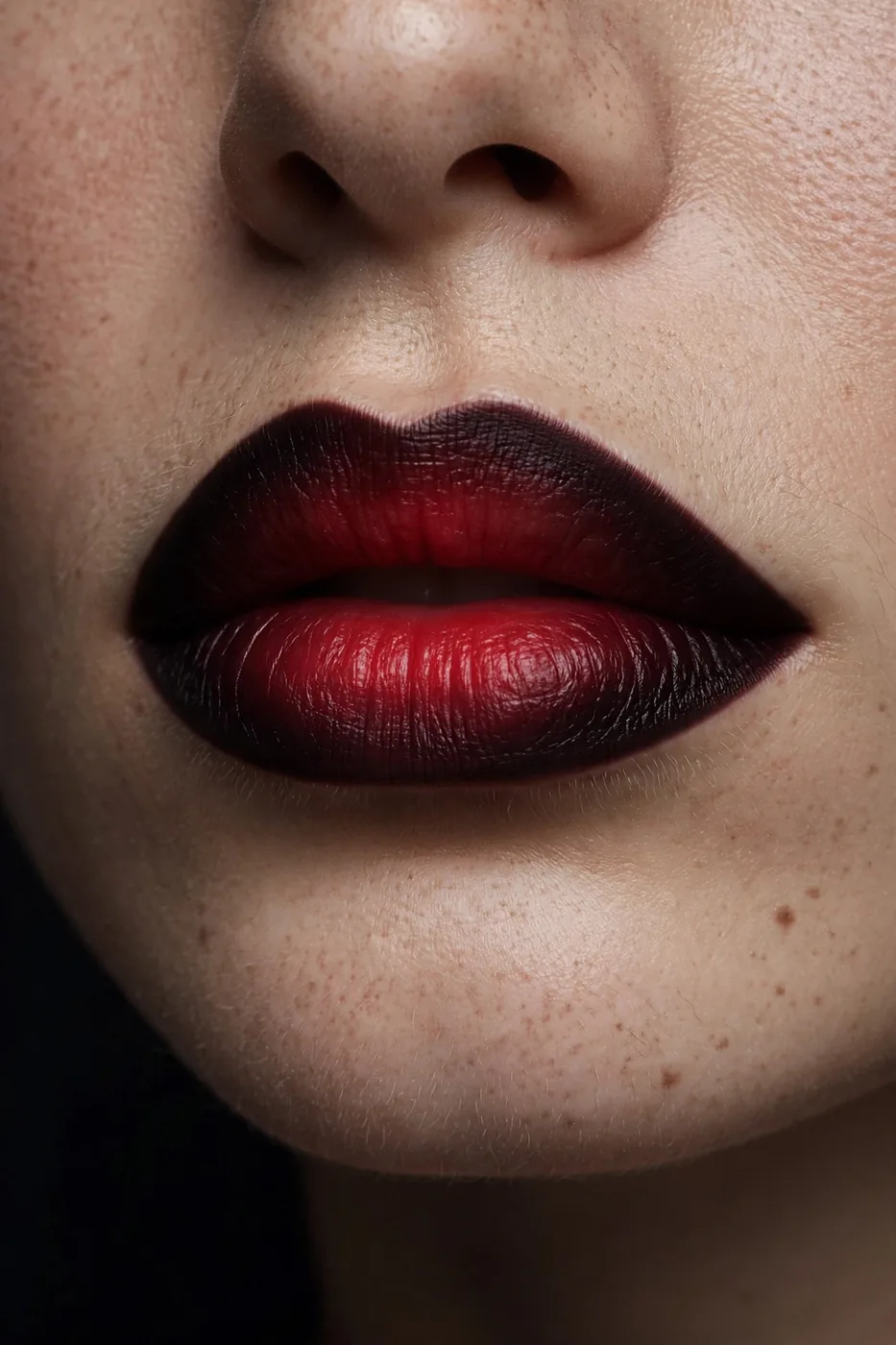
Ombré takes dark red from a single flat color into something dimensional: the outer edges go nearly black-cherry while the center stays a brighter red, so the lips look fuller and the color looks like it has depth. The contrast is what makes it work — a single dark shade can flatten the mouth, but the gradient tricks the eye into seeing volume. Choose a deep burgundy or blackened-red liner for the perimeter and a true red lipstick for the middle — NARS Dragon Girl stays vivid against the darker edge. The dark perimeter recedes visually while the bright center advances, which is the optical trick behind the fullness.
Line and fill the outer third of the lips with the dark liner, then press the red into the center with your finger, blending where the two meet so there’s no hard line. This technique suits smaller lips especially well and makes a strong evening look.
6. Blurred Burgundy, K-Beauty Style

The Korean blurred lip does the opposite of everything a classic red lip stands for: instead of sharp edges, the color is pressed into the center of the lips and diffused outward until the perimeter practically disappears. In burgundy, the effect is a soft, just-bitten stain that looks romantic rather than severe — dark red for people who find dark red intimidating. A lip tint or lightweight liquid lipstick works better than a bullet here, since you need buildable, blendable pigment.
Dab the tint onto the center of both lips, then tap outward with a fingertip, fading the color before it reaches the lip line. The edges should look like watercolor, not a mistake. Skip liner entirely. This is the most forgiving dark red on the list and the best daytime option: it wears like a stain, survives coffee, and looks better slightly faded. Pair it with straight brows and a dewy base for the full K-beauty feel.
7. Cranberry Lip Stain

A cranberry stain is the low-maintenance member of the dark red family: it sinks into the lips and stays put through eating, drinking, and talking, fading evenly instead of flaking off in patches the way long-wear mattes can. The color is a true cranberry — red with a cool berry pull, darker than a classic red but brighter than oxblood — which makes it one of the most wearable dark reds for fair skin. Maybelline SuperStay is the drugstore benchmark here.
Apply to bare, exfoliated lips — stain grips best with nothing underneath, so skip the balm and the primer. Work quickly in thin layers, because stain sets fast and a second pass over a dry first layer goes patchy. One even coat, lips pressed together once, and you’re done for the day. Exfoliate the night before and sleep in a lip mask, since stains run drying. This is the dark red for long days, weddings, and anyone who hates reapplying.
8. Overlined Dark Red
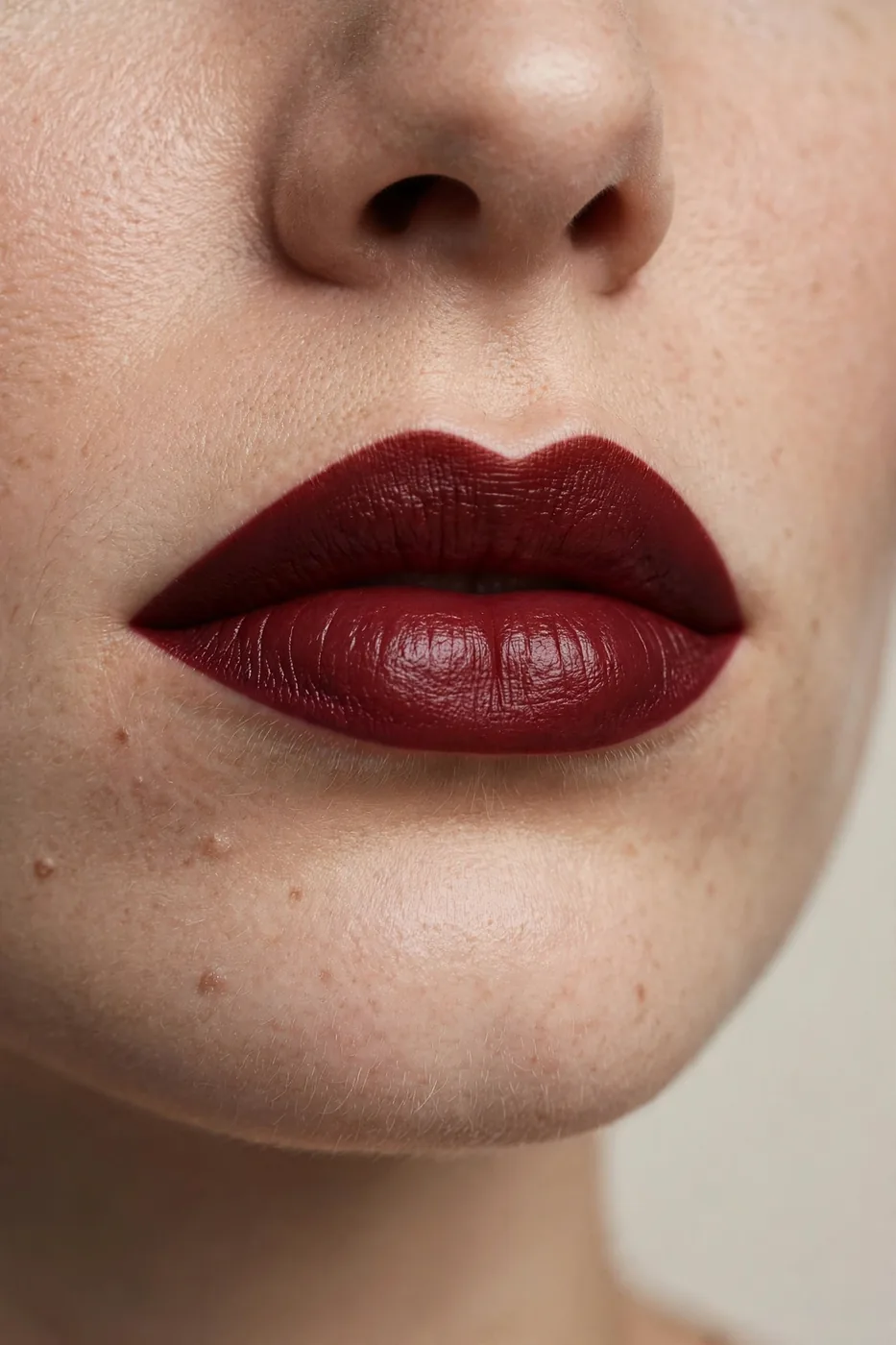
Overlining gets a bad reputation from the obvious, drawn-on versions, but done correctly it’s just precision: tracing a millimeter outside the natural lip line to correct asymmetry and add fullness, then filling so the liner disappears into the lipstick. In dark red, the high contrast exposes every wobble. Use a liner one shade deeper than your lipstick and overline only the cupid’s bow and the center of the lower lip, keeping the corners exactly on your natural line.
Fill the entire lip with the liner first, then layer the lipstick over it; the liner base grips the color and extends wear dramatically. This look favors defined lip shapes and suits anyone whose lips are slightly uneven, since the liner lets you redraw the symmetry. Keep the rest of the makeup structured to match: groomed brows, a clean wing or none at all.
9. Merlot Reverse Ombré

Reverse ombré flips the classic gradient: the outer lips carry the deep merlot while the very center is lightened with a softer red or even a touch of concealer, creating a spotlight effect that makes the mouth look plush and three-dimensional. It works best with a satin or cream finish, since matte formulas resist the blending this needs.
Apply the merlot shade across the whole lip, then press a lighter red into the center of the lower lip and the cupid’s bow with your fingertip. Tap the boundary until the transition is seamless. The lightened center catches light exactly where lips naturally protrude, which is why this reads as volume rather than color. For extra dimension, tap a dot of clear gloss over the lightened center — it acts like a spotlight. A good date-night dark red: it photographs beautifully in flash and looks softer in person than a single deep shade.
10. Copper-Flecked Metallic Red

Metallic dark red is the party version of the trend: a deep red base shot through with fine copper shimmer that catches light with every movement. The key is the particle size — modern metallics use micro-fine shimmer rather than chunky glitter. L’Oréal’s metallic lip formulas do this well at drugstore prices, and the copper flecks warm up the red, making it especially flattering on golden and olive skin tones.
Because the shimmer amplifies texture, prep is everything: exfoliate, then apply a thin layer of lip balm and blot it down before the color goes on. A lip primer underneath grips the shimmer and stops it migrating past the lip line. Apply the metallic in two thin coats rather than one thick one — thick metallic settles into lip lines. Keep the eyes simple and matte to avoid competing shine. This is a holidays-and-evenings look for most people, but it’s the one that gets photographed.
11. 90s Brown-Red
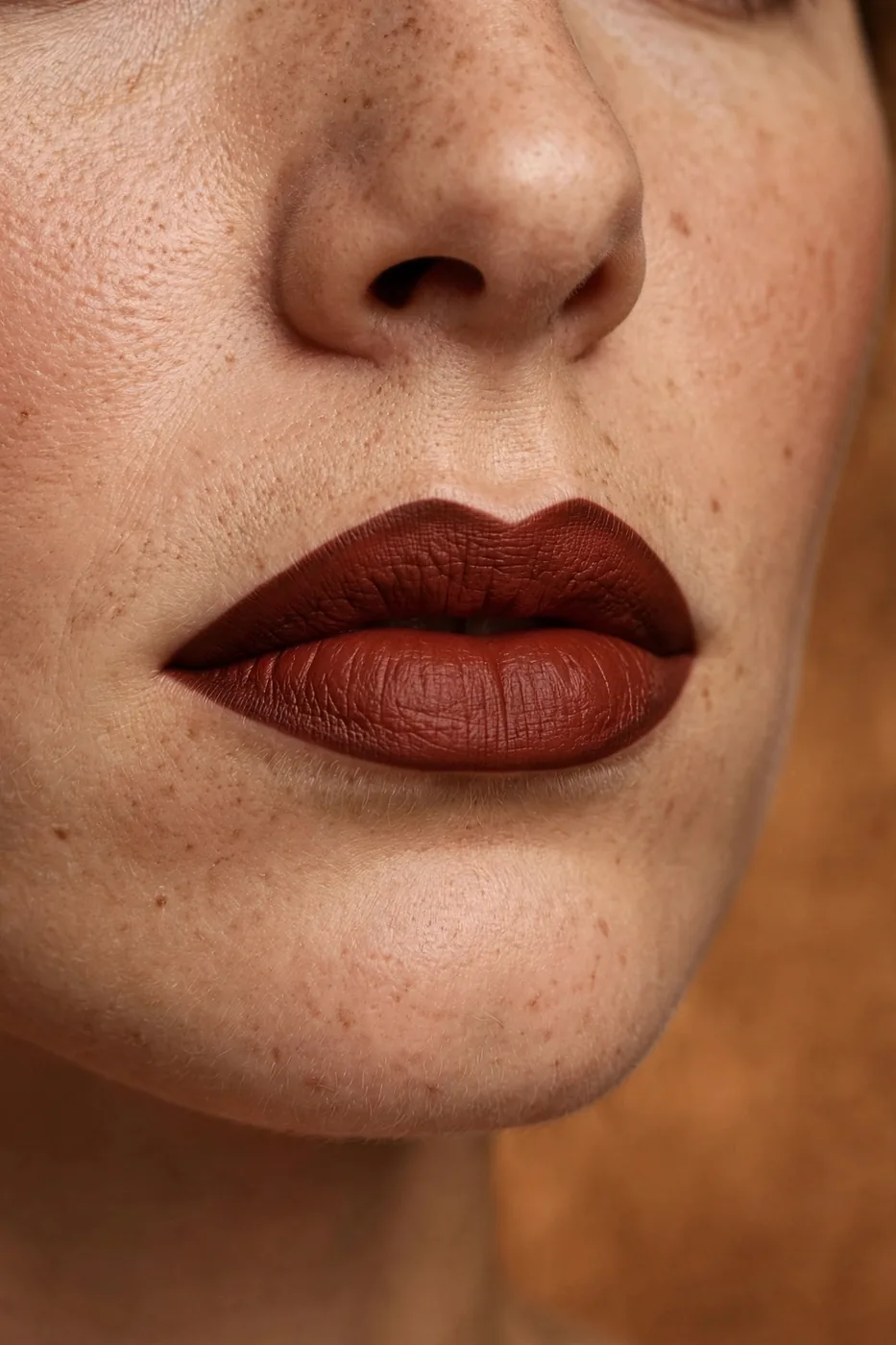
The 90s revival keeps delivering, and its dark red is brown-based: a deep reddish-brown with a darker liner and a slightly lighter fill, worn with the deliberately visible liner edge that defined the decade. Fenty Beauty’s Stunna Lip Paint in a deep shade nails the formula. The brown undertone makes this the most wearable dark red for deep skin tones, and the visible liner adds a graphic, editorial edge.
Line the full lip with a chocolate-brown liner, then fill with the brown-red lipstick, leaving the liner edge deliberately crisp rather than blending it away. The contrast between liner and fill should be visible but close — think one to two shades apart, not a harsh ring. Matte or cream finishes both work; gloss softens the 90s edge if you want the color without the attitude. Pair with thin brows and brown-toned eyeshadow to commit to the era, or keep the rest of the face modern.
12. Matte Base, Gloss Center

This is the layering trick makeup artists use when a client wants the staying power of a matte with the dimension of a gloss: a full dark red matte base, with a single dot of clear or red-tinted gloss pressed into the center of the lower lip only. The matte does the work — opacity, longevity, clean edges — while the gloss dot creates a highlight that makes the lips look fuller and the color more expensive.
Apply your matte as usual — liner, bullet, blot — then touch the gloss applicator to the center of the lower lip once and press your lips together lightly to distribute it. Don’t spread it to the edges; the contrast between matte perimeter and glossy center is the entire point. The gloss will fade first, so carry it for touch-ups. This hybrid suits anyone who finds full gloss too high-maintenance and full matte too flat — it genuinely gives you both.
How to Apply Dark Red Lipstick Like a Pro
Exfoliate with a damp washcloth or sugar scrub, press on a thin layer of lip balm, then blot most of it away — balm residue makes dark color slide. Fill the lips with a matching or one-shade-deeper liner before the lipstick goes on; the liner base is what keeps dark red from feathering into fine lines. Apply the bullet straight to the lips, or use a lip brush for ombré and overlining. Blot once on a tissue, set with translucent powder through a tissue, then apply a final layer. Check your teeth before you leave — a quick swipe of the inner lip with a fingertip removes transfer-prone excess.
Pro Tips for Wearing Dark Red Lips
Match the undertone to your skin: blue-based reds flatter cool undertones and whiten teeth, warm brick and brown-reds flatter golden undertones, and true neutrals can wear either. Balance the rest of the face — pick one feature to lead. Blot between applications instead of piling on fresh coats — it builds longer wear. For events, a stain base under any finish buys you hours. And think beyond the face — a dark red lip next to dark red nails is a power move, so coordinate with the velvet nail designs defining fall 2026 when you want the full monochrome moment.
Frequently Asked Questions
What skin tones can wear dark red lipstick? All of them — match the undertone. Fair cool skin shines in blue-based reds like MAC Ruby Woo, warm medium skin loves brick and brown-reds, olive skin takes oxblood beautifully, and deep skin carries black cherry with the most richness.
How do I stop dark red lipstick from bleeding? Line and fill the whole lip with a matching liner, blot balm down to almost nothing, and set with powder through a tissue. Mattes and stains migrate least.
Does dark red lipstick make teeth look yellow? Only warm, orange-based reds do that. Blue-based dark reds make teeth look whiter — stay on the cool side of the red family.
Can I wear dark red lips during the day? Yes — pick the finish. Blurred burgundy and cranberry stains read daytime-appropriate; vinyl and metallic belong to the evening. Sheer any shade out with a fingertip.
Final Thoughts
Dark red lips reward a little intention — pick your undertone, commit to the finish, and let the color do the heavy lifting. Start with the version that scares you least, whether that’s a forgiving blurred stain or the full crisp matte, and wear it somewhere low-stakes first. Save the looks that feel like you, note which finish survived your day, and build from there. Fall only comes once a year, and it deserves a lip to match — find yours and wear it on repeat.