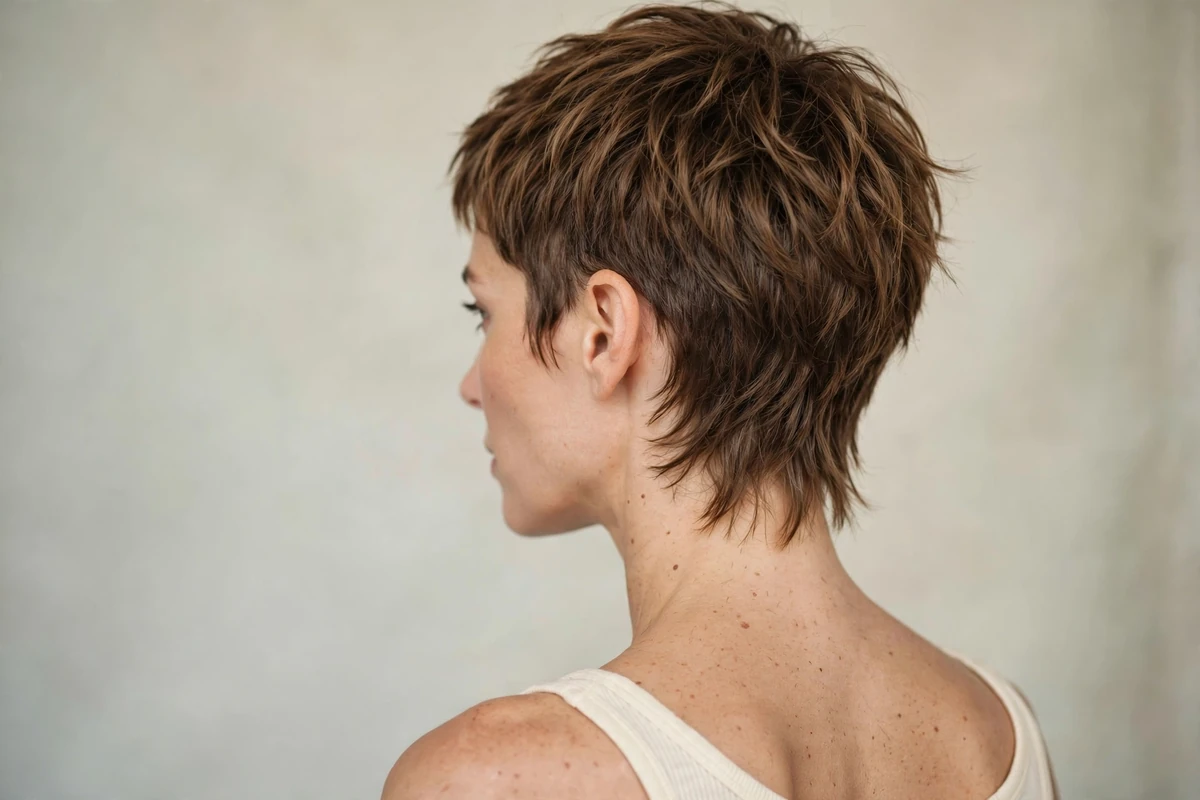
The mixie cut is the haircut that finally settles the short-hair debate. Cropped like a pixie across the top and sides, it keeps a soft, textured length at the nape, borrowing the mullet’s signature tail without any of its harshness. The result is a deliberate hybrid shape: short and clean around the ears, piecey and full on top, with just enough length at the back to move when you turn your head. For fall 2026, the mixie is everywhere, worn sleek, curly, shaggy, and drenched in copper and platinum. These ten versions cover the full range, from a soft classic to a bold undercut and a color-drenched statement cut, and each one explains exactly what to ask your stylist for.
1. The Classic Textured Mixie
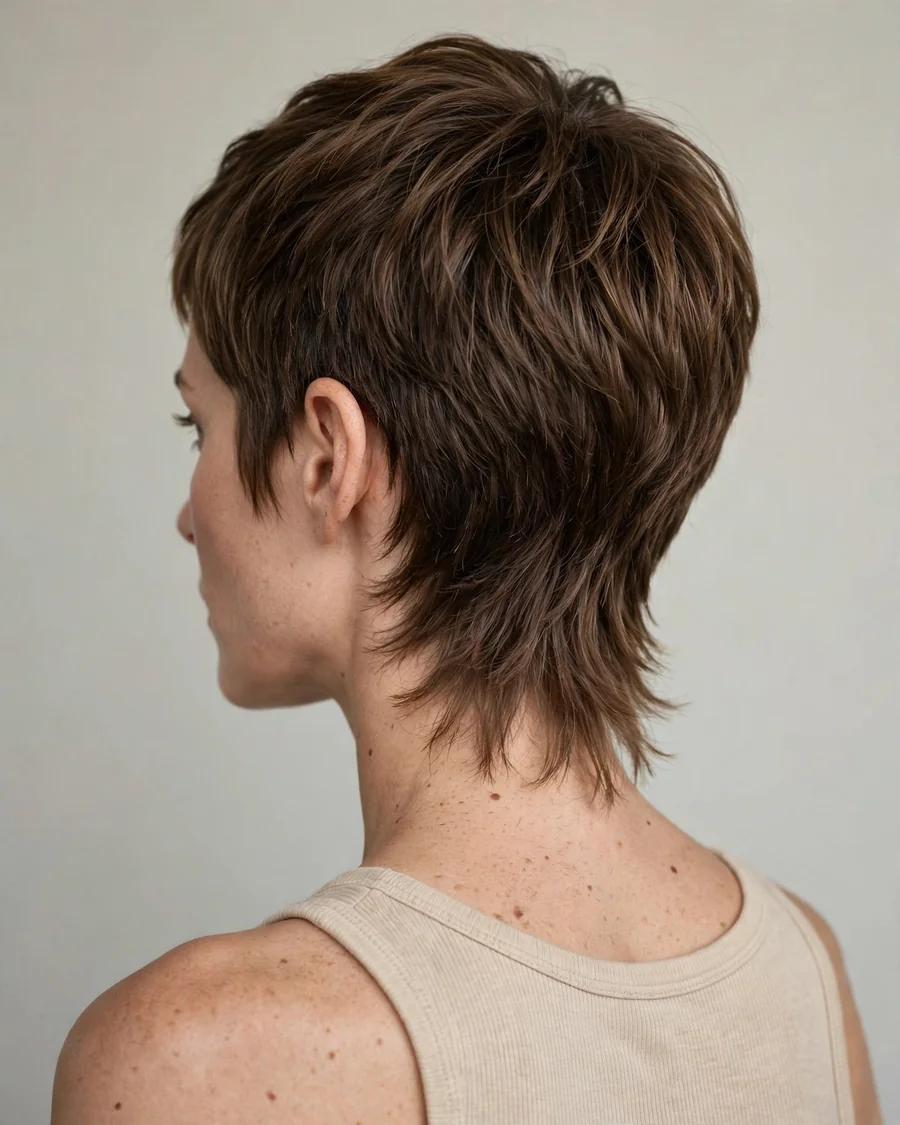
The classic textured mixie is the place to start — the hybrid shape at its purest. The top is cut short and piecey, like a pixie, the crown left long enough to push forward or sweep aside. The sides taper close around the ears while the back keeps two to three inches of textured length at the nape — the mullet half, softened into feathery, separated ends rather than a sharp tail. Point-cutting through the crown keeps the top from sitting flat and gives the cut airy, lived-in movement. The short sides open up the cheekbones, the nape length balances a longer neck, and it grows out gracefully — the nape just gets shaggier. Ask for a pixie crop on top with tapered sides and a textured, disconnected nape, and bring a back-view photo — the nape is what makes it a mixie. A pea-sized amount of matte paste, piece the crown out with your fingers, and let the nape fall. For the shorter end of the same family, see our roundup of feminine pixie cuts trending this fall.
2. The Micro-Bang Mixie
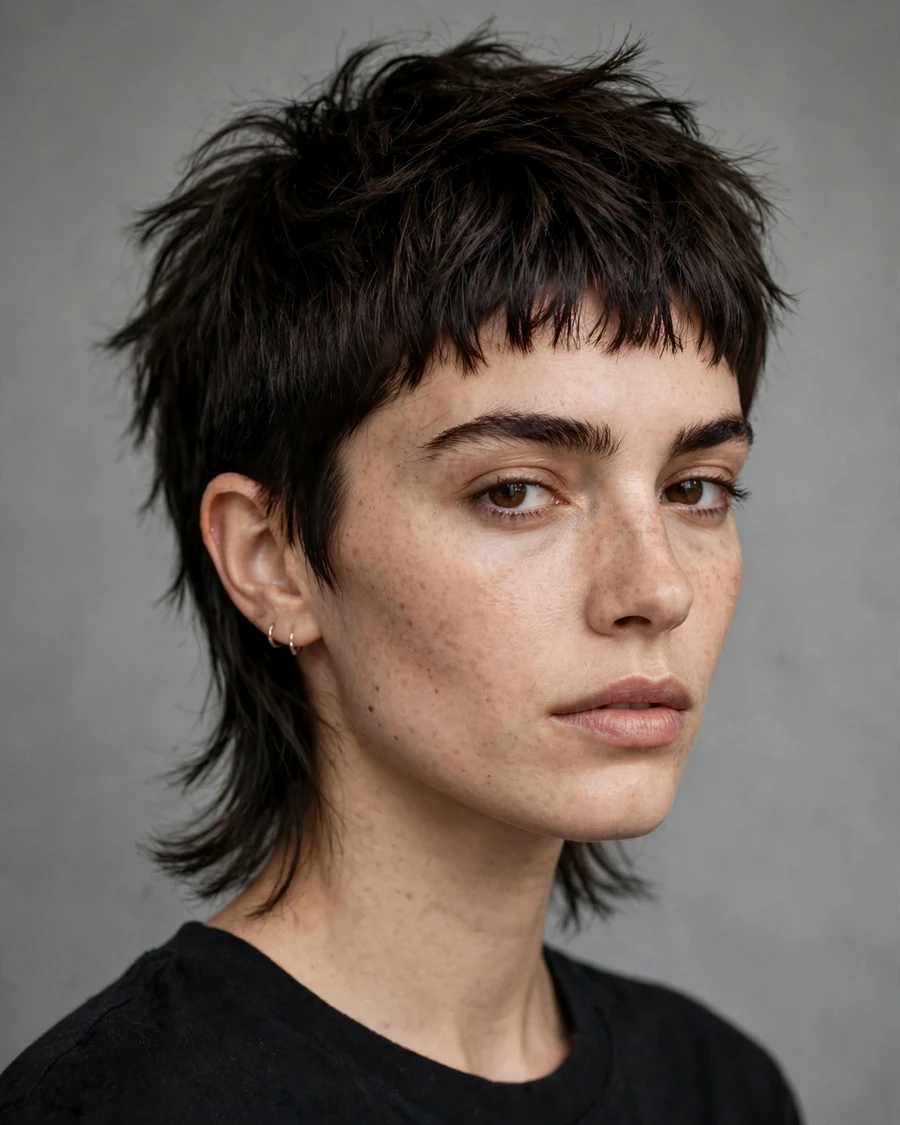
A micro-bang mixie pairs the hybrid silhouette with a short, choppy fringe above the eyebrows — sharper than either element alone. The fringe is cut straight across with a slightly uneven, piecey edge, so it never reads severe, while the pixie-cropped crown stays short and full above it. The sides hug close, and the nape keeps its textured mullet length, so the eye travels from the bold fringe down to the soft, wispy back — a contrast that gives the cut its energy. It suits oval and heart-shaped faces especially well: the short fringe opens up the face and the nape adds balance below the jaw. Have the fringe cut dry, a little at a time — wet hair shrinks as it dries, and a micro-bang has no room for error. A flat iron passed once over the fringe keeps the line crisp, and texture cream keeps the nape ends separated. Strong brows and a bare lip finish the look.
3. The Curly Mixie
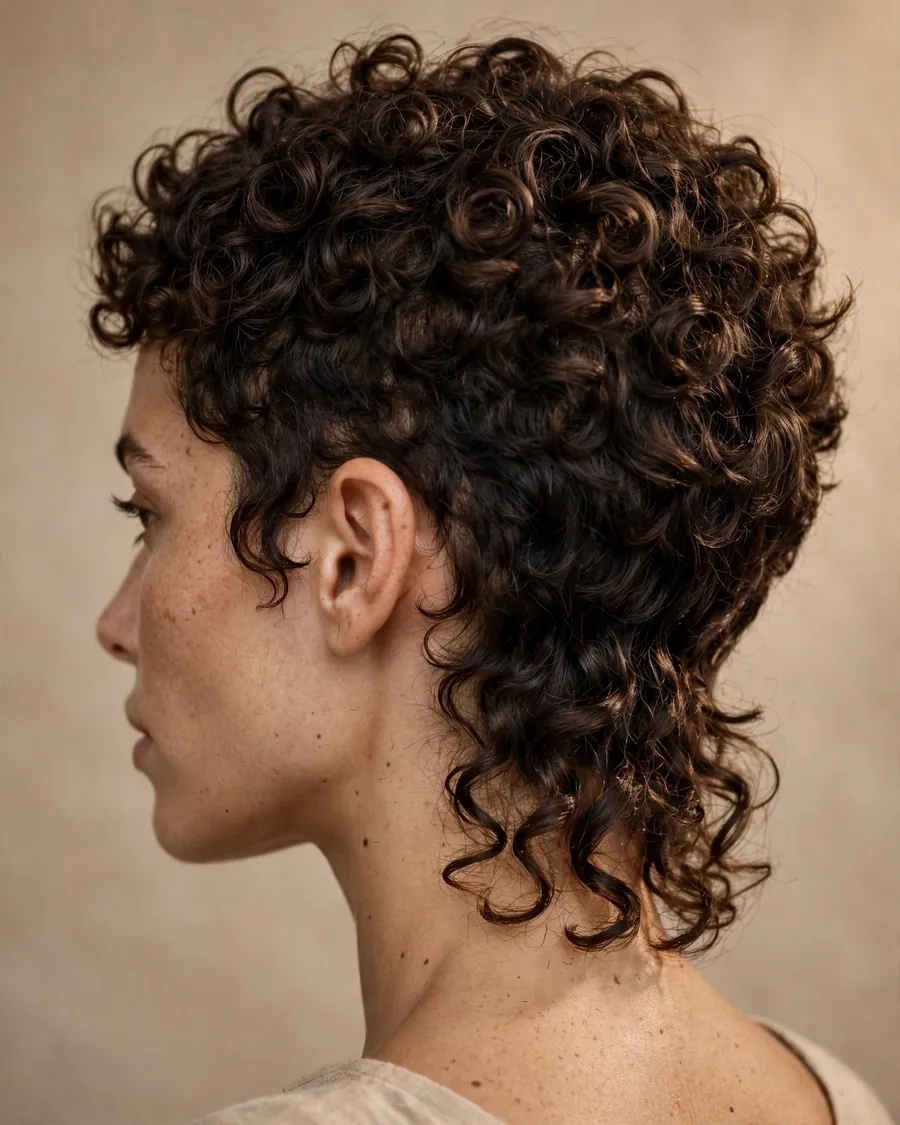
Curly hair might be the mixie’s best match — the cut was practically built for texture. The pixie-cropped top is shaped to let the natural curl pattern spring up and out, the crown left slightly longer so curls form soft, defined clusters instead of a tight cap. The sides are tapered, not shaved, so curls hug the head without puffing wide, and the nape keeps three to four inches of curl length falling in loose, bouncy ringlets — the mullet half, rendered in curls. The key is a dry cut, shaped on dry, styled hair, curl by curl — curls shrink and spring differently from strand to strand. Curl cream scrunched through damp hair, diffused on low heat, defines the pattern without frizz. It works across curl types, from loose waves to tight coils, and it avoids the classic short-curly triangle shape by keeping the sides close and letting the length live at the nape. Ask for a curly pixie top with tapered sides and a longer curly nape.
4. The Sleek Polished Mixie
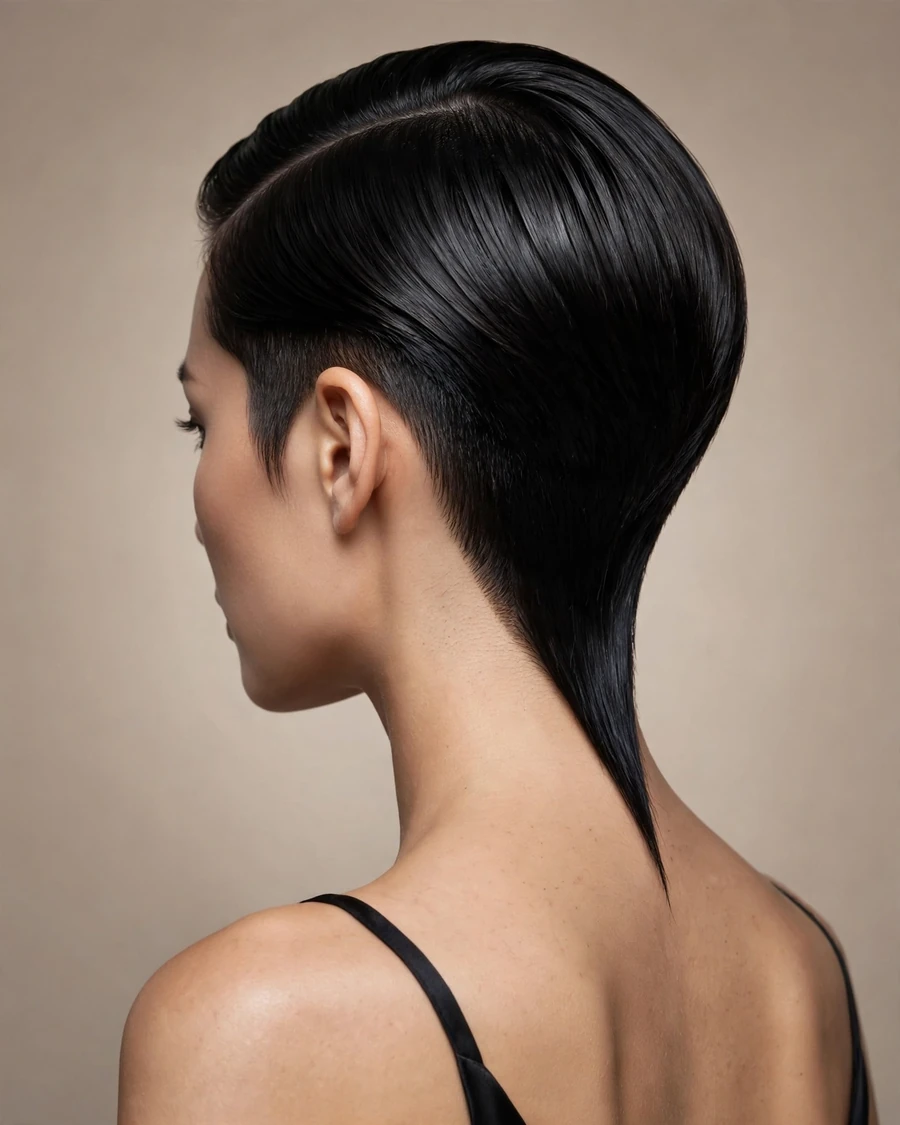
The sleek polished mixie proves the hybrid shape does not need texture to make its point. The pixie-cropped top is blown smooth and tucked close to the head, a side part giving the crown a clean, sculpted line. The sides taper to a sharp edge above the ears, and the nape is the star: a precise, pointed length, flat-ironed straight into a deliberate, glossy tail rather than leftover length. The contrast between the controlled top and the pointed back is what separates it from a plain short crop — polished from the front, daring from behind. Shine serum and a flat iron are non-negotiable, and the cut needs a stylist comfortable with precision work — a sleek finish exposes every uneven line. It is a strong choice for straight, fine hair, which smooths easily and shows off the pointed nape best. With a tailored coat and a bold earring, it reads boardroom-ready from the front, editorial from behind. Keep a travel flat iron and serum in your bag for a midday touch-up.
5. The Undercut Mixie
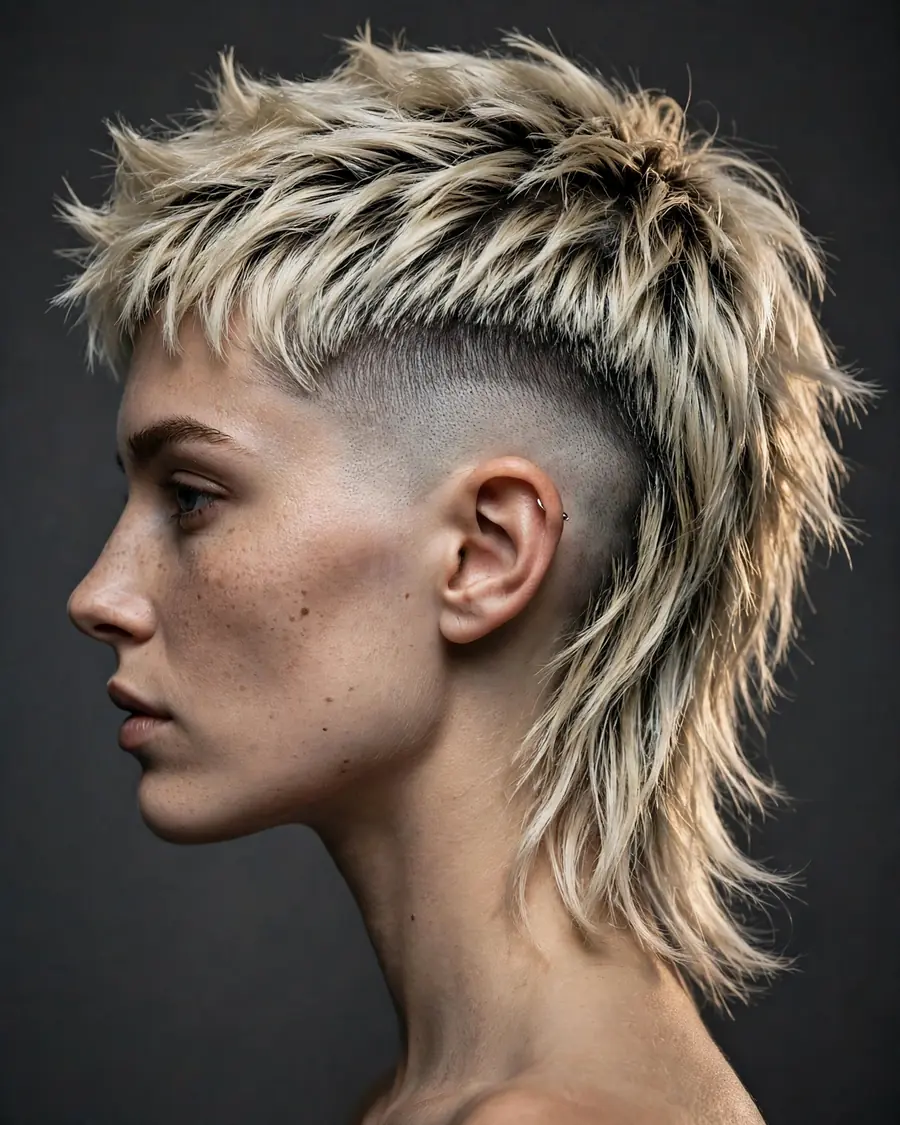
The undercut mixie is the boldest version of the hybrid, leaning into the contrast between the two halves. One or both sides are clipped close or faded to the skin, making the pixie-cropped crown look fuller by comparison. The top keeps its piecey length, styled forward or swept up for height, while the nape holds its longer mullet length — more pronounced now, framed by the shaved sides. The effect is architectural: hard lines at the sides, soft movement on top, a textured tail at the back. It suits thick hair especially well, since the undercut removes bulk where you do not need it. The trade-off is grow-out: the undercut needs a tidy-up every three to four weeks. Ask for a disconnected undercut, a textured pixie crown, and a longer, piecey nape — and decide beforehand whether you want it on one side or both. If you are weighing how much side length to keep, our bixie cut hairstyles for fall show the longer-sided alternative in the same short-hair family.
6. The Shaggy Lived-In Mixie
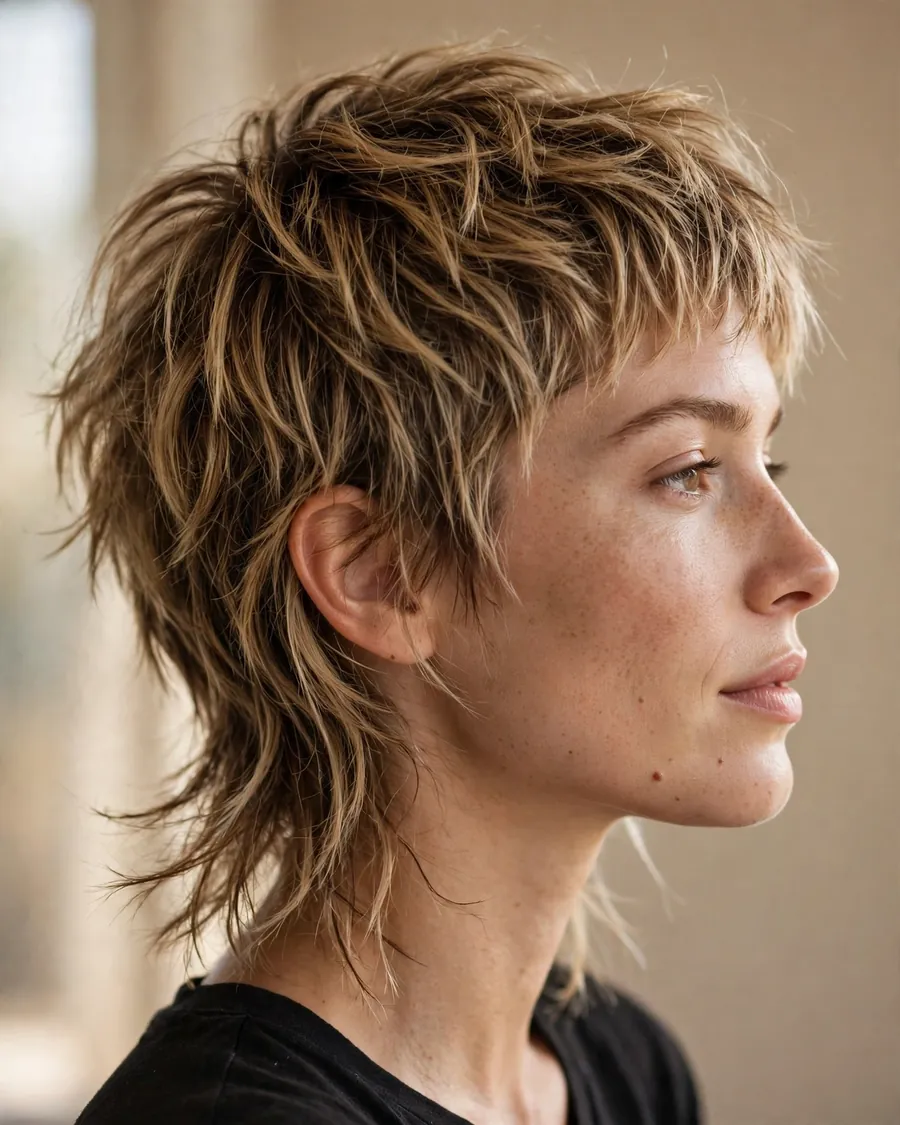
The shaggy lived-in mixie is the low-effort version, and it looks best on day three. The pixie-cropped top is cut with a razor or thinning shears into uneven, feathered layers, and the sides are left slightly longer than a classic taper so the layers blend into the nape. The back keeps its mullet length, broken into wispy pieces that flick outward — a windswept feeling that only improves as it grows. It is forgiving on wavy and fine hair alike: razored layers create movement fine hair usually lacks, and keep thick hair from turning into a helmet. It is the easiest mixie to maintain: air-dry with salt spray, scrunch the crown, and let the nape do what it wants. Ask for a razor-cut pixie top with feathered layers, soft sides, and a wispy, flicked-out nape — and tell your stylist you want it to look good messy. Dry shampoo at the roots on day two brings the texture back.
7. The Long-Nape Mixie
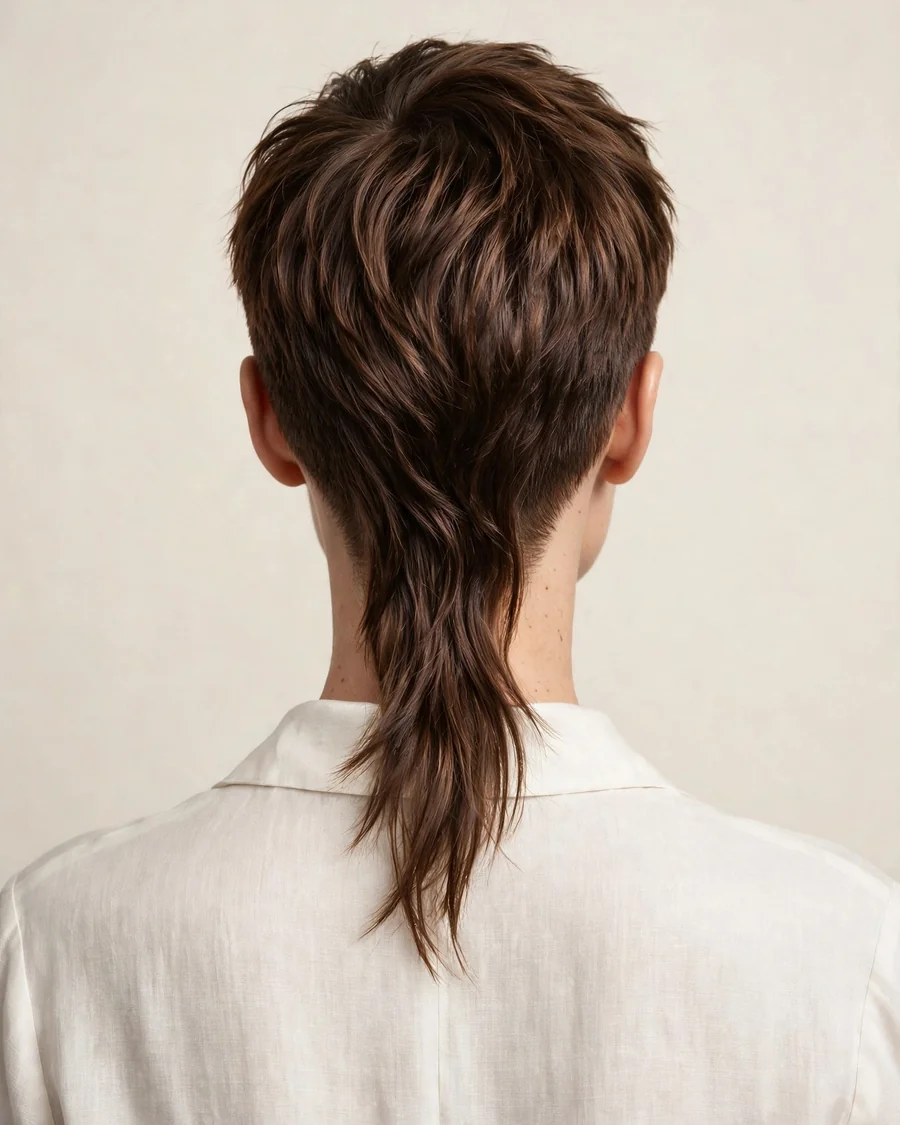
The long-nape mixie turns the mullet half up to full volume — the tail does the talking. The pixie-cropped top stays short and neat, the crown textured just enough to sit naturally, and the sides tapered close, keeping the silhouette clean from the front. The difference is at the back, where the nape stretches to four or five inches of textured, tapered length that brushes the shoulders. That extra length is the whole point: drama and motion a standard pixie never has, while the short top keeps it in short-hair territory. It is ideal if you are growing out a pixie but not ready for a bob — the nape buys time while the top catches up. Thick, straight hair suits it too, holding the tapered tail without frizzing. Style the nape with light cream and a round brush, flicking the ends outward; keep the crown piecey with matte paste. Bring a back-view photo, and agree on the exact nape length before the first cut — a single inch changes the whole balance.
8. The Blunt-Fringe Mixie
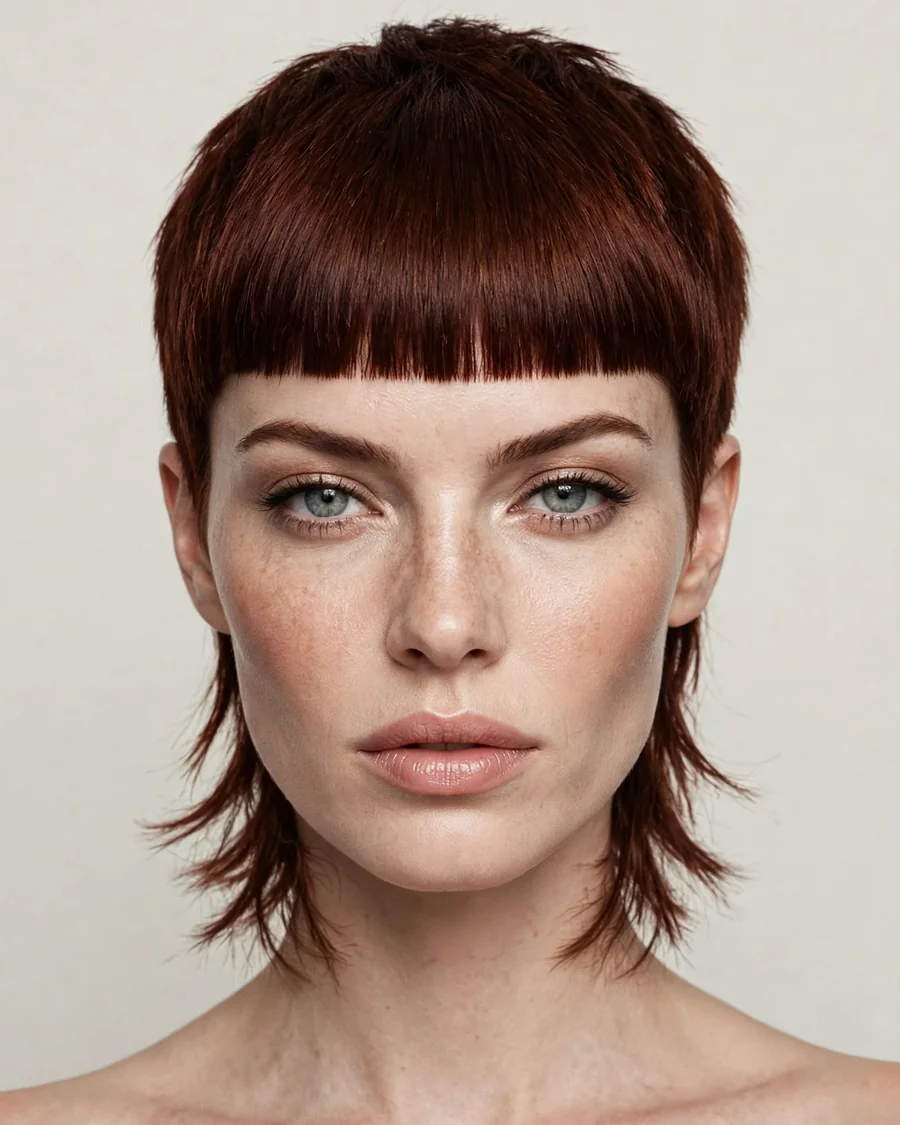
A blunt-fringe mixie brings a graphic, salon-sharp line to the front of the hybrid shape, and the fringe’s precision makes the textured nape behind it feel softer by contrast. The fringe is cut straight across at brow level with a clean, heavy line — no feathering, no wisps — while the pixie-cropped crown behind it stays short and full. The sides taper close, and the nape keeps its piecey mullet length, so the cut reads structured from the front and relaxed from the back. It suits straight, thick hair best, since the blunt line needs density to hold its edge, and it flatters long faces by shortening the forehead. The fringe needs a trim every two to three weeks to hold the line, and should always be cut dry, at the length you wear it. At home, a flat iron and smoothing serum keep the fringe glassy, while texture cream scrunched into the nape keeps the back soft and separated. The two finishes in one cut are what make it memorable.
9. The Wavy Mixie with Curtain Bangs
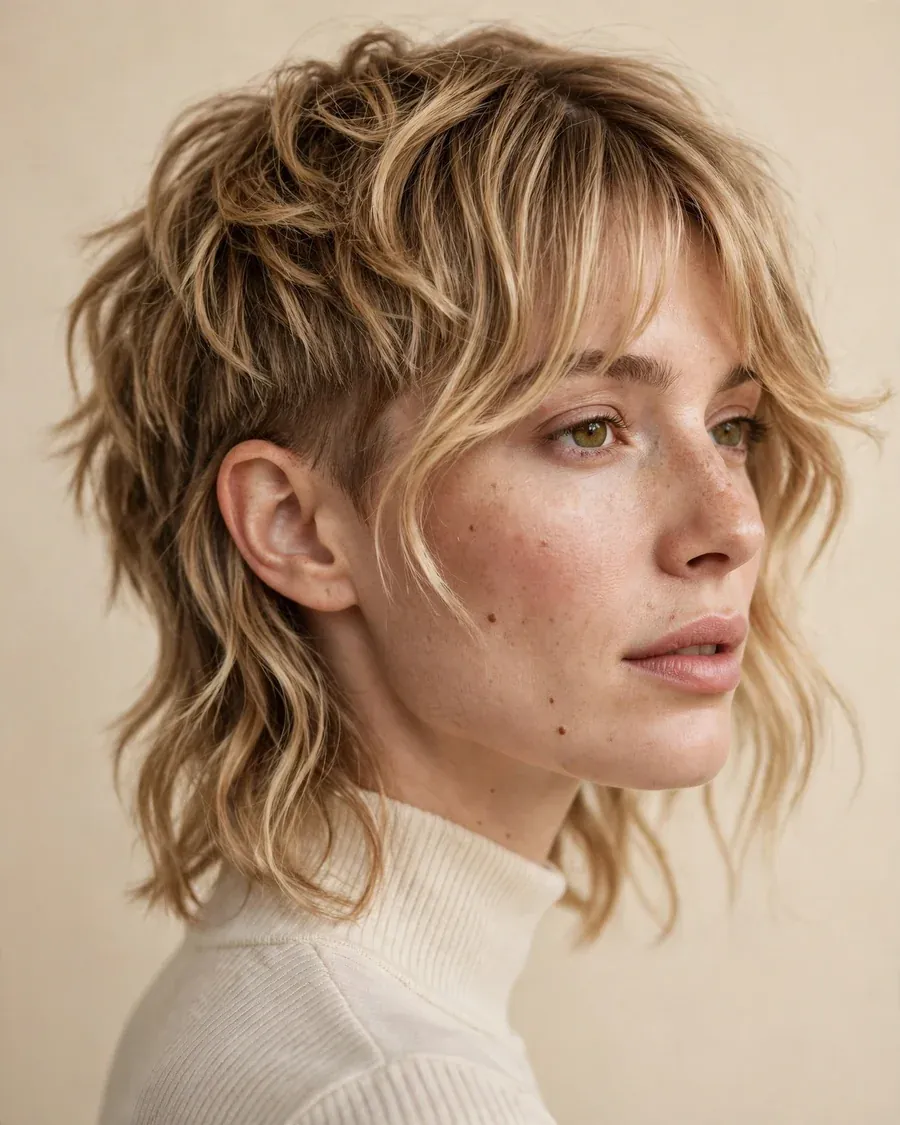
Curtain bangs soften the mixie into its most romantic version. The fringe is center-parted to sweep outward along the cheekbones, framing the face in two soft panels, while the pixie-cropped crown above stays short and textured. The sides taper close, and the nape keeps its longer, wavy mullet length, which picks up the same soft bend as the bangs and ties front and back together. The whole cut moves — the bangs shift with the face, the waves in the nape catch the light, and nothing sits stiff. It suits wavy hair and anyone who finds a straight fringe too severe: curtain bangs grow out beautifully and pin back on lazy days. A large round brush and blow dryer give the bangs their outward flick, and sea-salt spray through the nape brings out the wave. Ask for a pixie crown, tapered sides, curtain bangs to cheekbone length, and a wavy textured nape — the center part is what makes the curtains work.
10. The Copper Balayage Mixie
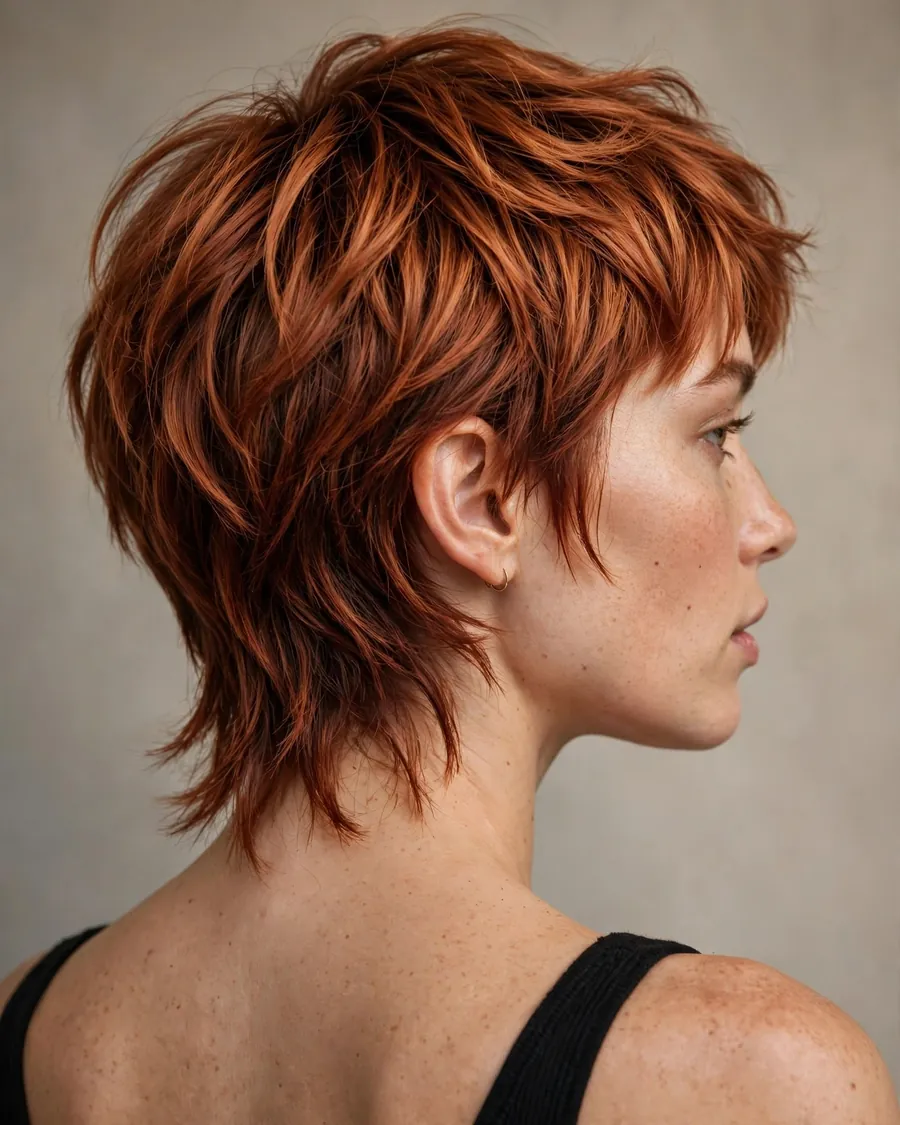
Color is the fastest way to make the mixie’s hybrid shape visible, and copper balayage does it best. The pixie-cropped top is painted a rich, dimensional copper that catches the light on every piecey layer, while the longer nape carries deeper, shadowed tones underneath, so the depth shifts as the tail moves. The balayage is hand-painted, not foiled, keeping the color soft and blended rather than striped, and the grow-out is forgiving with no hard line at the root. The cut stays classic — short textured crown, tapered sides, piecey mullet nape — so the color does the talking, not a new silhouette. It suits warm skin tones and anyone who wants a statement cut without a statement silhouette, and it photographs beautifully — the copper picks up every layer, so the shape reads clearly even in a small Pinterest thumbnail. Maintain it with color-safe shampoo and a copper gloss every four to six weeks, and ask your colorist for a lived-in balayage, deeper at the nape.
How to Ask Your Stylist for a Mixie Cut
The mixie lives or dies on the consultation, so walk in with a clear brief and front, side, and back photos. Say the word mixie, then describe the hybrid shape plainly: pixie-cropped top and sides, longer textured length at the nape. Agree on the nape length first — two inches reads subtle, four or five reads dramatic, and the difference changes the whole cut. Talk through your texture honestly: curly hair needs a dry cut, fine hair needs point-cutting, thick hair may need thinning at the crown. Ask how the sides will be finished — tapered or faded — and whether the fringe will be cut wet or dry. A good stylist will also give you the maintenance schedule first: most mixies need a tidy-up every four to six weeks, undercuts closer to three. If you are nervous, ask for the longer version first — a mixie is far easier to take shorter next visit than to grow back.
Pro Tips for Styling and Maintaining Your Mixie
Keep your styling kit small — the mixie rewards fingers over tools. A pea-sized amount of matte paste or texture cream is enough for the crown: warm it between your palms, work it through the top, and piece out the ends. For the nape, light cream or salt spray keeps the length separated, and a round brush flicked outward shapes the tail on sleeker versions. Wash every two to three days rather than daily — second-day texture suits this cut — and use dry shampoo at the roots to revive the crown. A silk pillowcase protects the nape from frizz, especially on curly and wavy versions. Book your maintenance trim before leaving the salon — a mixie loses its shape fast once the sides grow out. Finally, photograph your cut from the back on day one — your best reference for every future appointment.
Frequently Asked Questions
What is the difference between a mixie and a pixie cut? A pixie is short all over, including the back; a mixie keeps the pixie-cropped top and sides but leaves longer, textured length at the nape — the mullet’s tail. That nape length is the defining difference: movement and a hybrid silhouette a pixie lacks.
Will a mixie work on curly hair? Yes — curly hair often suits it best. The key is a dry cut shaped curl by curl, sides tapered close, length kept at the nape where curls spring freely. Curl cream and a diffuser keep the pattern defined.
How fast does a mixie grow out? The nape grows gracefully and just gets shaggier, but the short sides and crown lose shape within four to six weeks. Book a tidy-up every four to six weeks; undercuts need attention every three to four weeks to keep the fade crisp.
Is the mixie hard to style at home? No — it is one of the easier short cuts to live with. Most versions need only matte paste or texture cream worked through with your fingers, the nape left to fall naturally. Sleek versions need a flat iron; textured versions look best slightly undone.
Final Thoughts
The mixie works because it refuses to choose: the freedom of a pixie on top, the movement of a mullet at the back. The ten versions here show how far that idea stretches — from a soft classic to a bold undercut and a copper-drenched statement. Pick the version that matches your texture and your tolerance for upkeep, take clear photos to your stylist, and agree on the nape length first. Then let the cut do what it does best: effortless from the front, interesting from behind. Save the looks that caught your eye, and make the mixie your own.