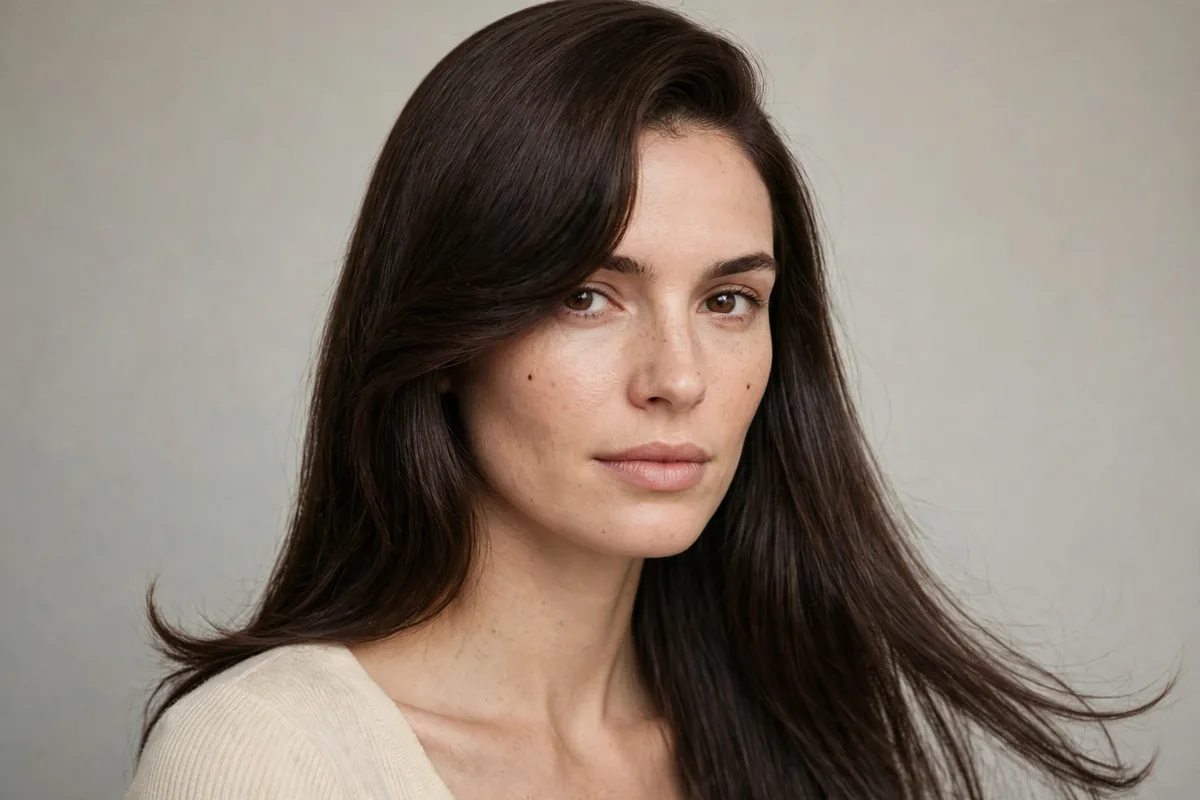
Side-swept bangs are back in a big way for fall 2026, and this time they are softer, longer, and far more wearable than the stiff, shellacked fringe of the 2000s. The modern version starts with a deep side part, falls across the forehead in a long diagonal sweep, and melts into face-framing layers instead of stopping abruptly at the brow. It works on nearly every length, from a chin-grazing bob to waist-length layers, and it flatters round, oval, square, and heart-shaped faces because the diagonal line draws the eye across rather than cutting the face in half. Below are ten ways to wear the look this season, from polished blowouts to undone waves, each with the cutting and styling details that make it work.
1. Classic Deep Side Part Blowout
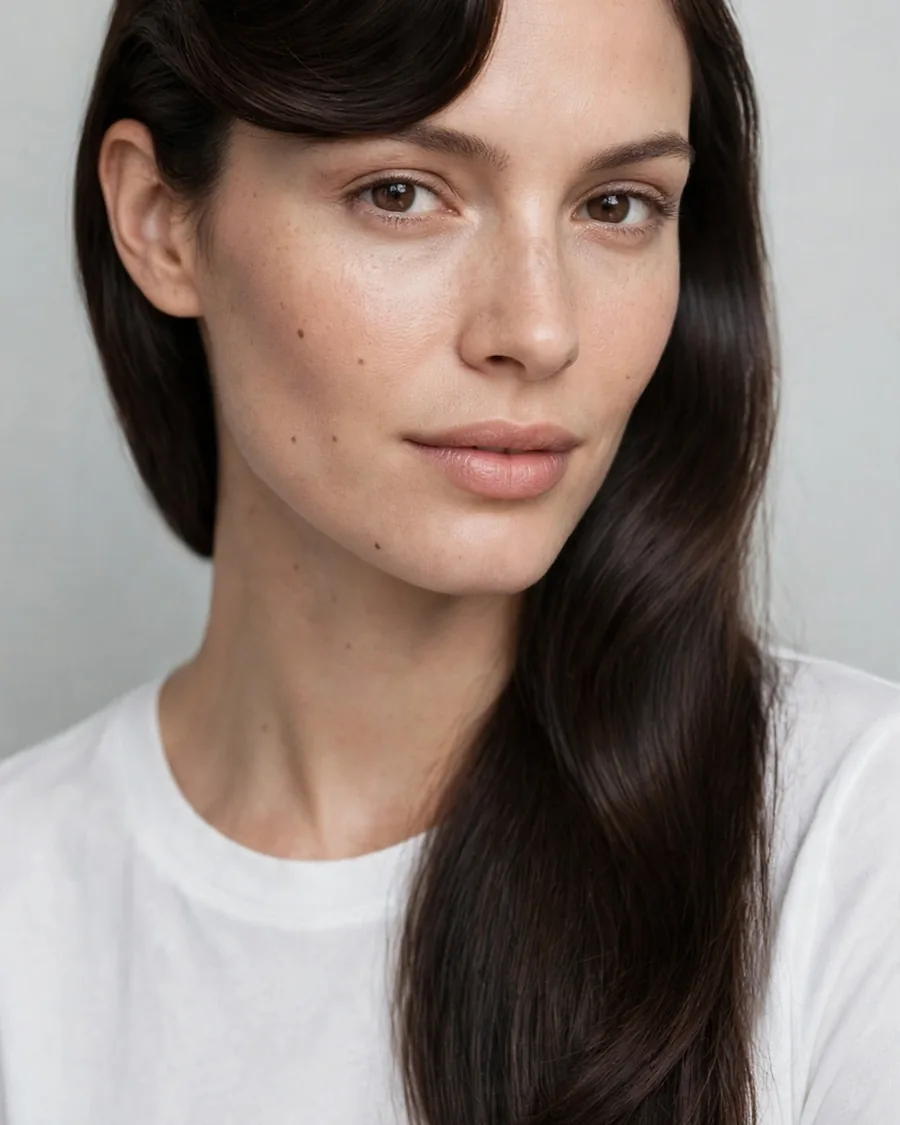
The deep side part blowout is the foundation of the whole side-swept trend, and it remains the most polished way to wear it. Hair is parted far to one side, usually above the arch of the eyebrow, and the longer side sweeps across the forehead in one smooth, continuous curve before blending into the lengths. The rest of the hair falls sleek and straight with a soft bend at the ends, giving the style its expensive, salon-finished feel.
What makes this version work is the absence of any hard line where the fringe ends and the layers begin. Ask your stylist to cut the fringe on a diagonal so the shortest pieces sit just below the cheekbone and the longest pieces reach the jaw. That graduation is what lets the sweep lie flat without flicking outward. Blow-dry with a large round brush, directing the fringe across the forehead and rolling ends under slightly. A lightweight smoothing cream keeps flyaways down without the heavy, lacquered finish that dates the look. This is the safest entry point if you are trying side-swept bangs for the first time.
2. Side-Swept Bangs with Long Layers
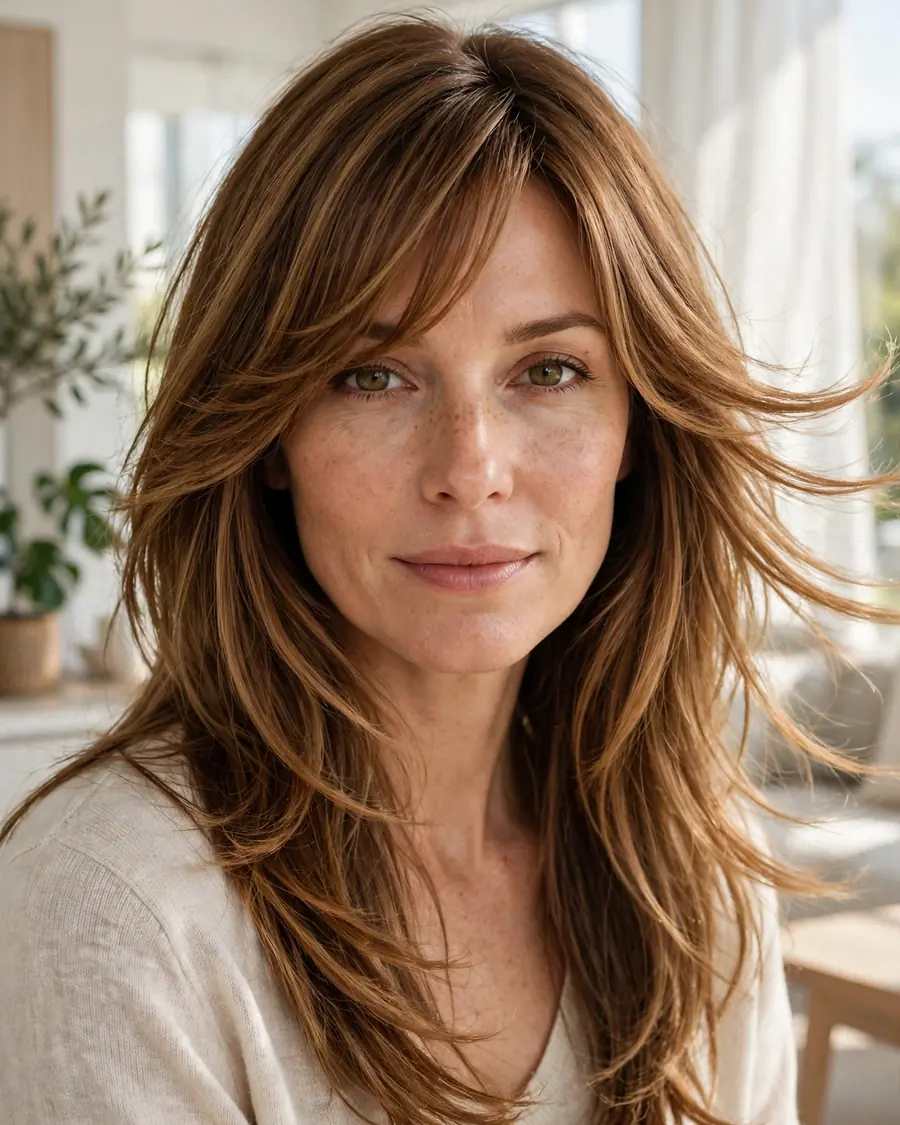
Pairing a side-swept fringe with long, feathered layers is the easiest way to make the look feel current rather than retro. The layers start around the chin and cascade downward, so the fringe reads as the first layer in a longer story instead of a separate piece sitting on top of the hair. Movement is the whole point here: every layer is cut to swing, which means the style looks good even on days when you do little more than air-dry it.
The key detail is weight distribution. If the layers are too heavy, the fringe collapses; if they are too thin, the ends look wispy. Ask for point-cut layers through mid-lengths and ends, keeping the perimeter fairly full so hair still reads long and healthy. Style with volumizing mousse at the roots and a large-barrel iron on the outer sections only, bending each piece away from the face. The result is soft, bouncy, and distinctly different from a center-parted curtain fringe, which splits the face evenly rather than sweeping across it.
3. Sleek Side Fringe on a Bob
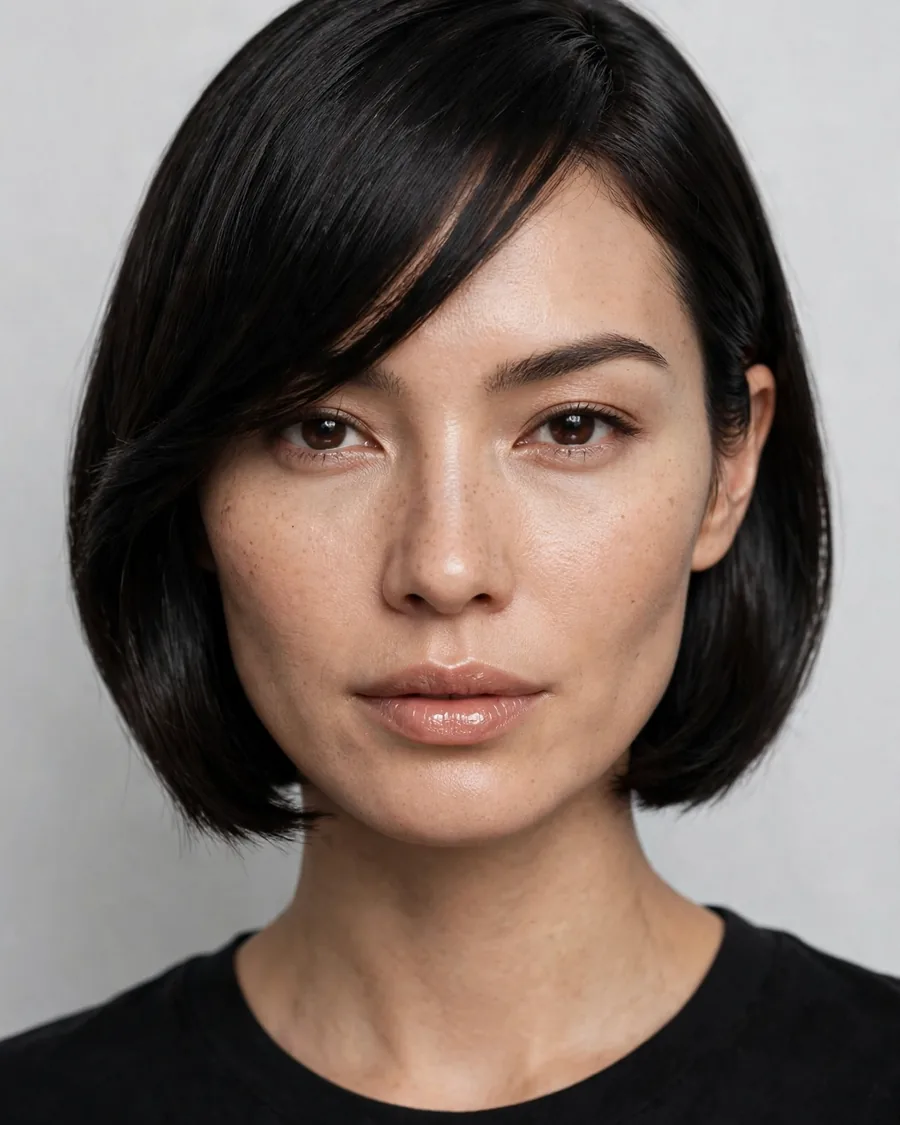
A bob and a side-swept fringe are a natural match, because the diagonal line of the fringe echoes the clean geometry of the cut. Here the fringe is cut slightly shorter and sharper than in the long-layered versions, ending just above the cheekbone, while the bob itself sits at the jaw with a subtly stacked back. The contrast between the angled fringe and the blunt perimeter is what gives this style its graphic, fashion-forward edge.
This version demands precision. A bob shows every uneven snip, so the fringe should be cut dry or nearly dry, with the hair falling exactly as it will be worn. Flat-iron in small sections, bevel ends under, and finish with shine serum rather than heavy oil so the cut keeps its crisp outline. It suits straight and slightly wavy textures best, and flatters a square jawline because the diagonal fringe softens its angles. If you want more bob inspiration before committing, the season’s bob cuts pair beautifully with this fringe direction.
4. Voluminous Side-Swept Curls

Side-swept bangs are not reserved for straight hair. On curls, the fringe becomes a cascade of defined ringlets that sweep across the forehead and open up the face, giving natural texture a deliberate, styled shape. The trick is cutting the fringe while the hair is dry and in its natural curl pattern, so each curl lands exactly where it will live day to day rather than shrinking up unpredictably after the cut.
Volume comes from the part: lifting the roots on the heavier side with a diffuser and root-lifting foam creates height that balances the curls falling across the face. Define the fringe curls with a curl cream, scrunching upward rather than pulling downward, and let everything air-dry or diffuse on low heat. Avoid brushing the fringe out, which turns definition into frizz. This version is especially flattering on round faces, since the height on top and the diagonal sweep both lengthen the overall silhouette.
5. Soft Side Bangs with a Shag Cut

The shag gives side-swept bangs their most relaxed, lived-in expression. Choppy layers, a heavily textured crown, and piecey ends replace the polished blowout’s smooth finish, while the fringe stays long and wispy, breaking across the forehead in separated strands rather than one solid sheet. The overall effect is effortless: great hair on a good day, not an hour in the salon chair.
Texture is everything here. Ask for razor-cut or slide-cut layers through the crown and mid-lengths to create that airy, broken-up silhouette, and keep the fringe long enough to tuck behind the ear on one side. Style with a sea-salt spray or texture cream, scrunching the ends and letting the fringe fall where it wants. A quick pass with a flat iron over just the fringe pieces keeps them from looking messy rather than intentionally undone. This is the best choice if you like low-maintenance styling but still want a visible, on-trend shape.
6. Side-Swept Bangs and a High Ponytail
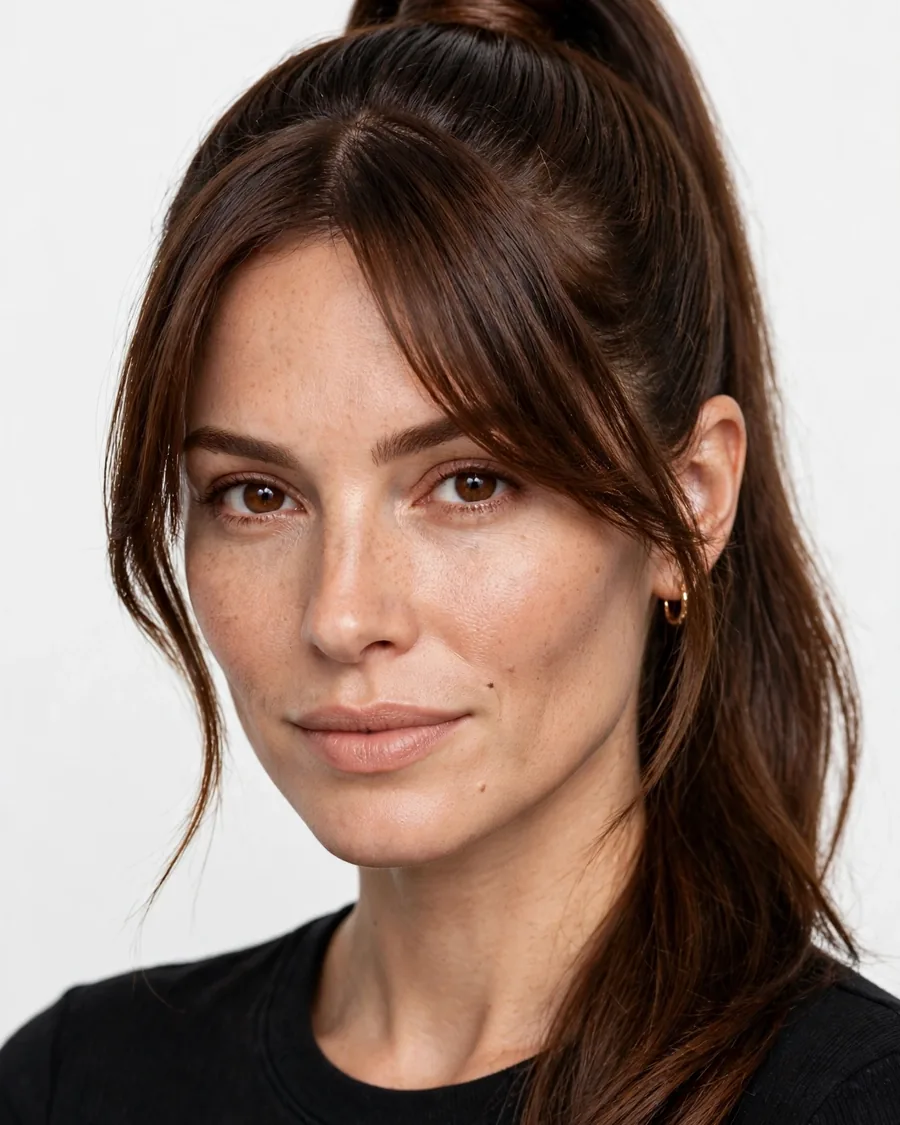
Pulling the hair into a high ponytail while leaving the fringe out is the fastest way to make side-swept bangs feel modern and sporty. The contrast does the work: the sleek, pulled-back ponytail sharpens the silhouette, while the loose fringe softens the face and keeps the style from looking severe.
Placement matters more than anything else. Set the ponytail at the crown, not at the nape, and smooth the sides back with a bristle brush so there is no bump where the fringe separates from the pulled-back hair. Wrap a section of hair around the elastic to hide it, and sweep the fringe across with light-hold spray. For extra polish, curl the ponytail ends loosely so they move. A spritz of shine spray over the finished ponytail adds a healthy gleam without weighing anything down. Keep the fringe piece generous, from the temple to just past the brow, so it reads as an intentional style choice rather than a stray wisp that escaped the ponytail.
7. Wavy Side Fringe with Balayage
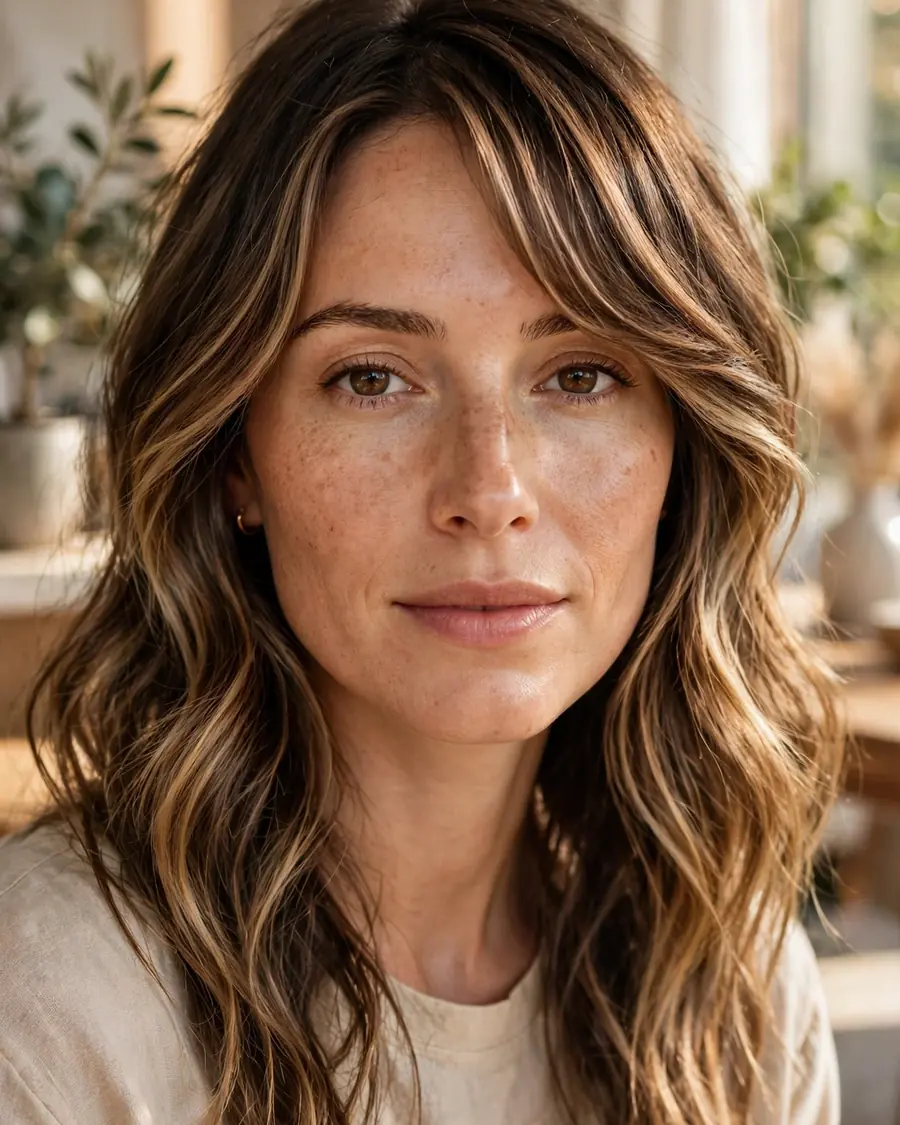
Color changes how a side-swept fringe reads, and balayage is the coloring technique that shows it off best. Hand-painted highlights woven through the fringe and the face-framing layers catch the light every time the hair moves, making the diagonal sweep visible from across the room. The lightest pieces should sit exactly where the fringe curves across the forehead, because that is where the eye naturally lands.
The waves themselves should be loose and uneven, created with a large-barrel iron alternating directions so the texture looks organic rather than uniform. Leave the ends straighter than the mid-lengths; that contrast keeps the style from turning into a full curl and preserves the relaxed fall feel. Maintenance is straightforward: color-safe shampoo keeps balayage from turning brassy, and a gloss every six to eight weeks revives shine. This is the version to choose if you want your fringe to double as a showcase for your color.
8. Side-Swept Bangs on a Pixie Cut
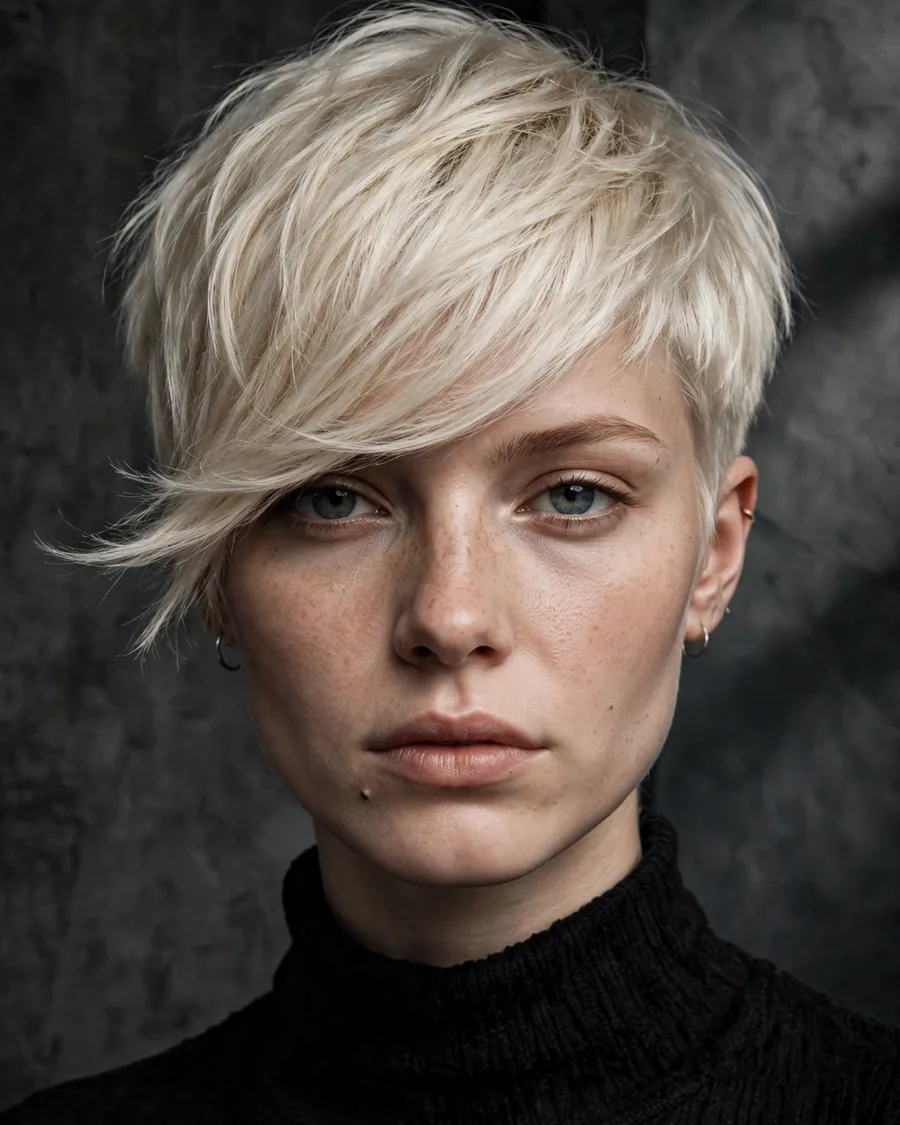
A pixie might seem like the last cut that could carry a fringe, but the long, side-swept version is exactly what keeps a pixie feminine and versatile. The top stays long, sometimes reaching the cheekbone, and sweeps across the forehead in a dramatic diagonal, while the sides and back stay closely tapered. That single long piece transforms the pixie from a uniform crop into a style with real direction and movement.
The cut lives or dies on the taper. The nape and sides should be faded or tightly tapered so the long top has something to contrast against; otherwise the style reads as an overgrown crop rather than a deliberate pixie. Style with matte pomade, directing the top across the forehead with your fingers and pinching ends for separation. It also grows out gracefully, as the sweep simply lengthens and tucks behind the ear. This is the boldest version in the collection, and the one that photographs best.
9. Glossy Side Part for Fine Hair
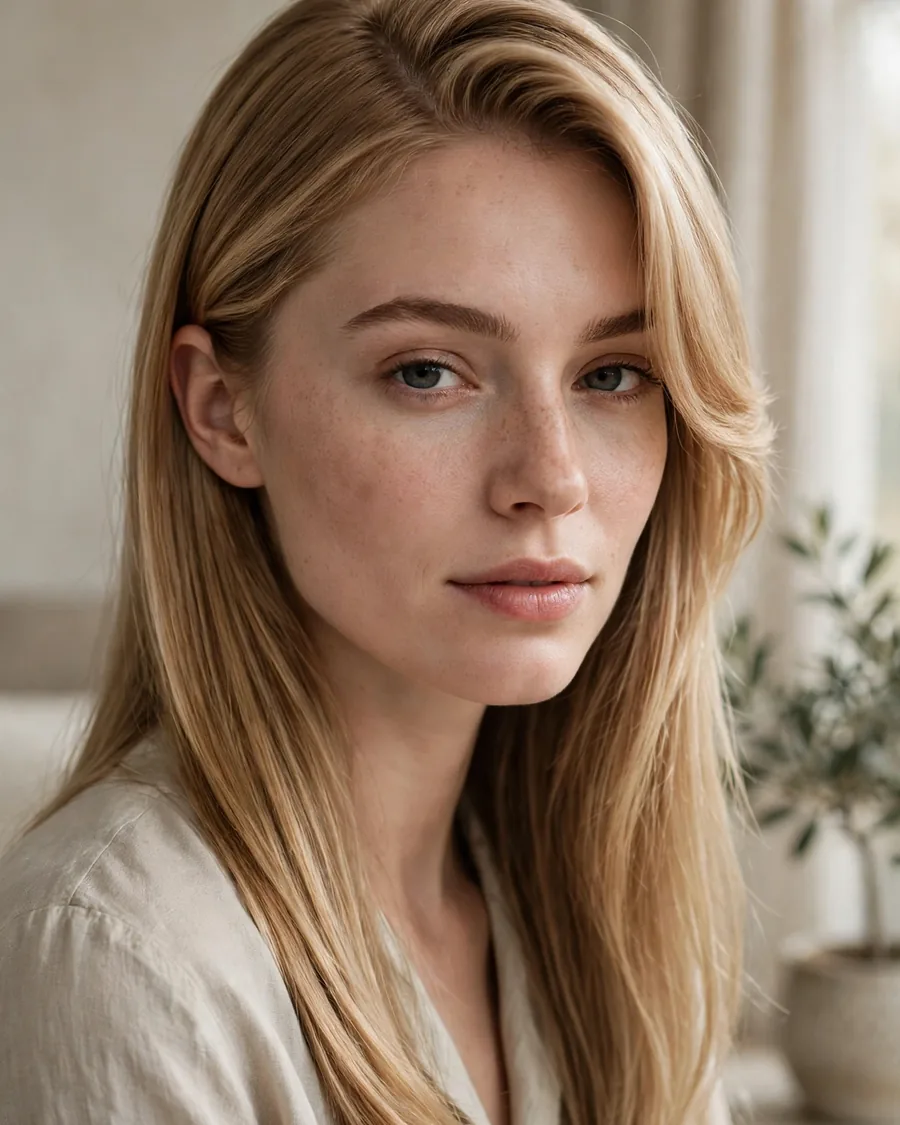
Fine hair benefits from a side-swept fringe more than any other texture, because the deep part instantly creates the illusion of volume where a center part would expose the scalp. Sweeping the bulk of the hair to one side doubles the visual density on that side, and a glossy, healthy finish sells the effect completely. The goal is fullness without stiffness, which means the products matter as much as the cut.
Start with volumizing shampoo and root-lifting spray applied only at the crown and along the part. Blow-dry the fringe in the opposite direction first, then flip it over into the sweep; that over-direction is what builds lasting lift at the root. Keep the layers long and blunt rather than heavily thinned, since thinning fine hair only makes it look thinner. A pea-sized amount of shine serum on the ends finishes the look. Skip heavy oils and thick creams, which flatten fine hair within hours. With the right foundation, this version holds its shape from morning to evening.
10. Side-Swept Bangs with a Low Bun

For evenings and formal occasions, the low bun paired with a side-swept fringe is the most elegant version in this collection. The hair is gathered low at the nape, twisted or coiled into a soft chignon, while the fringe stays loose and sweeps across the forehead, framing the face and preventing the updo from looking severe. A few face-framing pieces left out around the temples complete the softness.
The bun itself should not be pulled too tight. A looser, slightly textured chignon photographs better and feels more comfortable over a long evening, and it lets the fringe remain the focal point rather than competing with a sculpted updo. Secure with pins that match your hair color, and mist with a flexible-hold spray so the fringe can still move. A mist of texturizing spray on the fringe before pinning keeps it from slipping flat during a long evening. It also converts from a day look in minutes: twist the blowout from the first idea low at the nape.
How to Get Side-Swept Bangs
Start by deciding how long you want the fringe to be, because that choice drives everything else. A cheekbone-length sweep is the most versatile and the easiest to grow out; a brow-length version makes more of a statement but needs more frequent trims. Bring reference photos to your appointment and show your stylist exactly where you part your hair in daily life, since a fringe cut on a different part will never fall correctly. Ask for the fringe to be cut dry, with a diagonal line so the shortest pieces sit near the part and the longest blend into your layers.
At home, styling a side-swept fringe takes about five minutes. On damp hair, apply volumizing mousse or smoothing cream through the fringe, then blow-dry across the forehead with a round brush, directing airflow downward to keep the cuticle smooth. A Dyson Airwrap smoothing attachment gives the same finish with less heat damage. Finish with a light mist of flexible-hold hairspray, and avoid touching the fringe throughout the day, since oils from your hands break down the style faster than anything else.
Pro Tips for Styling Side-Swept Bangs
Train your part early. For the first two weeks, blow-dry the fringe in its swept direction after every wash, even if you plan to wear it up; hair follows the direction it dries in. Second, trim the fringe every four to six weeks. Side-swept bangs grow out more gracefully than blunt ones, but once the longest pieces pass the jawline they stop reading as a fringe and start reading as a layer, which changes the whole shape.
Third, protect the style from humidity and heat damage. A heat protectant is non-negotiable before flat-ironing or curling, and treatments from Olaplex or Living Proof keep hair strong enough to hold a smooth sweep. Color Wow’s Dream Coat is a popular choice for fighting frizz in damp weather. Finally, keep the fringe clean between washes: a quick pass with dry shampoo at the roots absorbs oil exactly where the fringe touches the forehead, which is where it loses its shape first.
Frequently Asked Questions
Do side-swept bangs suit a round face?
Yes, they are one of the best fringe choices for a round face. The diagonal line across the forehead breaks up the face’s symmetry and draws the eye sideways and upward, which visually lengthens the face. Ask for a longer sweep ending near the cheekbone rather than a short, blunt piece.
How often should I trim side-swept bangs?
Every four to six weeks is ideal. Unlike blunt bangs, a side-swept fringe grows out gracefully as its longest pieces blend into your layers. Still, regular trims keep the diagonal shape crisp and stop the fringe from falling into your eyes.
Can I style side-swept bangs without heat?
Absolutely. On damp hair, comb the fringe into its swept direction, clip it flat against the forehead with a duckbill clip while it air-dries, and remove the clip once dry. The result is a softer sweep that works especially well on wavy and curly textures.
Will side-swept bangs work with glasses?
Yes, and they often work better than blunt bangs, which can compete with frames. A side-swept fringe sits above or alongside the frames rather than across them, so it rarely interferes with your line of sight. Just tell your stylist you wear glasses so the fringe length is set with your frames on.
Final Thoughts
Side-swept bangs earn their fall 2026 comeback because they offer something few fringes can: real versatility without a dramatic commitment. Whether you choose the polished blowout, the textured shag, or the bold pixie version, the diagonal sweep adapts to your length, texture, and routine instead of demanding a new one. Pick the version that matches how you actually style your hair each morning, bring a photo to your stylist, and give the part two weeks to settle. Save the looks you love most, and let the sweep do the rest.