
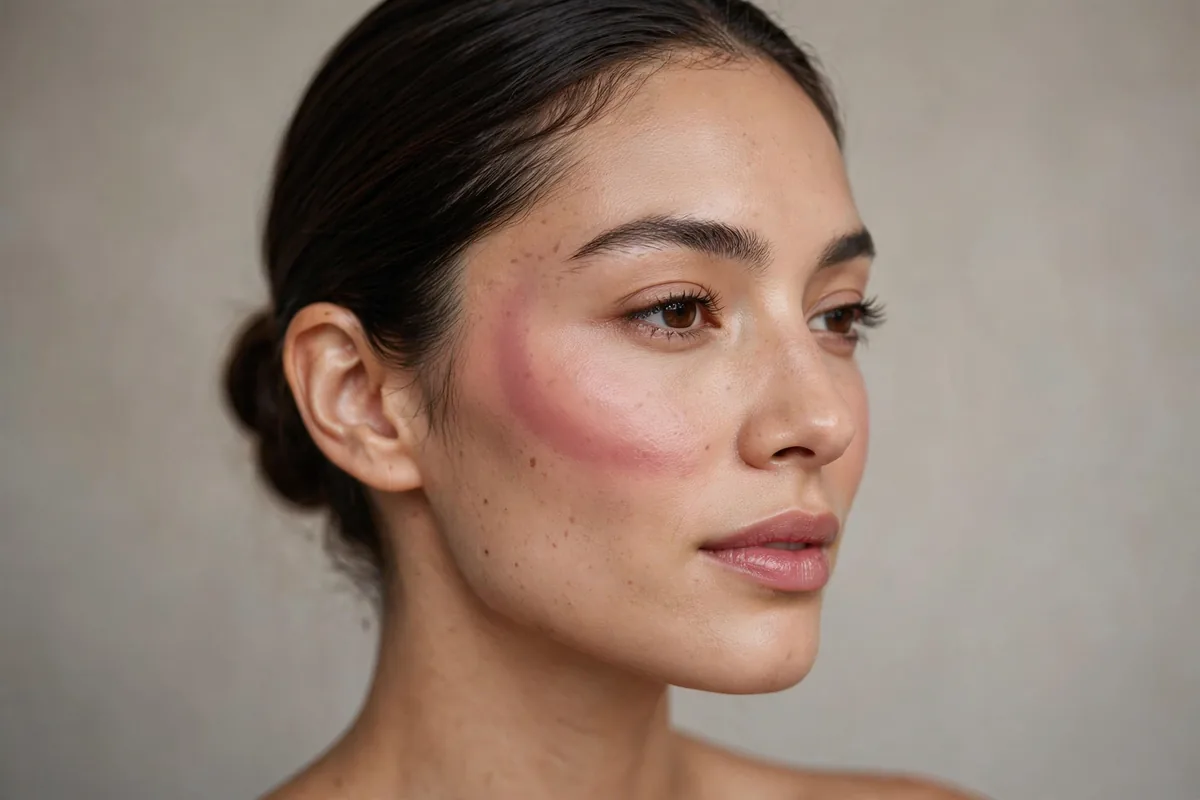
Berry blush has a way of making everything around it look intentional. Unlike a peach flush that simply warms the face, a berry tone — blackberry, raspberry, crushed plum — sits cooler on the skin and reads as deliberate makeup rather than a trick of the light. That’s why it resurfaces every fall: it flatters nearly every complexion and pairs with everything the season already asks for, from dark lips to smoky eyes.
The ten looks below treat blush as the lead actor. You’ll see it draped toward the temples, pressed sheer across the nose, layered over bare skin, and built into full monochromatic moments. Different finishes — matte, satin, dewy — change the mood completely, and placement changes where the eye travels on your face. Save the ones that match your coloring, and use the application guide at the end to nail the placement on the first try.
1. Draped Berry Blush From Cheekbone to Temple
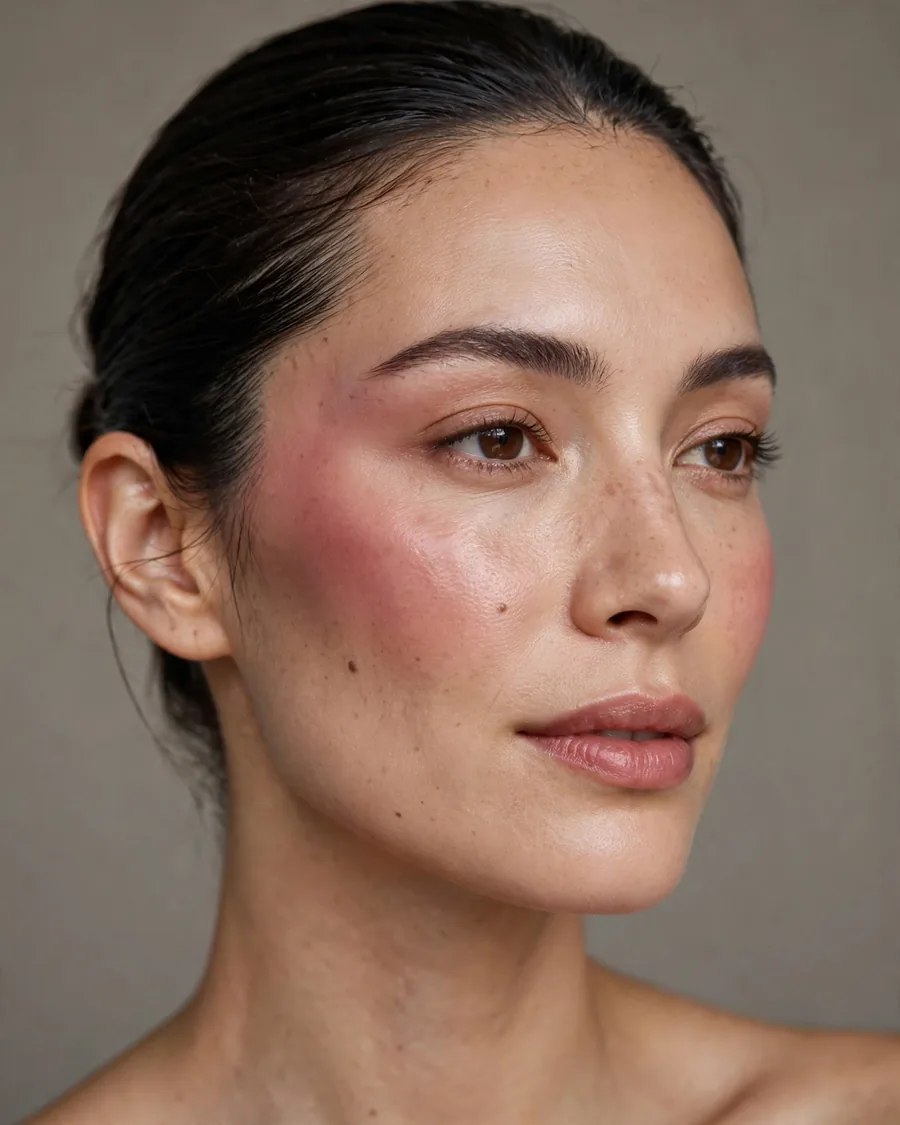
Blush draping is the technique that made berry blush famous, and it earns the top spot here. Instead of confining color to the apples, pigment starts at the high point of the cheekbone and sweeps upward toward the temple in a soft C-shape, almost replacing contour. The cool berry tone creates shadow where it’s deepest and lift where it fades — sculpted, with no brown contour shade involved.
Use a cream or cream-to-powder formula: Rare Beauty Soft Pinch Liquid Blush in Faith gives you the working time to blend upward before it sets. Press a small amount along the cheekbone, then buff the edge toward the temple so no line remains. Pair with a sheered berry lip and quiet eyes — one wash of taupe shadow, one coat of mascara. This placement suits round and full faces especially well, since the diagonal sweep visually lifts the cheek area. On very fair skin, build in two thin layers; berry pigment is strong and draping covers a lot of real estate.
2. Sunset Blush Gradient in Berry and Warm Coral
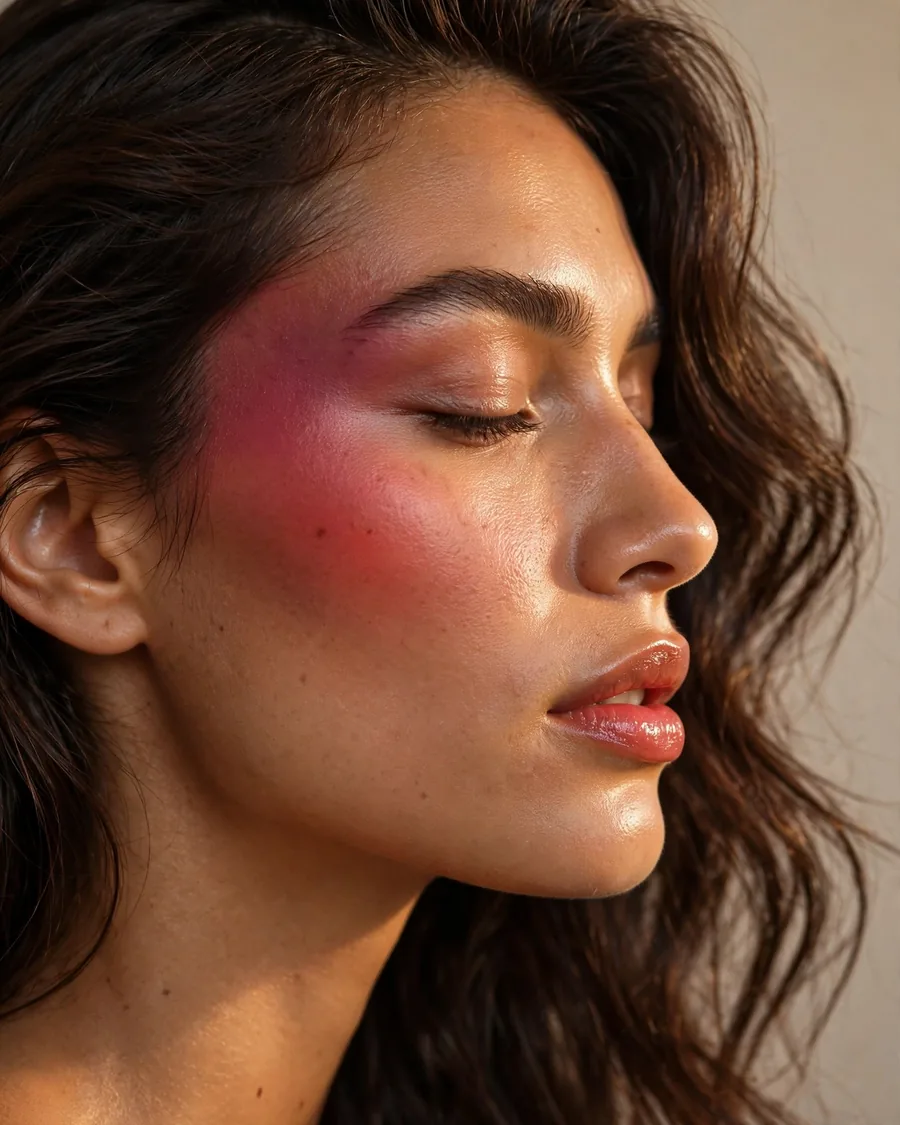
Sunset blush stretches the draped shape into a gradient: berry concentrated at the back near the temple, melting into warm coral over the apple of the cheek. The blend is the whole point — a seamless fade, not two stripes. The warm center keeps the look from reading too cool, while the berry tail gives it unmistakable fall depth.
Build it with the sandwiching technique: apply a berry cream blush first (Saie Dew Blush in Spicy), blend the edges, then tap a warm coral powder over just the apples and diffuse where they meet with a fluffy brush. Powder over cream locks the color down for long wear. The coral center flatters medium and tan skin tones while the berry edge adds contrast. Keep lips in the same family — a coral-berry gloss rather than a deep lipstick — so nothing competes with the cheek gradient. On oily skin, set the cheek with a whisper of translucent powder after blending, since layered cream-plus-powder can turn shiny by midday.
3. Boy-Beat Berry Blush Across the Nose Bridge

The boy-beat placement — blush swept straight across the nose bridge connecting both cheeks — gives berry its most youthful, cold-weather reading. It mimics the flush of walking through crisp autumn air, and berry sells that effect better than pink because it echoes the actual color blood brings to the skin’s surface. Keep the bridge application sheer; it should continue the cheek color, not form a stripe.
Apply with a cream stick or fingers: tap berry color onto the apples first, then drag the residue lightly across the bridge of the nose. Rhode’s Pocket Blush in a berry shade or Glossier Cloud Paint in Storm both melt in well. Keep everything else restrained — tinted skin, groomed brows, berry-tinted lip balm. This is the most forgiving idea for beginners since precision doesn’t matter, and it photographs beautifully. One caution: if your nose gets oily, use a powder berry blush for the bridge portion so the center of the face doesn’t break down by afternoon.
4. Berry Underpainting Beneath a Sheer Base
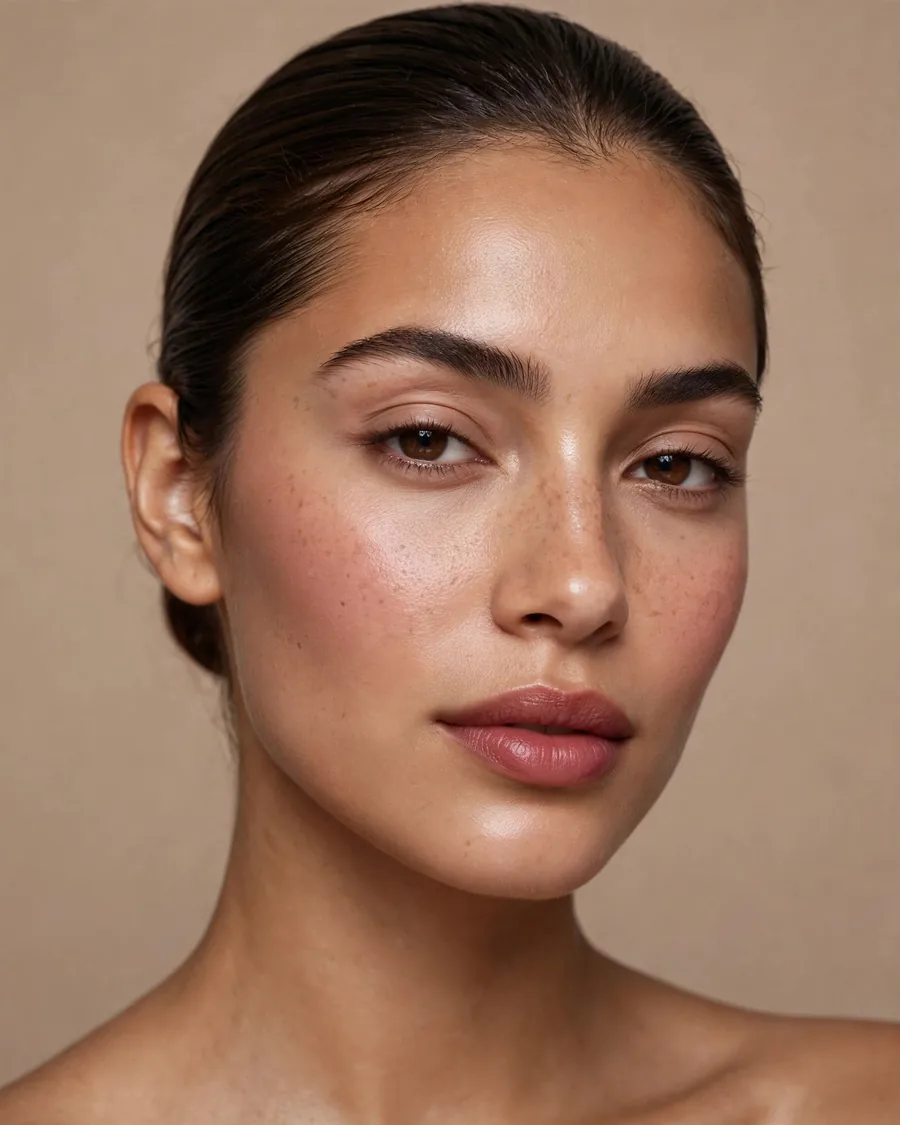
Underpainting flips the usual order: blush goes on first, over moisturizer or primer, and a sheer foundation goes over it. The berry shows through as a lit-from-within flush that looks like it’s coming from under the skin rather than sitting on top. It’s the most naturalistic way to wear a strong shade.
Use a liquid berry blush — the technique needs a formula that won’t pill under foundation, so Rare Beauty Soft Pinch or a similar serum-like liquid is ideal. Dot it on the high cheeks, blend with a damp sponge, then stipple a sheer skin tint over the top (stippling, not sweeping, so you don’t move the blush). The result reads as a deep, healthy flush with zero visible edges. This suits anyone who finds berry intimidating — the base layer dials intensity down by about half, and blush trapped under foundation fades slower than blush on top. Pair with a satin berry lip in the same depth and a single neutral shadow on the eyes.
5. Monochromatic Berry: Satin Blush, Berry Eyes, Bitten Lip
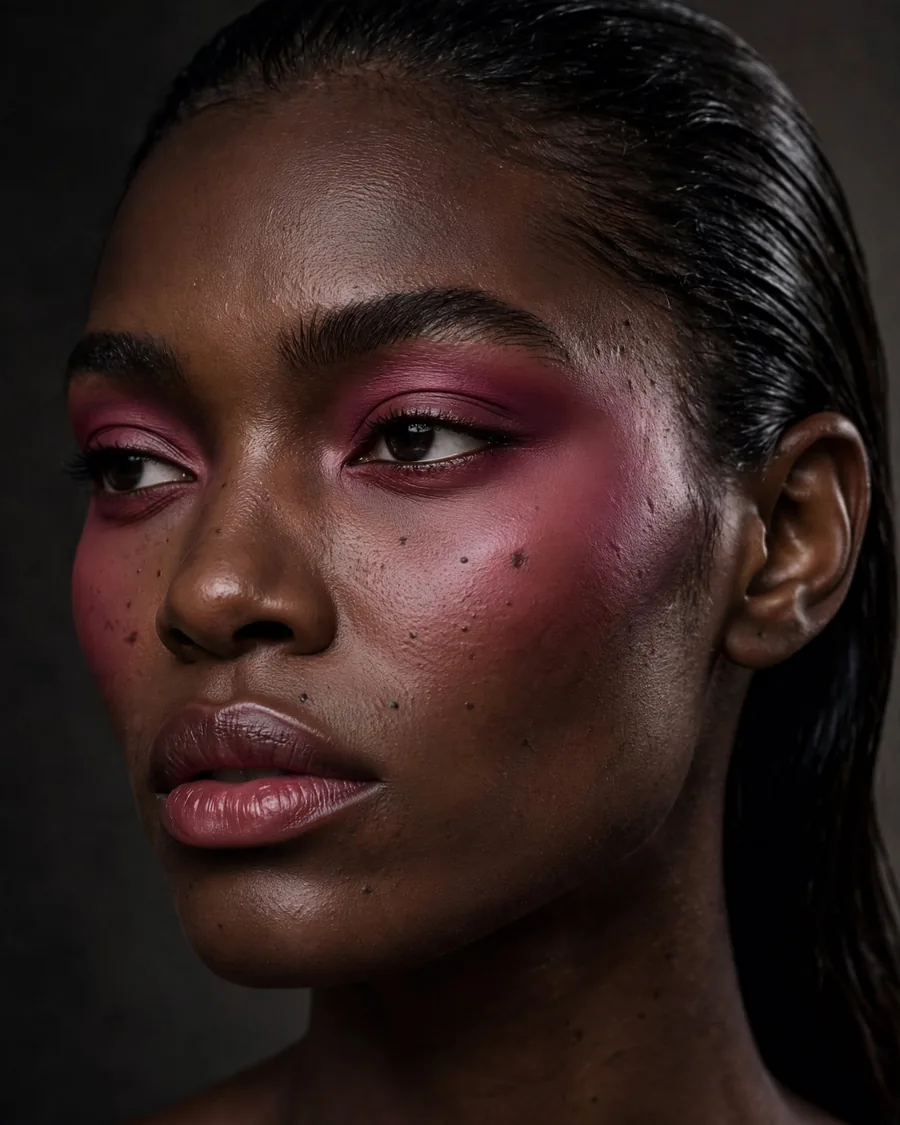
The full monochromatic moment commits to one color story: satin berry blush, a wash of berry eyeshadow, and a bitten, just-ate-cherries lip. When every feature shares one undertone, the face looks pulled together with almost no effort. The bitten lip is essential — a fully opaque berry lip with full berry cheeks tips into costume, while a diffused edge keeps it modern.
Sweep a matte berry shadow across the lid and softly under the lower lash line, skipping liner. Then press satin berry blush onto the cheeks — NARS blush in Dominate gives glow without glitter. Finish by pressing berry lipstick into the center of the lips and blurring outward with a finger. Made for evenings, this photographs beautifully because the single color story reads clearly on camera. It suits deep and medium skin tones especially well, where berry-on-berry has enough contrast to register. If your lips are naturally pigmented, blot first so the lipstick shade stays true.
6. Cool-Toned Berry Blush on Deep Skin
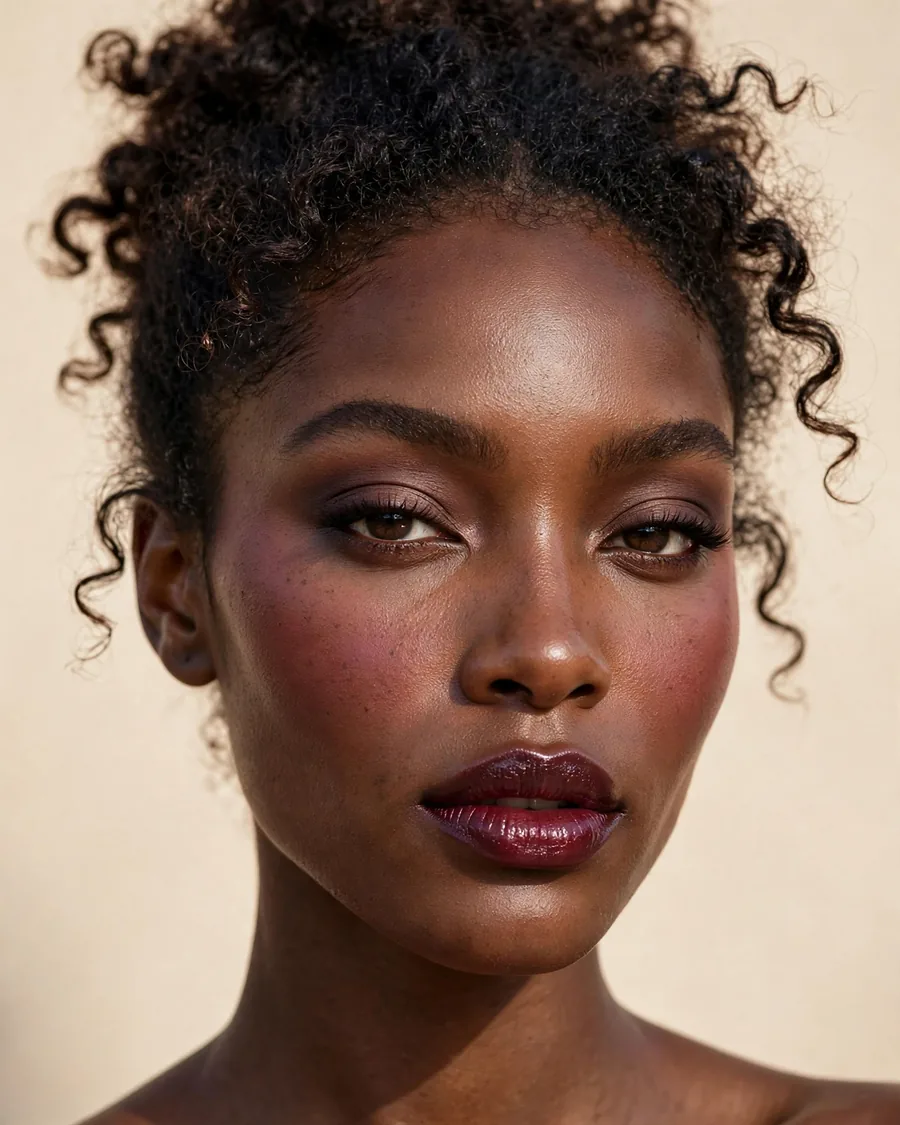
On deep skin, berry blush does something it can’t do on fair skin: it shows up as pure color rather than just flush. Shades with plum and blackberry depth — Fenty’s Summertime Wine, for example — sit vividly without the ashy cast lighter pinks can leave. Placement stays classic on the apples and high cheekbones — with payoff this good, the shape needs no complication.
Choose strong pigment with minimal white base — chalky binders cause ashiness. A rich powder with a dense brush or a cream tapped on with fingers both melt in well. Balance the strong cheek with a deep berry or espresso lip; our roundup of dark red lip looks for fall has pairings in exactly this color family. Keep the eye simple: a soft brown smoky wash and defined lashes. It’s also the best idea here for oily skin — well-set powder berry fades evenly rather than patchily. Check intensity in daylight; indoor lighting flatters berry more than the sun does.
7. Dewy Berry Cream Blush With Glassy Highlights

This is berry blush at its most luminous: a cream formula at full dew, with a glassy highlight placed exactly where the blush sits deepest. The shine lives inside the berry color itself, making the cheek look wet and dimensional rather than powdered. It reads expensive on camera, and cream does the blending for you.
Mix a dewy berry cream — Saie Dew Blush in Chilly — with a touch of liquid highlighter on the back of your hand. Press the mixture onto the high apples with fingers, then tap pure highlighter at the very center of the placement. Keep surrounding skin satin, not matte: luminous primer, no heavy powder. Pair with a clear gloss lip and feathered brows; a strong lip competes with the shine story. Best for dry and normal skin — on very oily skin the dew can read as grease by evening, so set the T-zone and keep dew to the cheeks. In photos, angle toward the light to catch the glassy reflection.
8. Matte Berry Powder Blush With a Soft Smoky Eye
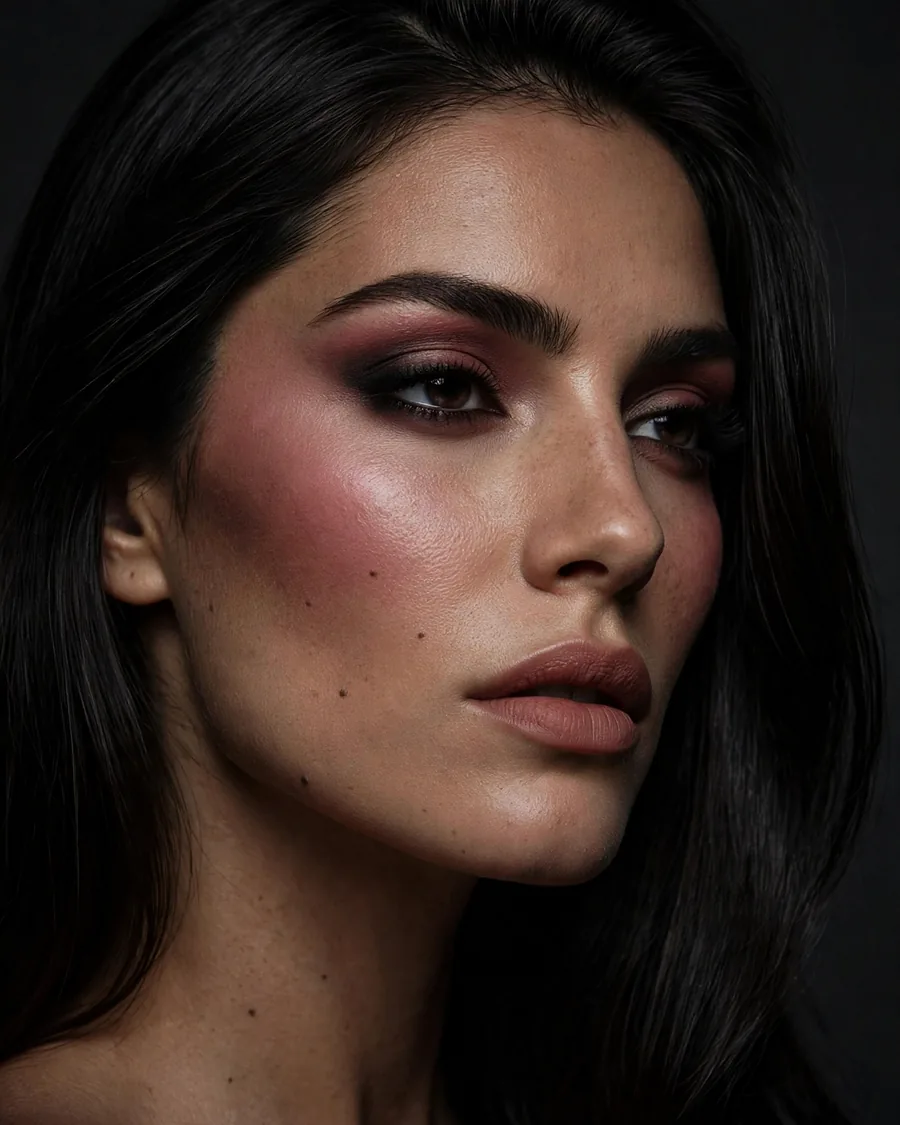
Matte berry blush with a soft smoky eye is the evening anchor of this collection. The matte finish keeps the cheek modern and velvety — no shimmer competing with the eye — while the cool berry tone echoes the smoky shadow and ties the face together. Matte pigment holds more presence than sheen under artificial light, so the blush stays visible after dark.
Apply a matte berry powder (NARS Dominate or a similar cool raspberry) with a medium fluffy brush, keeping placement slightly higher than usual so it doesn’t drag the face down. Blend a soft brown-black shadow through the crease and lash lines, then smudge the same berry blush lightly over the lid as a transition shade — it harmonizes the two features without a separate product. Finish with a nude-berry lipstick between your natural lip color and the blush depth. This pairing slots neatly into the fall makeup looks you’ll want to try in 2026 alongside the season’s deeper lip moments. Blot once before heading out; this is a look that should stay exactly where you put it.
9. Sandwiched Berry Blush: Liquid Base, Powder Seal
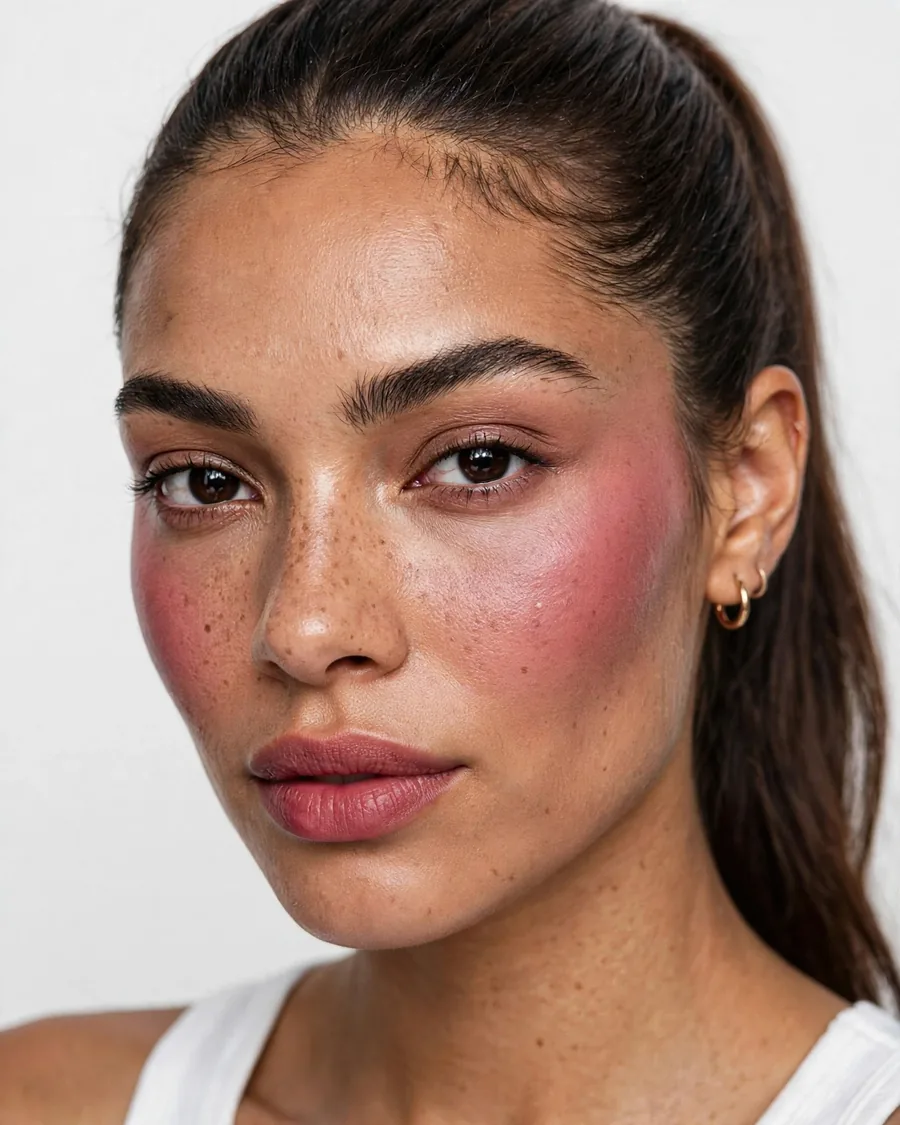
Blush sandwiching — liquid blush first, powder in the same family pressed over it — is behind cheeks that still look freshly applied at 10 p.m. The liquid layer gives depth and a skin-like meld; the powder sets it and adds surface color. In berry tones it also solves patchiness: where the liquid is sheer the powder covers, and where powder looks powdery the liquid underneath keeps it skin-like.
Start with a berry liquid (Rare Beauty Soft Pinch in Faith) blended over the apples and up toward the temples. Let it set a minute, then press berry powder over the same area with a stippling motion — don’t sweep, or you’ll move the liquid layer. The double layer means a lighter hand with each product than you’d use alone. The most practical idea here for long days with no touch-ups — and finish-agnostic, so pair it with a bold lip or a bare face equally. If you only buy one berry blush, make it a liquid: it doubles as the base layer here and wears beautifully on its own, sheered out.
10. Sheer Berry Wash on Bare Skin With a Gloss Lip
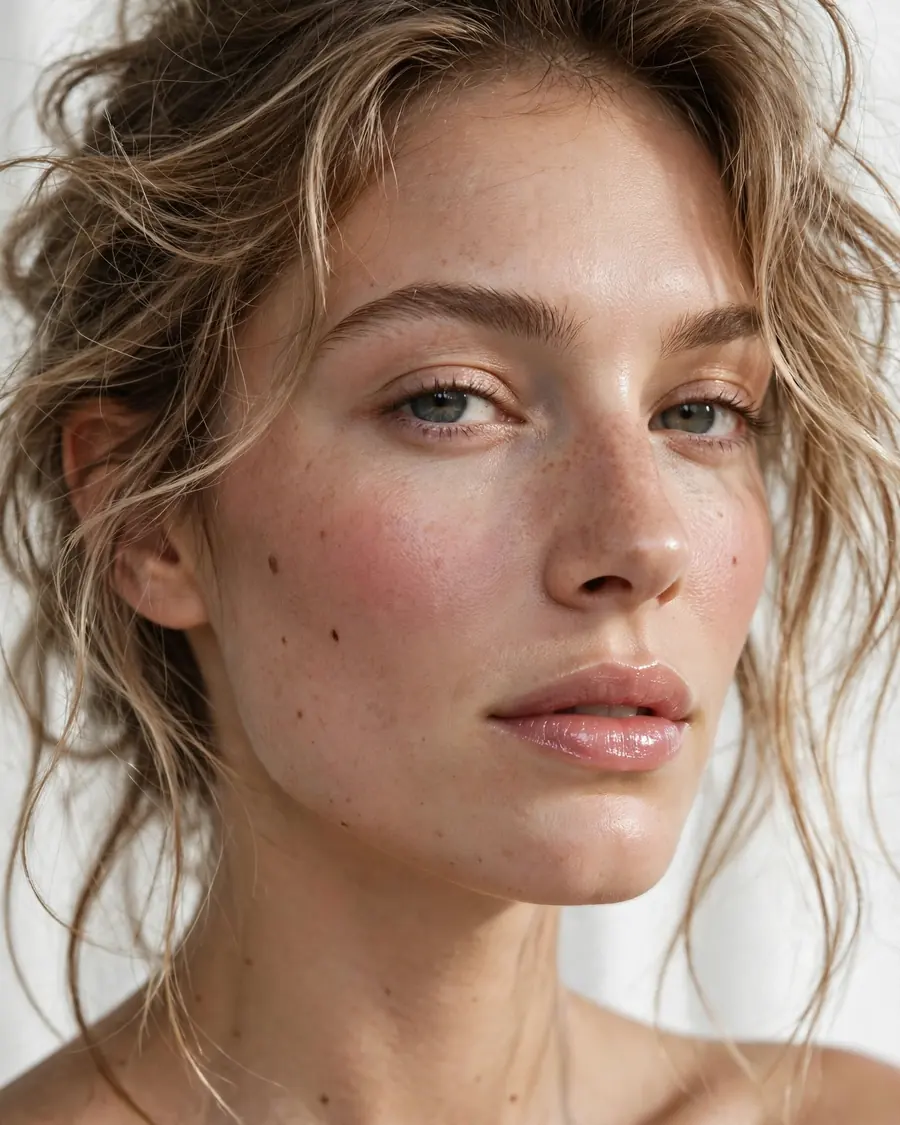
The quietest idea here is also the most wearable: a sheer wash of berry blush over otherwise bare skin, finished with a clear or lightly tinted gloss. No foundation, no contour, nothing on the eyes beyond curled lashes — sheered out, the berry reads as a healthy flush rather than makeup. For days you want in on the trend without a full face.
Mix a pea-sized amount of berry cream blush with a drop of moisturizer on the back of your hand, then press over the apples and blend upward with fingers. The moisturizer dilutes pigment evenly — more reliable than using a tiny amount of full-strength product. A berry-tinted gloss ties it together without weight. This suits every skin tone since the sheerness self-adjusts, and at under three minutes it’s the fastest idea here. The same sheer base layers well under a bolder lip from the dark red lip looks roundup without the face feeling overdone. Keep blotting papers handy instead of powder, which can look cakey where there’s no base.
How to Apply Berry Blush Without Overdoing It
Berry pigment runs stronger than the pink or peach blush most people know, so start with half the product you think you need. Creams and liquids are most forgiving for beginners because fingers and damp sponges sheer them out naturally, while powders demand a lighter hand.
Placement changes the whole message: apples read youthful, temples read sculpted, across the nose reads effortless. Pick your placement before you pick up the product — switching mid-application is how muddy cheeks happen. Blend edges invisibly but keep the center saturated.
Check your work against a window. Berry that looks perfect under warm bathroom light can read too subtle or too intense in daylight. Too strong? Press a clean damp sponge over the area. Faded? Add one thin layer to the center.
Pro Tips for Making Berry Blush Work for You
Match the blush undertone to your skin’s undertone. Cool and neutral skin takes blue-based berries — raspberry, blackberry, crushed plum — straight on. Warm skin does better with berries leaning red, like warm cherry. When in doubt, test on the jawline: the right berry melts in, the wrong one sits on top.
Layer textures. A cream blush set with a matching powder lasts hours longer than either alone. If you own just one berry blush, press translucent powder lightly over the top to lock it down.
Let the blush dictate the lip — a clashing warm nude lip makes the face look disjointed. A clear gloss, a lip color one shade deeper than your natural tone, or a blotted-down berry tint all harmonize.
Finally, treat berry blush as a workhorse: one tube covers the sheer wash, the draped sculpt, and the monochromatic moment depending on how much you apply and where.
Frequently Asked Questions
Does berry blush work on fair skin, or will it look too dark?
Beautifully — fair skin shows berry’s cool undertones most clearly. Use a sheer layer, build gradually, and favor cream or liquid formulas.
What lip colors pair best with berry blush?
Stay in the same undertone family: berry glosses, bitten stains, nude-berry lipsticks, and deep plum or dark red lipsticks all harmonize. A clear gloss never clashes.
Is cream or powder better for berry blush?
Creams and liquids are more forgiving — they blend seamlessly and sheer out easily. Powders give more precision and better longevity on oily skin. For longest wear, layer both.
Can I wear berry blush with a bold eye or dark lip?
Yes, with balance. With a smoky eye, keep the blush matte and the lip quiet. With a dark lip, sheer the blush out so the two don’t compete.
Final Thoughts
Berry blush earns its fall staple status because it’s both a trend and a tool — the color is current, but the techniques behind it are permanent additions to your routine. Pick the placement that matches your face and your day: draped for structure, sheer for ease, monochromatic for impact. Buy one good berry formula in the right undertone, learn the sheer-versus-build control, and you’ll get ten different looks from a single product. Save the ideas that caught your eye, try the sheer wash first if you’re new to the shade, and let the blush do what it does best — make the rest of your makeup look planned.