10 Men’s Fall Outfits Worth Trying in 2026
Fall is the season menswear was built for. Cooler air means real texture — wool, corduroy, suede, waxed canvas — and permission to wear more of your closet at once. The strongest looks this year keep one foot in classic territory and one in the current moment: longer coats over lean trousers, chore jackets worn with the confidence of tailoring, heritage knits paired with clean denim instead of fuss. Across these ten outfits you will find polished date-night options, off-duty workwear, and a couple of street-ready uniforms, all assembled from pieces that mix freely with one another. Every idea breaks down exactly what goes into the look, why the proportions work, and the small adjustments that make it yours.
1. The Camel Overcoat Over a Charcoal Roll-Neck
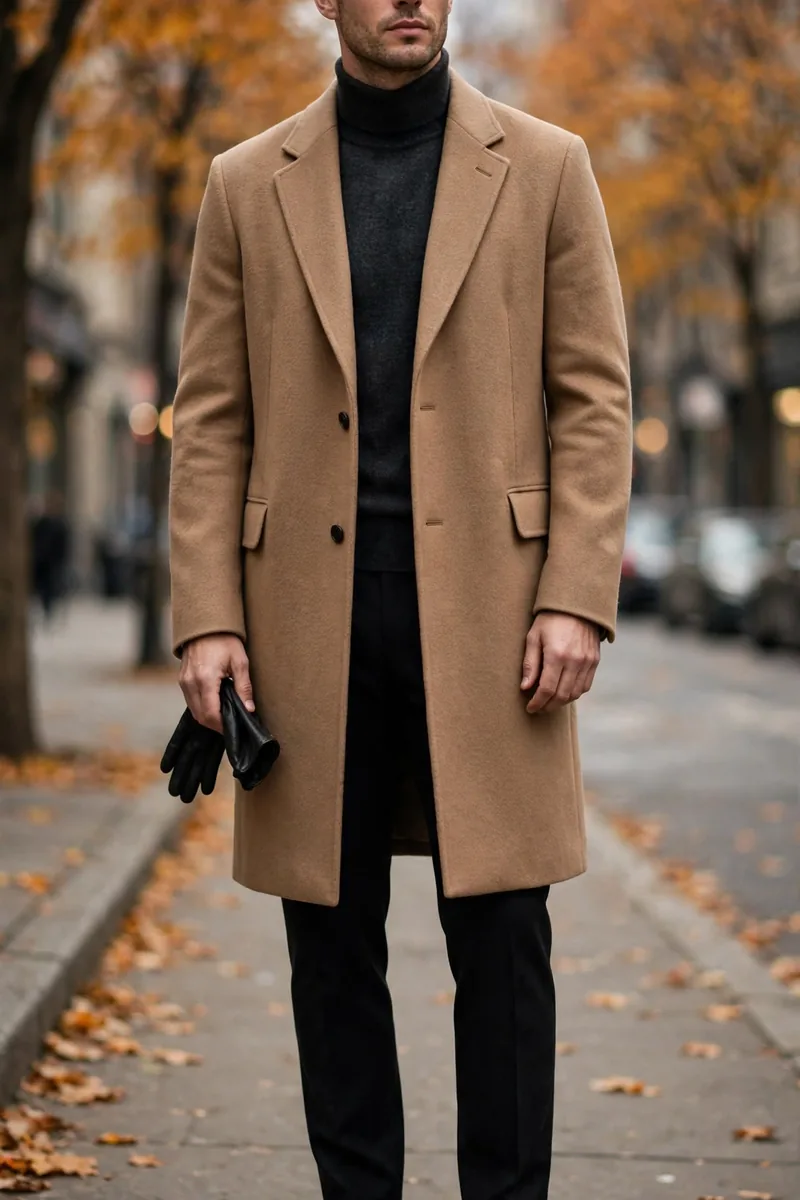
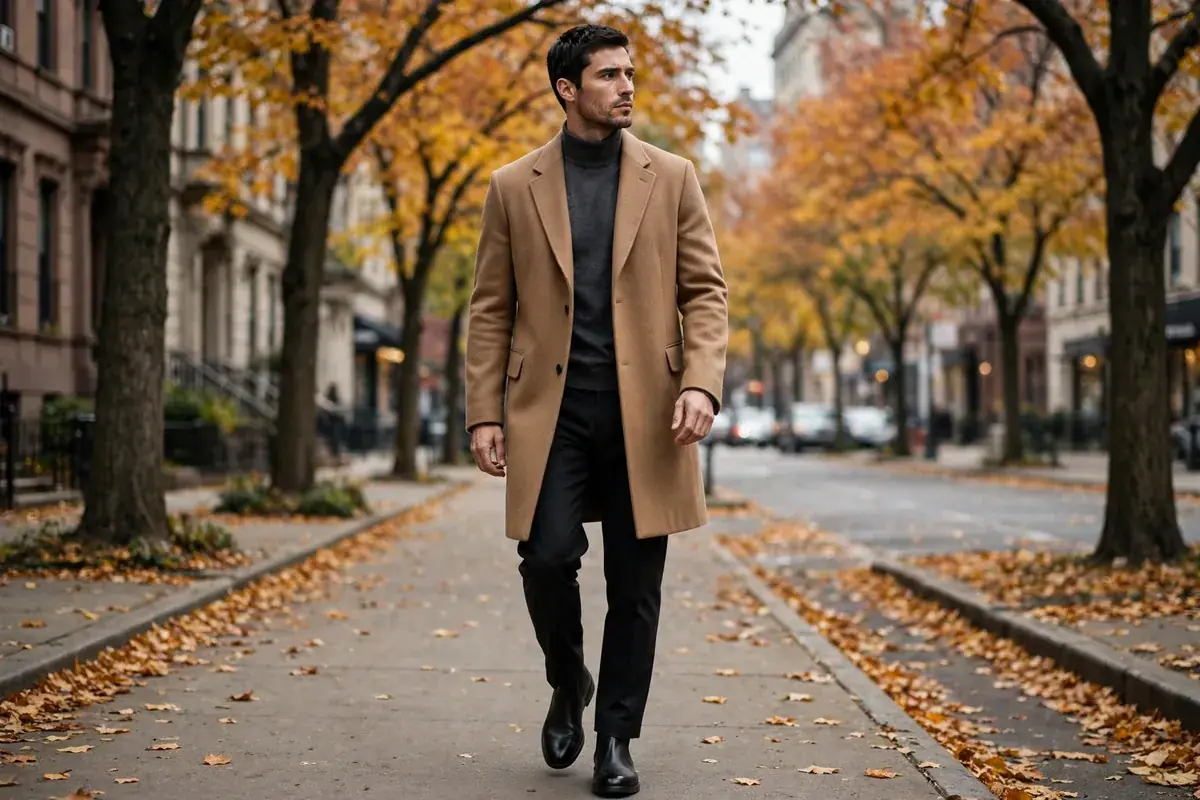
Few combinations announce fall like a camel overcoat over dark, quiet layers. Start with a double-faced wool overcoat in warm camel, cut just above the knee with a clean notch lapel. Under it, a charcoal merino roll-neck sits close without bunching, its fine 12-gauge knit keeping the torso smooth. Black straight-leg wool trousers continue the dark column, and polished black Chelsea boots finish with a sharp line from knee to toe.
The long coat adds vertical weight, so the slim dark base keeps the silhouette from going shapeless. Camel does all the talking — everything else deliberately steps back. This covers client dinners, evening plans, and days you want to look considered without trying too hard. Shorter men should pick a knee-length cut so the coat does not swallow the frame.
Swap the black trousers for charcoal flannel on softer days, or add a rust scarf when it turns cold. A dark brown leather watch and black leather gloves are the only accessories needed.
2. Olive Chore Coat, Ecru Thermal, and Raw Selvedge Denim
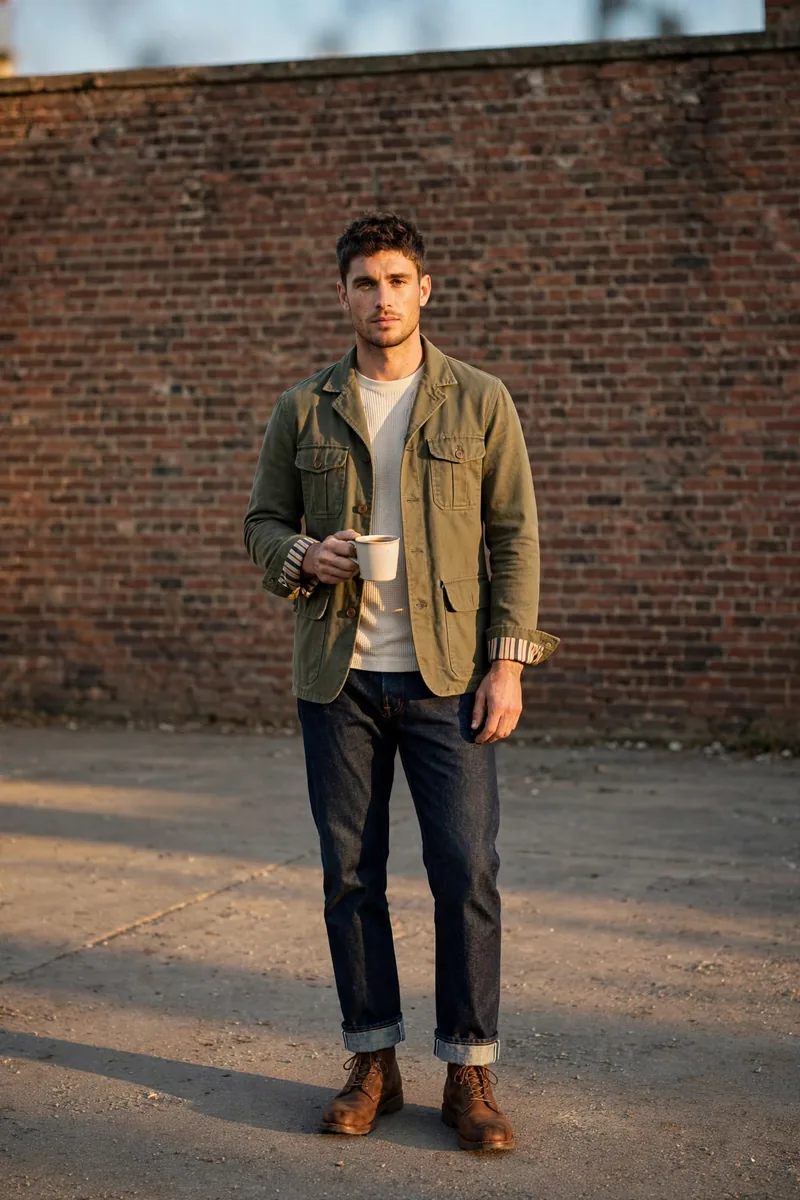
Workwear keeps its grip on fall because the formula is honest: tough fabrics, functional pockets, nothing decorative. The anchor is an olive canvas chore jacket in the Carhartt WIP Detroit tradition — boxy, four patch pockets, blanket-stripe lining flashing at the cuffs. Underneath, an ecru waffle-knit thermal adds warmth and texture. Raw indigo selvedge jeans, straight with a single cuff, show the selvedge detail. Brown leather work boots ground the whole thing.
The palette does the heavy lifting: olive, ecru, and indigo are muted, earthy tones that deepen as daylight fades. The boxy jacket over a slimmer jean keeps proportions current rather than costume-y. This is weekend uniform — coffee runs, markets, bar patios — and the raw denim fades around your actual life over the season, which is the entire point.
Roll the sleeves once to flash the lining, or swap the thermal for a chambray shirt when you want a collar. A charcoal knit beanie and a canvas tote finish the errand-day version.
3. Cognac Suede Trucker, Cream Crewneck, Rust Corduroy
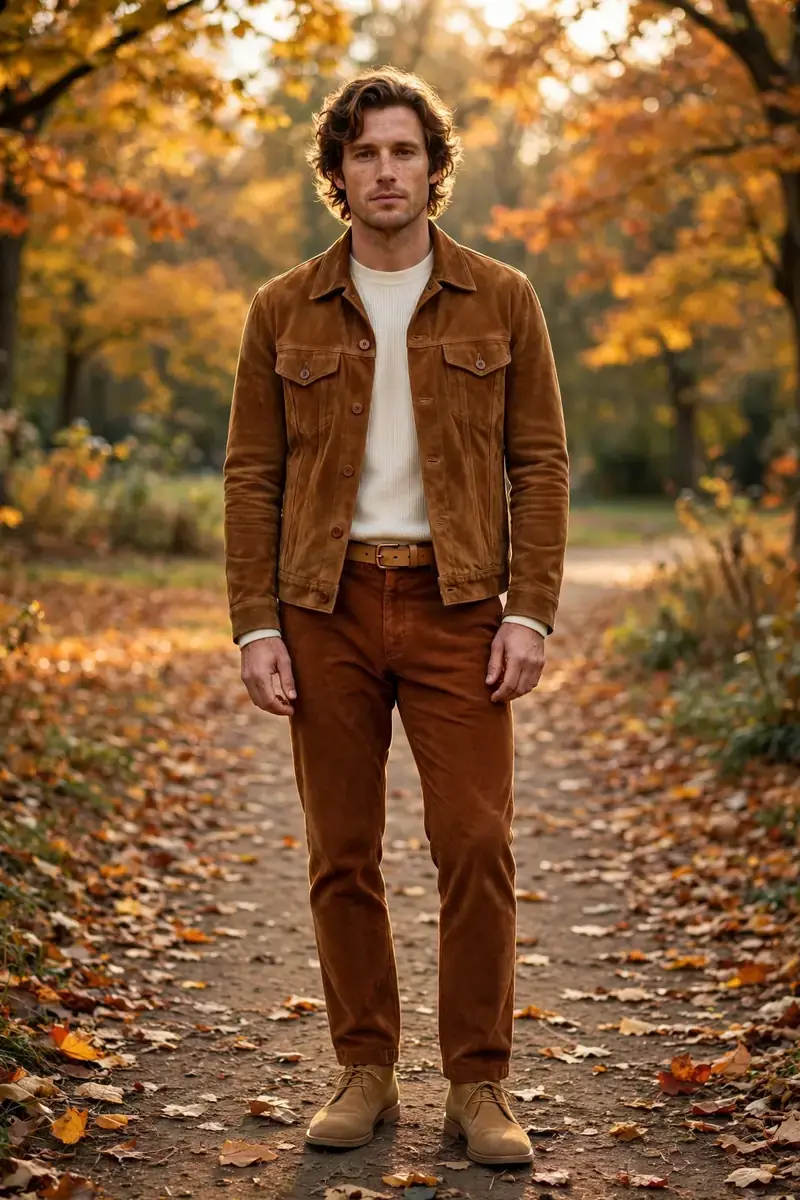
This is the warm-toned answer to fall — an outfit built from autumn’s own colors. A cognac suede trucker leads, its nap catching light differently than smooth leather. Beneath it, a cream ribbed cotton crewneck keeps the chest light. The trousers are the statement: straight-leg corduroy in deep rust, the fine wale catching the eye without shouting. Tan suede chukka boots and a tan leather belt complete the warm register.
The analogous color story makes it work — cognac, cream, and rust sit together on the warm side of the spectrum, so the outfit feels intentional without matching. Suede, ribbed knit, and corduroy are three distinct textures that reward a second look. Wear it to dinners and gallery nights; chocolate brown cords make the quieter evening version.
Dark brown chukkas sharpen it, white sneakers make it daytime-casual. Skip the scarf — the jacket collar and crewneck are already doing enough at the neck.
4. Navy Fair Isle Yoke Sweater With Dark Denim
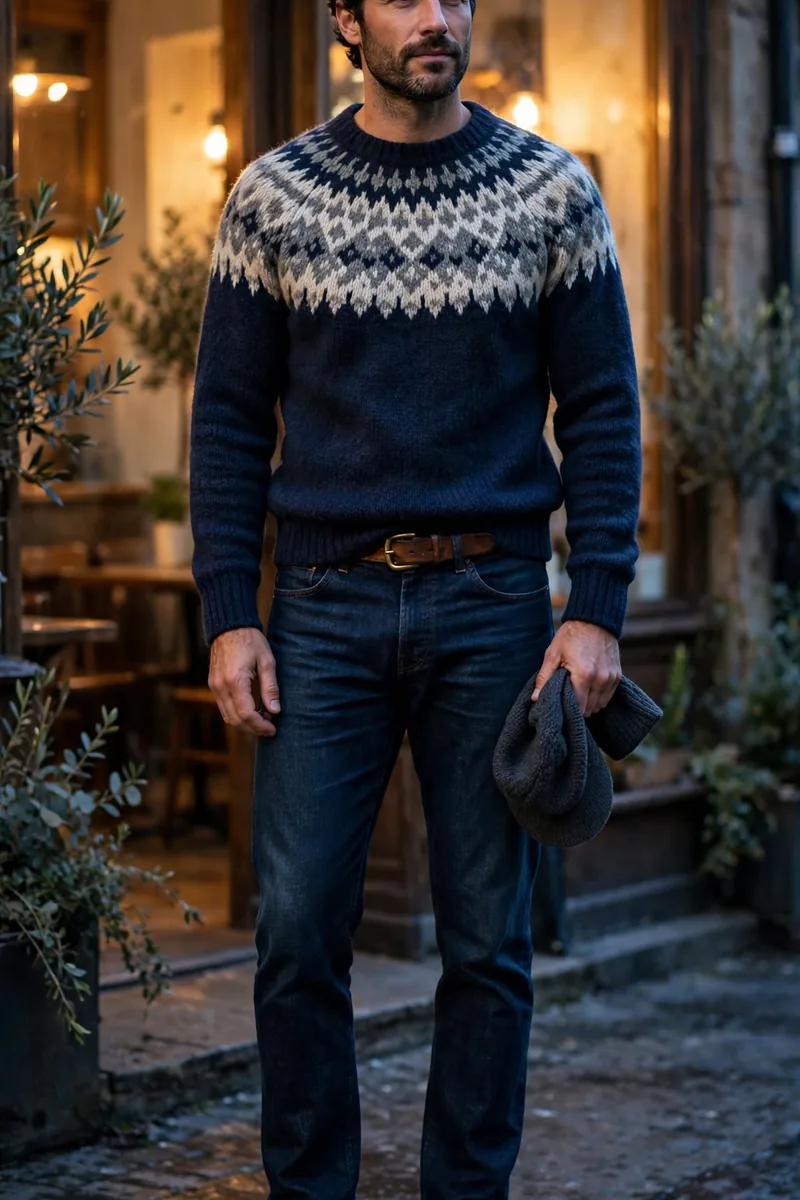
Heritage knitwear earns its place every fall, and the Fair Isle yoke sweater is the most wearable entry point. This one is navy lambswool with a cream-and-gray geometric band across the yoke — pattern at the shoulders and chest, drawing the eye up and framing the face. The body stays solid navy. Dark indigo straight jeans continue the deep tones, tan lace-up boots add warm contrast, and a brown belt and steel watch finish it.
Contrast management is why it keeps working: the yoke provides all the visual interest, so everything else stays plain — solid denim, solid boots, no competing prints. Navy reads refined rather than festive, handling office Fridays and family dinners. Trade jeans for gray flannel trousers and brogues, and the same sweater works for the restaurant table.
Fit matters most: the sweater should skim without clinging, shoulder seams on the bone. Size up between sizes — a Fair Isle that pulls across the chest distorts the pattern.
5. Herringbone Tweed Sport Coat Over a Forest Turtleneck

Tailoring does not hibernate in fall — it gets heavier. A brown herringbone tweed sport coat with patch pockets and a soft half-canvassed shoulder is the centerpiece, reading as texture from across the room and craft up close. Under it, a forest-green merino turtleneck replaces the shirt-and-tie, making the tailoring feel current. Charcoal flannel trousers keep the lower half sober; dark brown brogues finish with quiet authority.
Forest green and warm brown are an autumn pairing that never feels forced, with charcoal as the neutral buffer. The turtleneck solves the collar problem — no competing lapels, no tie to fuss with. This is for client lunches, theater evenings, and holiday dinners, and it photographs well because every piece has texture.
Swap forest for oatmeal when you want it lighter, or add a rust pocket square for accent. Keep trousers flat-front with a minimal break. One caution: tweed plus turtleneck runs warm — a 50-degree-and-below outfit.
6. Black Leather Café Racer and an Oatmeal Henley
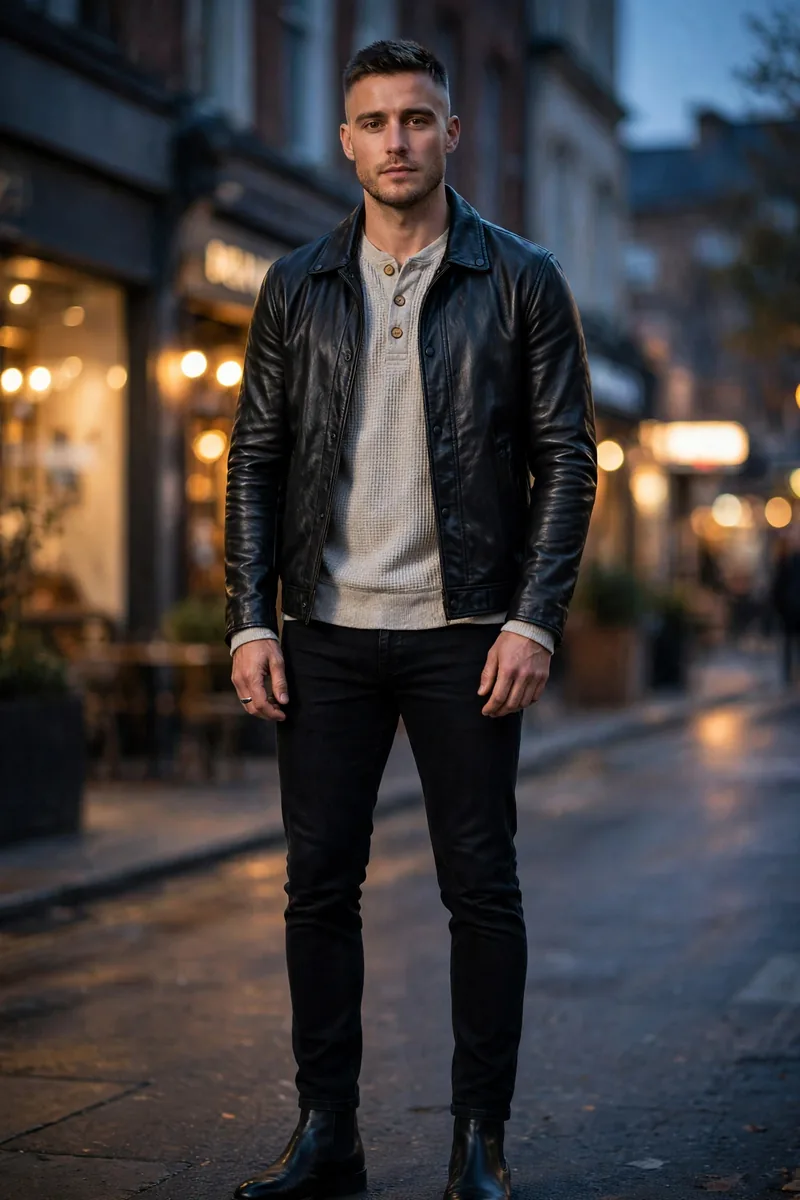
Some nights call for an edge, and the black leather café racer is the fastest route there. Cut close with a snap collar and minimal hardware, in the Schott NYC tradition, it sits at the hip and frames the torso. Underneath, an oatmeal waffle-knit henley keeps it from going costume — the button placket adds detail that breaks up the black. Black slim selvedge jeans and black Chelsea boots continue the dark column.
The tonal base reads taller and leaner — one dark line from shoulder to shoe — while the oatmeal knit keeps it from vanishing into the night. The placket matters: a plain black tee under a black jacket looks like a uniform, but buttons and waffle texture give the eye somewhere to land. Concerts, late dinners, city nights.
Brown boots soften it for daytime, breaking the black column at the ankle. Mind the fit: it should zip without pulling and end at the belt line. Between sizes, size down — leather stretches, never shrinks back.
7. Chunky Shawl-Collar Cardigan Over Buffalo Check Flannel
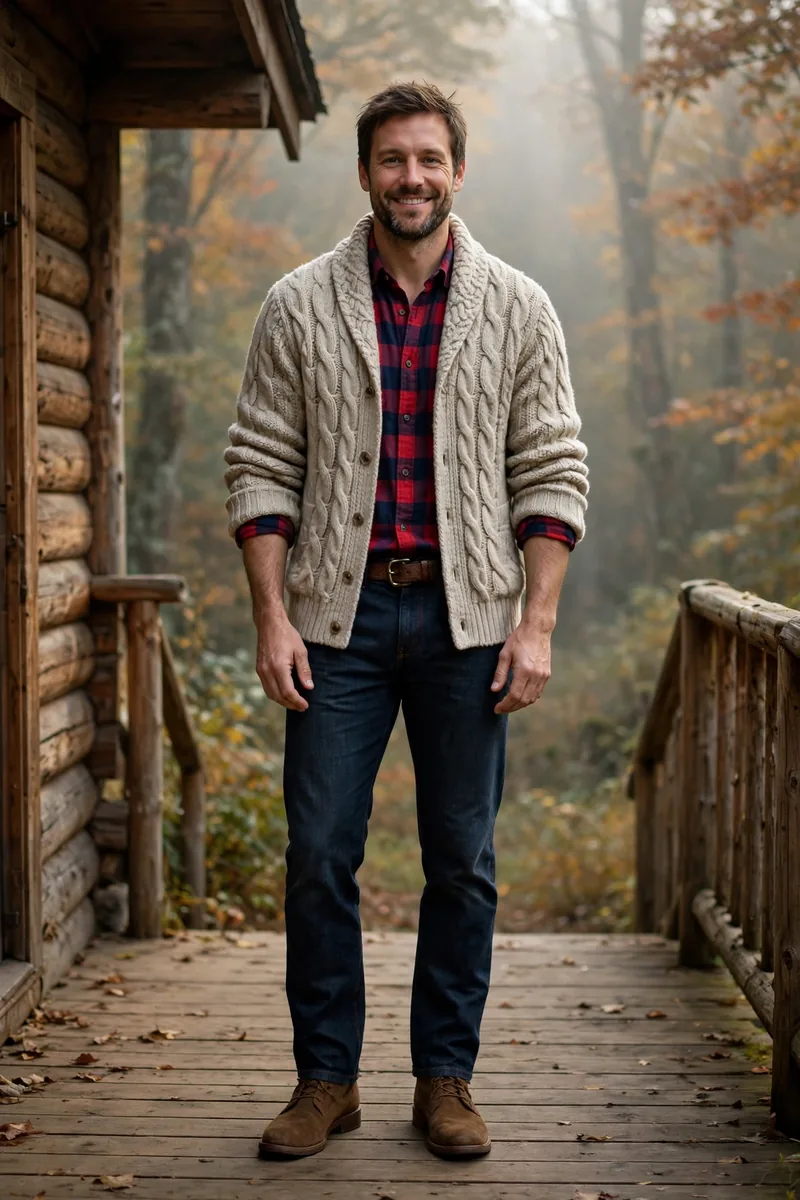
This is for the first genuinely cold weekend — looking put-together while essentially wearing a blanket. A red-and-navy buffalo-check flannel provides all the pattern the outfit needs. Over it, an oatmeal chunky cable-knit shawl-collar cardigan, thick enough to stand alone on mild days, the collar framing the check like a picture frame. Dark straight jeans stay quiet; brown suede desert boots in the Clarks tradition anchor with softness rather than polish.
Scale balance is the trick: bold check and chunky cable are both large-scale textures, so neither overwhelms the other. A fine-gauge cardigan would get eaten alive here, and polished leather would fight the coziness while suede agrees with it. Orchards, cabin weekends, Sunday football.
Push the cardigan sleeves up once to show the flannel cuff — the small styling move that keeps a cozy outfit looking intentional instead of sloppy. A forest-green and navy check is the less-expected alternative worth trying.
8. Waxed Olive Field Jacket, Navy Roll-Neck, White Sneakers
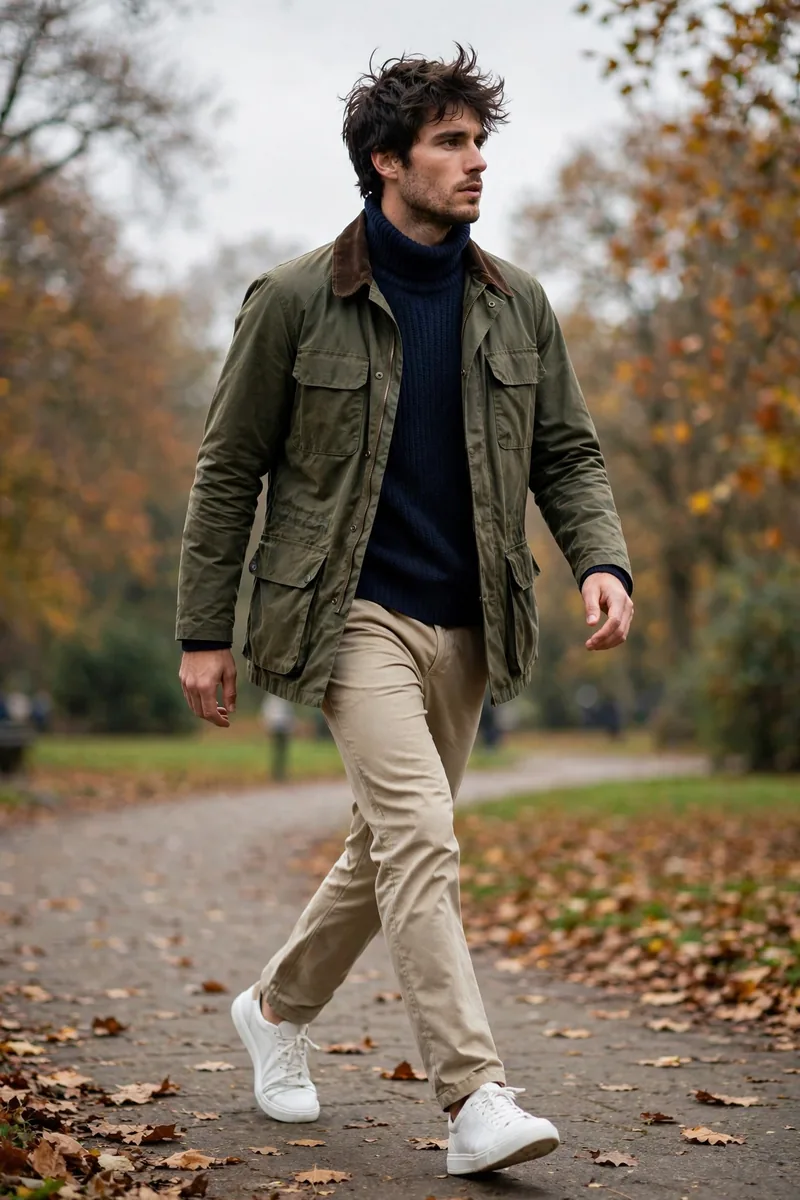
Heritage and minimalism can share an outfit. The top half is pure country: a waxed olive field jacket in the Barbour Bedale tradition — corduroy collar, bellow pockets, brass zips — the waxed cotton carrying a sheen that only comes with wear. Underneath, a navy fisherman-rib roll-neck holds its own against the collar. Then the pivot: sand chinos and white minimalist leather sneakers in the Common Projects vein, dragging the look back to the city.
Navy and olive is one of menswear’s most reliable pairings, and the fisherman rib balances the jacket’s hardware. The sneakers do real work: without them this tips into countryside costume; with them it reads as a man who knows the rules well enough to bend one. Travel days, Saturday errands, casual Fridays.
When rain threatens, the waxed jacket earns its keep — swap in tan suede Chelsea boots and it dresses up a notch. Break it in before judging; new waxed cotton softens beautifully, and yearly re-waxing makes it last decades.
9. Charcoal Overshirt Over a Waffle Knit With Stone Chinos
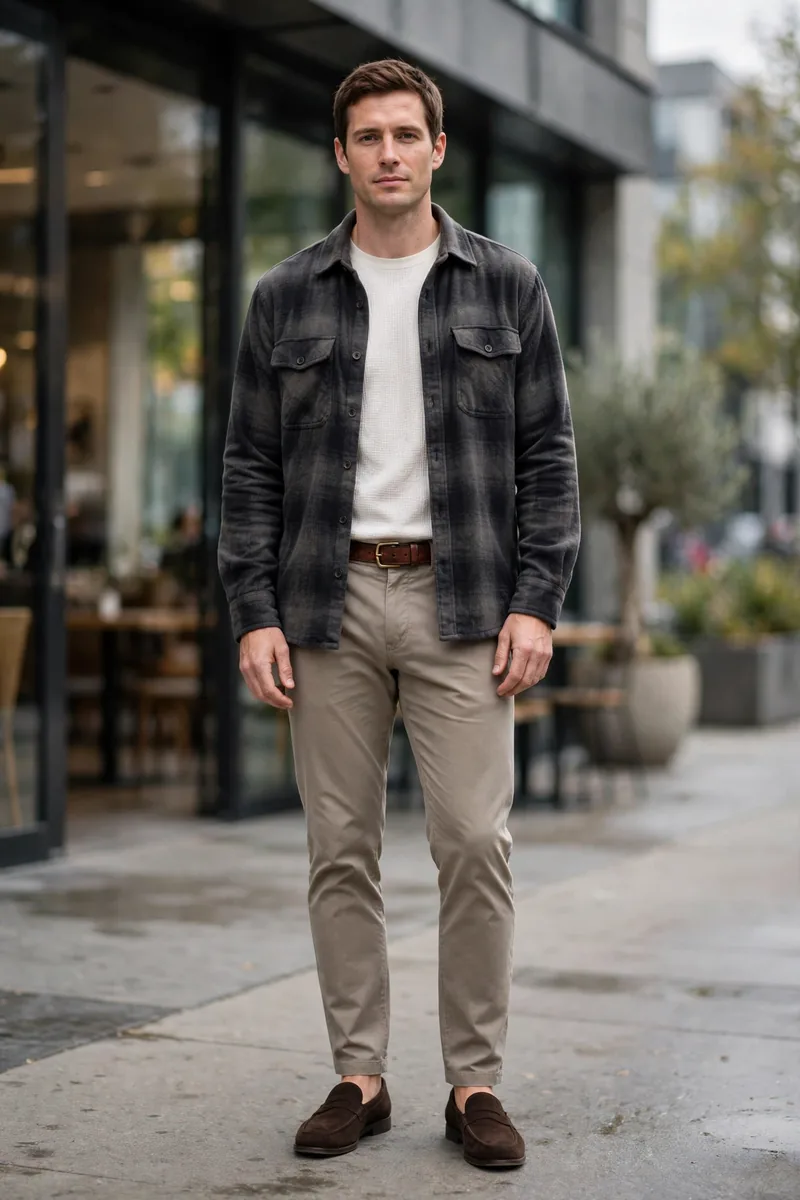
The overshirt — part shirt, part jacket — is fall’s most useful layer. An off-white waffle-knit long-sleeve tee forms the base, texture visible at neck and cuffs. Over it, a charcoal brushed-flannel overshirt worn open, heavy enough to read as outerwear. Stone tapered chinos bring a light neutral below; dark brown suede loafers finish with relaxed polish, and a brown belt and simple watch complete it.
The palette stays deliberately quiet — charcoal, off-white, stone — feeling calm and considered without a luxury label. The overshirt bridges the formality gap between knit and chinos. This is the smart-casual sweet spot: client coffees, nice restaurants, offices without a dress code. White sneakers drop it a level for weekends; dark jeans raise it for evenings.
Size it like a light jacket, not a shirt — room for the knit without pulling at the shoulders. Brushed flannel pills slightly with wear; a fabric comb every few weeks keeps it sharp.
10. Monochrome Black Utility Layers
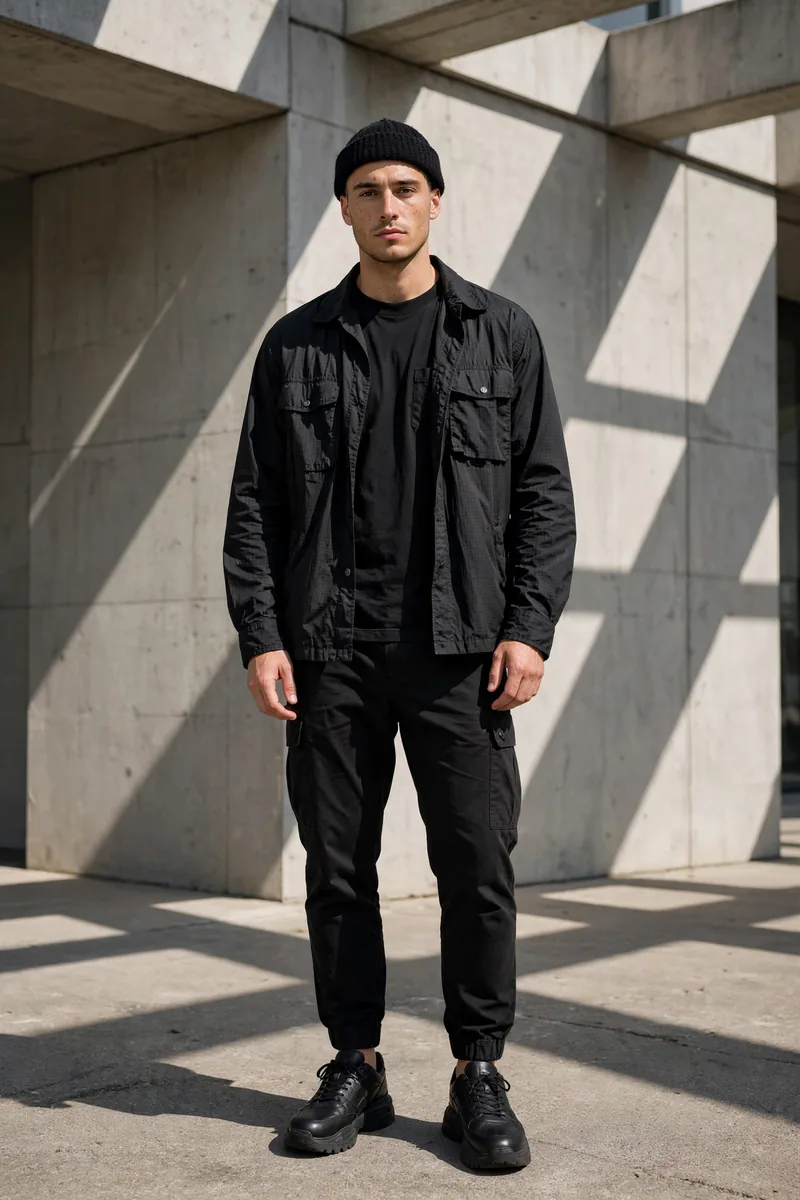
Every wardrobe needs one outfit that looks intentional with zero color decisions. A black heavyweight pocket tee holds its shape as the base. Over it, a black ripstop field overshirt with flap pockets, worn open, adds utility character and a second texture. Black tapered cargos — never baggy, pockets kept low-profile — keep the military reference modern. Black chunky leather sneakers finish the column; a black knit beanie joins on cold mornings.
One color works only when textures vary, and there are four here: smooth cotton, crisp ripstop, matte twill, polished leather. Light hits each differently, so the eye registers depth instead of flatness. The tapered cargo is critical — wide cargos tip the look into costume. City days, travel, creative workplaces, anywhere the dress code is “look like you meant it.”
Keep the sneakers clean; monochrome shows scuffs faster than mixed palettes. Resist the colorful accessory — the discipline of the single color is the entire point. Olive cargos are the one sanctioned swap, and they change the temperature completely.
How to Style Men’s Fall Outfits Without Overthinking It
Every outfit above runs on one three-layer formula. Layer one: the fitted base — a thermal, henley, or long-sleeve tee sitting close so everything stacks without bulk. Layer two: the insulating middle — the sweater, overshirt, or cardigan that gives the outfit its character. Layer three: the weather shell facing the elements. Two layers handle mild days; all three earn their keep below 55 degrees.
Proportions follow one rule: a long top wants straight or tapered trousers, while a cropped top balances against a slightly fuller trouser. The shoe shortcut is simple — leather boots sharpen, white sneakers relax, suede sits between. Anchor on one color — navy, charcoal, olive, camel — and let the rest orbit it. Knits stay untucked with a clean hem; shirts get tucked with a belt. Dining out as a couple? Coordinate with her look via our guide to 12 fall outfits for women that are trending in 2026 — match the season’s palette, not each other.
Pro Tips for Fall Fabrics and Fit in 2026
Fabric weight beats brand names. Twelve to fourteen-ounce selvedge holds its shape while lighter denim bags at the knee; 21-wale corduroy reads dressier than 8-wale; boiled wool and brushed flannel warm without puffer bulk. A 12-gauge merino layers under everything; a 5-gauge chunky knit is outerwear on its own — never stack two chunky knits.
Mirror checkpoints: shoulder seams on the bone, coat sleeve showing a centimeter or two of cuff, trousers with a single clean break, jeans cuffed once to show the boots. A thin thermal under the knit buys five degrees of warmth invisibly. Maintain the investment: re-wax yearly, brush and spray suede before the season, condition leather boots monthly. And frame the face to match the collar — one of the 10 men’s haircuts trending this fall sharpens every look on this list.
Frequently Asked Questions
What is the easiest fall outfit for men who don’t like planning?
The four-piece formula: flannel overshirt, waffle-knit thermal, dark straight jeans, brown leather boots. It covers office, dinner, and weekends, and every piece pairs with the rest of your closet. Buy the overshirt in charcoal or olive — you will reach for it three days a week.
How do I layer without looking bulky?
Keep the base slim and let each layer add structure, not padding. Never stack two chunky knits; pair one substantial knit with a smooth shell. Wearing the outer layer open creates a slimming vertical line, and a half-tucked shirt under an open overshirt breaks up the torso.
Which boots should I buy first for fall?
One pair of dark brown leather boots covers the most ground — jeans, chinos, flannel trousers, cords. Chelsea if you lean polished, lace-up work boot if you lean rugged. Black boots come second; they pair best with black, charcoal, and dark denim.
Can I wear sneakers instead of boots in fall?
On dry days, absolutely. White minimalist leather sneakers dress down chinos, dark jeans, and field jackets without looking like summer leftovers. Save the boots for wet weather and dressier settings — and skip knit runners with tailored pieces.
Final Thoughts
Ten outfits, one season, and no single right answer — which is exactly the point. If your days lean polished, start with the camel overcoat and the tweed sport coat; if they lean hands-on, the chore coat and the field jacket will get more wear; if you live in the city after dark, the leather café racer and the monochrome utility look are waiting. Treat these as starting points rather than uniforms: swap a boot, change a color temperature, roll a sleeve. Save the looks that caught your eye and try the closest version with what you own this weekend — the pieces you actually reach for will tell you what to buy next.