
10 Men’s Haircuts That Are Trending in Fall 2026
Fall is the season when men’s haircuts get interesting again. Summer’s sweat and chlorine fade into memory, and the barbershops fill with guys asking for real structure — texture on top, cleaner transitions on the sides, cuts that work under a beanie without collapsing into nothing. The big shift this year: the hard, high skin fade is loosening its grip. Soft tapers, natural finishes, and longer, more deliberate tops are doing the heavy lifting, and the cuts that win are the ones that look good on day one and day twelve.
This collection covers the full range — from the near-zero-maintenance buzz to mid-length flow — with exactly what to tell your barber for each one, so you can walk in with a picture and walk out with the cut you actually asked for.
1. The Textured Crop with Tapered Sides

The textured crop is the haircut of the season for a reason: it asks almost nothing of you in the morning and still reads intentional. The top is cut short — usually between half an inch and two inches — and point-cut to create broken, piecey texture that sits forward or slightly messy. The sides are tapered with clippers, not taken to a hard fade, so the transition from the top melts into the sides instead of drawing a hard line.
It suits straight to slightly wavy hair best, because the texture needs some natural body to hold. Round faces benefit from a touch more height on top, while square jaws carry the cleaner tapered version well.
At the chair, tell your barber: “Short textured crop, point-cut the top, and taper the sides — number two to number three guards, no hard fade line.” Personalize it by going longer on top in winter or asking for a slightly rougher, more separated finish if your hair is fine.
2. The Soft Taper Fade
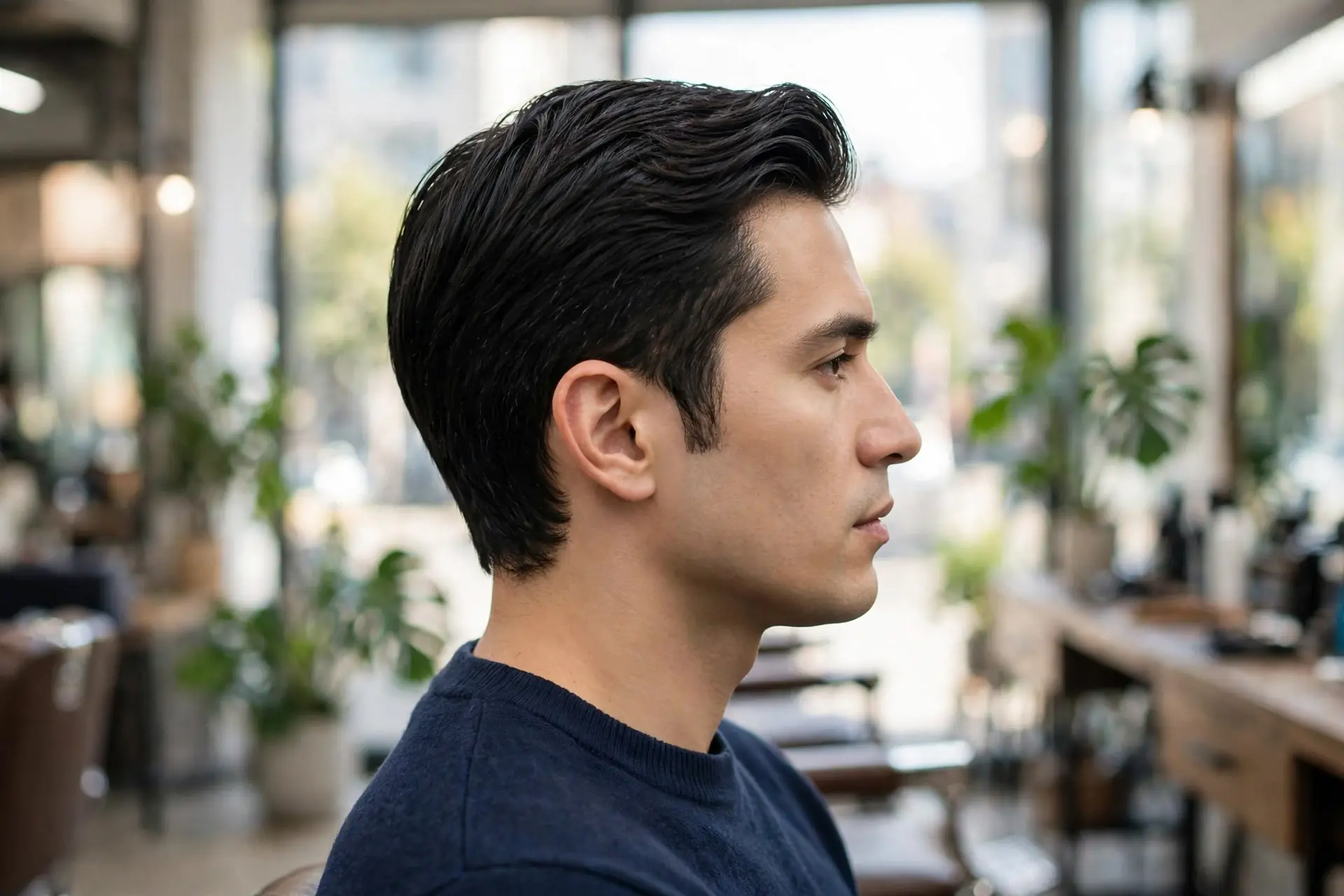
The taper fade is the grown-up answer to the skin fade. Everything stays longer — the hair gradually shortens around the ears and neckline instead of being shaved to the skin — which keeps the whole cut softer and far easier to grow out. The top usually runs two to three inches, left with enough length to push back, sweep to the side, or wear naturally messy.
This is the safest strong choice in the collection. It works on thick, straight, or wavy hair, suits oval and oblong faces especially well, and reads sharp in a suit without looking overdressed on weekends. It is also the best first haircut for a guy switching away from a high fade.
At the chair, say: “Taper fade — not a skin fade. Keep it soft around the ears, blend the neckline, and leave two to three inches on top.” Personalize it by asking your barber to keep the taper slightly longer if your hairline is receding; lower contrast hides more.
3. The Modern Quiff with Low Taper
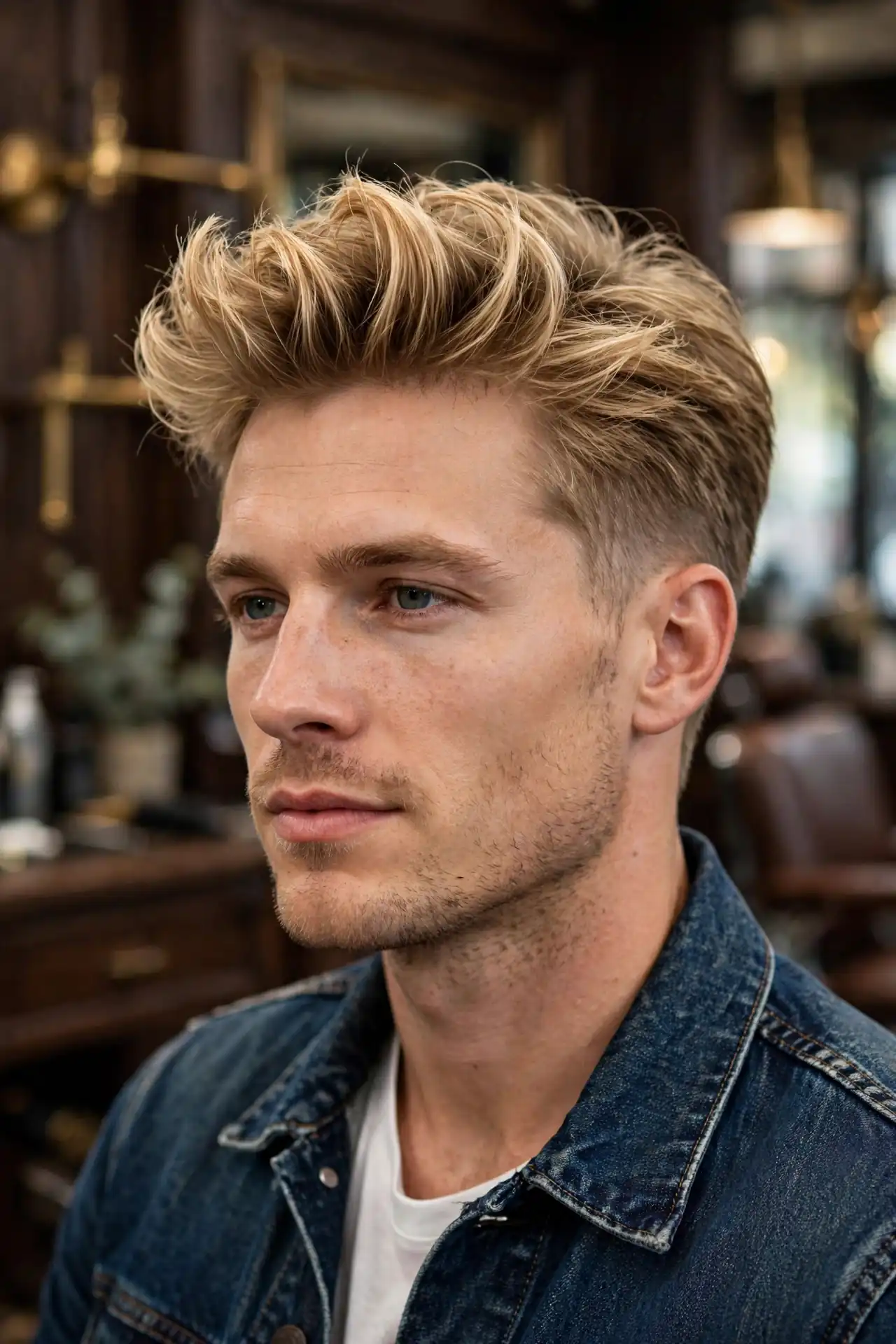
The quiff never really leaves; it just gets re-cut for the moment. The 2026 version keeps the volume brushed up and back from the forehead, but the sides are a low taper rather than a severe fade, so the whole thing feels relaxed instead of helmet-like. The top needs three to five inches of length, cut with texture so the height looks airy instead of solid.
This cut earns its keep on rounder faces — the vertical lift lengthens the face visually — and it handles fine hair surprisingly well, since the styling creates fullness that is not really there.
At the chair, say: “Quiff with a low taper on the sides. Leave three-plus inches on top, add texture, and keep the front longest.” Personalize it by pushing the quiff slightly off-center for a more casual read, or keeping the sides tapered rather than faded if your workplace is conservative.
4. The Clean Buzz with a Sharp Line-Up
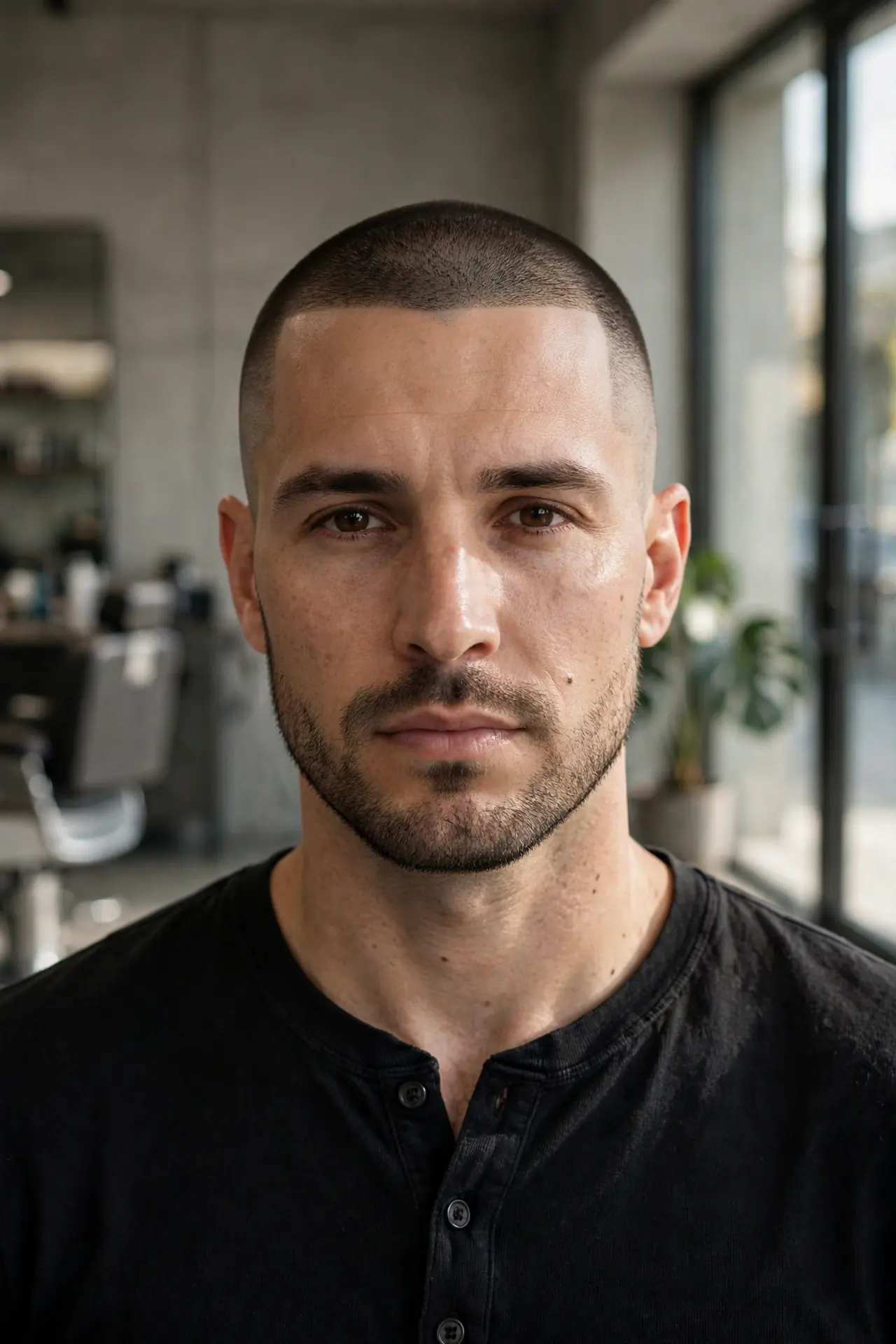
There is confidence in not hiding. The clean buzz takes everything to one guard length — usually a number two or three — and lets the shape of the head do the talking. The detail that separates a good buzz from a home job is the line-up: a crisp, squared forehead line and cleaned-up temples, plus a tapered neckline instead of a hard blocked one that grows out in a shelf. Keep some stubble or a short beard and the whole thing balances — bare on top, texture on the jaw.
It suits strong jawlines and guys who want the lowest possible maintenance.
At the chair, say: “Number two buzz all over, sharp line-up, and taper the neckline.” Personalize it by going a number three on top with a number two on the sides for a subtle shadow effect, or pairing it with a skin-tapered edge if you want the sharpest possible finish.
5. The Curtain Fringe, Rebuilt for 2026

The center-part curtain is back, but the 2026 rebuild is tighter and more deliberate than the nineties original. The top falls to four to six inches and splits down the middle, framing the face on both sides, while the sides are kept shorter — tapered or faded — instead of the all-one-length mop of the past. The result keeps the romantic movement of the original without looking like you forgot to book a haircut.
This is the cut for wavy and thick hair; the natural bend is what makes the fringe fall correctly. It suits angular faces beautifully, softening sharp cheekbones, and it works on oval faces too.
At the chair, say: “Curtains — center part, leave the front four to six inches, take the sides down with a taper, and layer the top so it moves.” Personalize it by asking for the part slightly off-center if your face is asymmetrical, or keeping the sides longer for a softer, more vintage read.
6. The Classic Side Part with a Skin Taper

Some cuts never need reinventing — they need cleaner execution. The classic side part combs the top to one side from a defined part, with the sides taken down in a skin taper for contrast that reads crisp without screaming for attention. The top runs two to four inches, cut with enough weight to stay in place but enough texture to avoid a flat, helmet-like finish.
This is the most versatile cut here: boardroom-safe, wedding-ready, and still fine with a leather jacket. It suits straight to wavy hair and most face shapes, and it is one of the few styles that genuinely improves with age.
At the chair, say: “Side part, skin taper on the sides, leave three inches on top with some texture.” Personalize it by choosing the part side based on your natural growth pattern — fighting a cowlick with a part is a losing battle — or asking for a hard part (a shaved line) for the most defined version.
7. The Forward Textured Fringe
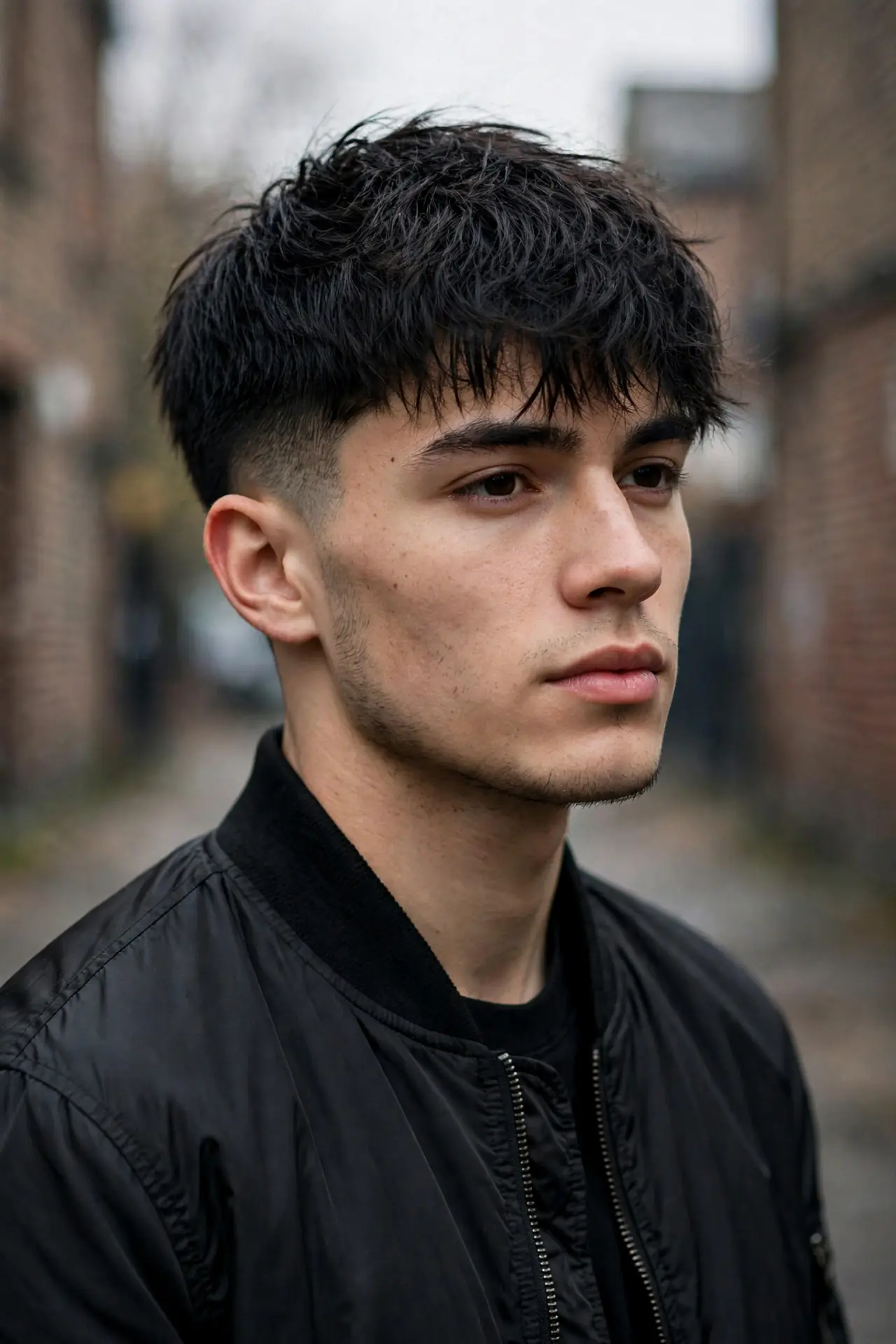
Worn forward over the forehead, the textured fringe is the streetwear end of the crop family. The fringe is cut choppy and piecey — never a blunt, bowl-cut line — and pushed forward to cover the forehead, while the sides drop away in a mid or high fade. The contrast between the soft, broken fringe and the tight sides is what gives it edge.
This cut is a gift for guys with high foreheads or receding temples; the forward fall covers exactly what you want covered. It needs straight or slightly wavy hair to sit right — tight curls will fight the forward direction.
At the chair, say: “Textured fringe forward, mid fade on the sides, and keep the fringe choppy — no blunt line.” Personalize it by going longer on the fringe for a bolder look, or asking for an undercut-style disconnection between fringe and sides for maximum contrast.
8. The Bro Flow

The bro flow is the reward for patience. Hair grown to four to eight inches on top is brushed or pushed back so it moves naturally, with the sides long enough to blend rather than fade. The key is restraint at the barber: shape the outline, clean the neckline and edges, thin out bulk where it poofs, and leave the length alone. Done right, it looks effortless; done wrong, it looks like you stopped caring, and the difference is a good shape-up every six to eight weeks.
It needs medium to thick hair with some wave — dead-straight fine hair tends to lie flat instead of flowing.
At the chair, say: “Keep the length on top, shape it back, clean up the sides and neckline, and just remove bulk — no real cutting.” Personalize it by adding subtle layers if your hair is very thick, or asking for the front slightly shorter so it stays out of your eyes without a headband.
9. The Wavy Top with a Mid Fade
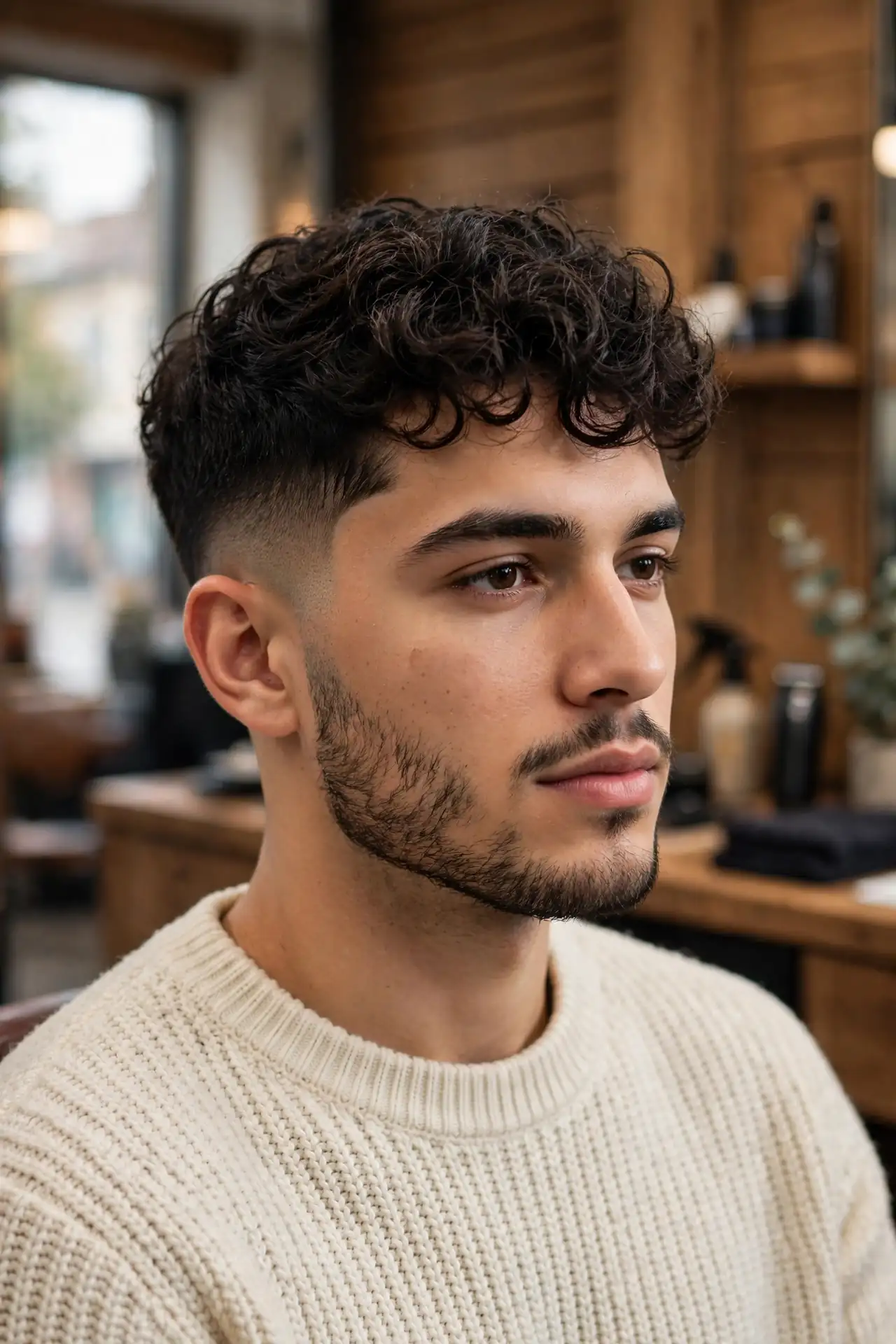
If you have natural wave or curl, this is the cut that finally works with it instead of against it. The top is left at two to four inches and cut to enhance the natural pattern — longer layers, minimal thinning, so the curls clump instead of frizzing. The sides are a clean mid fade starting around the temple, giving the whole cut structure while the top does its own thing. A curl cream or light leave-in, scrunched in while damp, is the entire styling routine.
It suits every face shape, because the height and width of the top can be tuned: more volume for long faces, tighter sides for round ones.
At the chair, say: “Mid fade on the sides, keep the curls on top — two to four inches, layer it but don’t thin it out.” Personalize it by asking your barber how your specific curl pattern behaves at different lengths; a good barber will cut it dry to see the true shape.
10. The Cropped Drop Fade
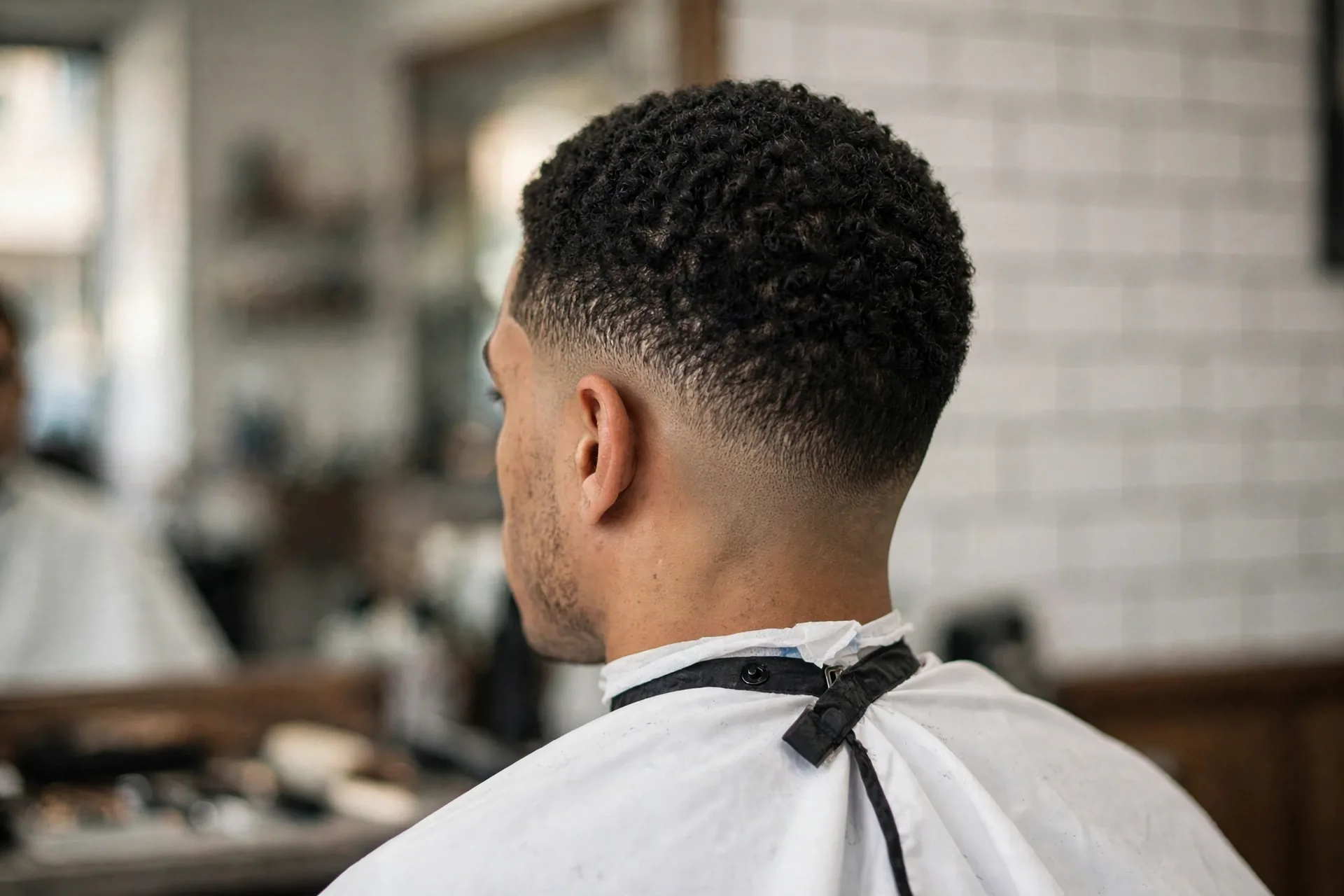
The drop fade is the detail that separates this crop from a standard one. Instead of the fade line running straight around the head, it drops down behind the ear, following the natural curve of the skull. The top is a short textured crop, but the dropping fade line gives it a more sculpted, custom feel from every angle — especially the back. It flatters coily and tightly textured hair especially well, where the curved fade line shows off the shape.
It suits guys who want something that looks considered from behind as well as the front — the back view is genuinely the best angle on this cut.
At the chair, say: “Short textured crop on top, and a drop fade — let the fade follow the curve down behind the ear, not a straight line.” Personalize it by asking how low the drop should sit based on your head shape; a deeper drop suits longer heads, a shallower one suits rounder ones.
How to Ask Your Barber (and Actually Get the Cut)
The difference between the haircut you imagined and the one you got is usually communication, not skill. Bring two or three reference photos of the same cut from different angles — front, side, and back if you can find them — and show them before the clippers come out. Learn the vocabulary: a taper gradually shortens, a fade goes to skin, a crop is short on top, and guard numbers (#1–#8) describe clipper length in eighths of an inch. Describe length on top in inches, not vibes — “two inches on top” beats “a little off the top” every time. Be honest about your routine: if you will not blow-dry, say so, and let the barber pick a cut that works air-dried. Finally, ask about the grow-out. A good barber will tell you which parts to trim at four weeks and what the cut becomes at eight, so your next visit is a tune-up, not a rescue mission.
Pro Tips for Keeping It Sharp
Book your next cut before you leave the chair. Fades and tapers hold their shape for two to three weeks; crops and textured tops can stretch to four or five. Wash less than you think — two to three times a week is enough for most hair types, and over-washing strips the natural oils that give texture its grip. Match the product to the finish: matte clay or fiber for texture and hold without shine, sea salt spray for wave and volume on damp hair, light pomade for polished styles like the side part, curl cream for the wavy top. A pea-sized amount, warmed between your palms, beats a handful every time. Sleep on it, literally — a silk or satin pillowcase cuts down on morning frizz and keeps styled hair closer to how you left it. And when a cut starts to lose its edge, a neckline and edge cleanup between full cuts buys you another two weeks.
Frequently Asked Questions
How do I know which haircut suits my face shape?
Oval faces can wear nearly anything here. Round faces want height on top and tighter sides. Square faces suit softened texture over severe lines. Long faces should avoid excess height and keep some width on the sides.
How often should I get a trim to keep it fresh?
Fades and tapers need attention every two to three weeks. Textured crops and fringes last four to five. Longer styles like the bro flow can go six to eight weeks, but book a neckline and edge cleanup in between.
My hair is thinning — which of these should I avoid?
Skip anything long you would have to comb over. The clean buzz, the textured crop, and a short forward fringe all work with thinning hair because they keep everything short and uniform.
Can I grow out any of these into longer hair?
The soft taper fade and the bro flow grow out most gracefully since they already carry length. Crops and buzzes pass through an awkward phase — ask your barber to shape the sides while the top catches up.
Final Thoughts
The best fall haircut is the one you will actually maintain, styled for the life you live rather than the one in the photo. Pick the cut that matches your hair’s natural behavior first — texture, wave, thickness — then tune it with the barber details above. Save two or three favorites from this list, show them at your next appointment, and give the cut two weeks before you judge it; hair settles, and so will you.