
A good Oxford shirt earns its place in a fall wardrobe the hard way: it works with almost everything, holds its shape under layers, and looks just as right at a Saturday lunch as it does in a Monday meeting. The button-down collar, the basketweave cotton, the slightly structured drape — those details are what separate an Oxford from a plain dress shirt, and they are exactly why it layers so well when the temperature drops. This collection builds every look around that one shirt, styled as a smart-casual layer — tucked into straight-leg jeans, under a denim jacket, with a boiled-wool chore blazer, or with fatigue pants and loafers.
1. Crisp White Oxford Tucked into Straight-Leg Jeans
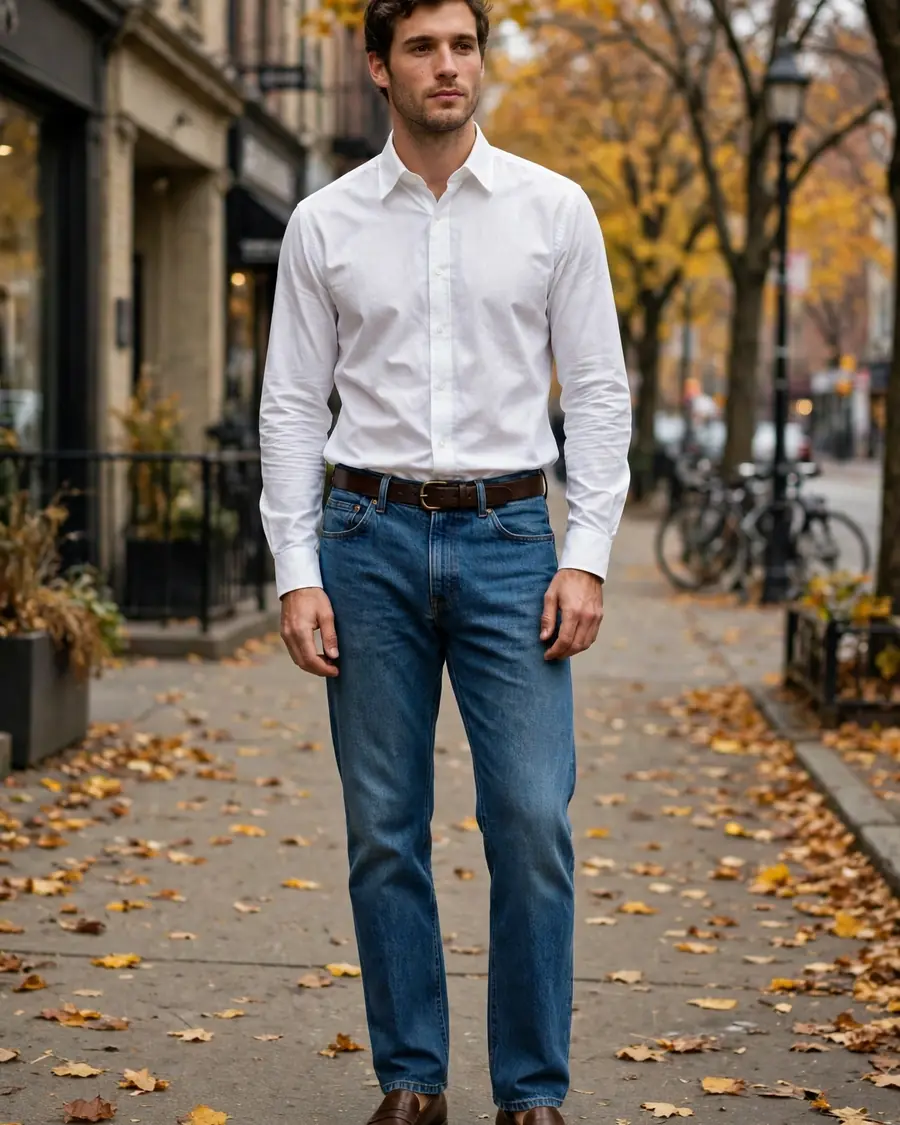
A white Oxford tucked into straight-leg jeans is the cleanest version of this whole idea, and it works because nothing in it is trying too hard. Start with a white Oxford in midweight cotton — heavy enough to hold the collar shape, light enough to tuck without bunching at the waist. The jeans should be a straight leg in a clean mid-blue wash, no heavy distressing, with a hem that breaks just once over the shoe. Tuck the shirt in fully and add a dark brown leather belt to mark the waistline.
The proportions do the heavy lifting here. A straight leg balances the structured shoulders of the Oxford, and the white shirt brightens the denim instead of competing with it. Brown leather loafers push the outfit toward smart-casual; clean white sneakers keep it relaxed for the weekend. Roll the sleeves below the elbow when it warms up.
2. Oxford Layered Under a Denim Jacket
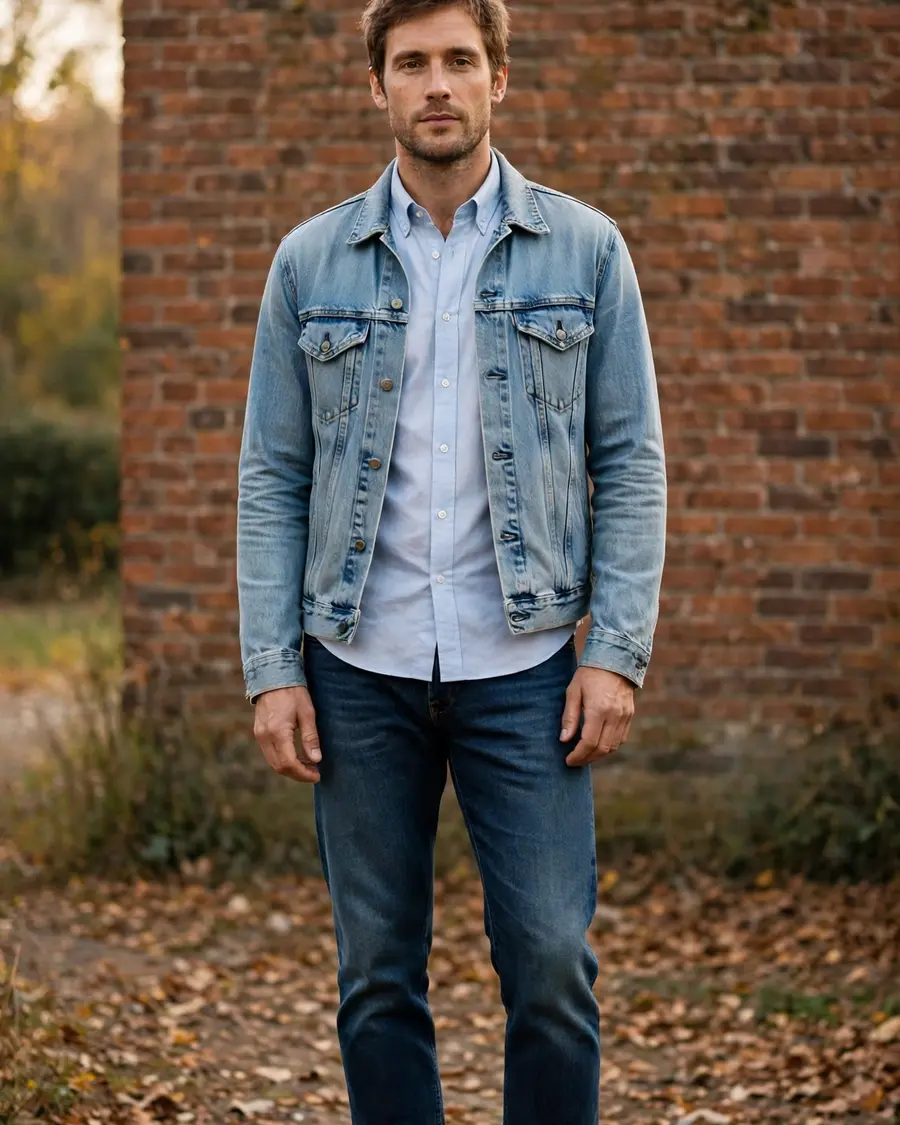
Wearing an Oxford under a denim jacket gives you two classic fabrics in one outfit, and the trick is keeping them visually distinct. Choose a light-wash denim jacket over a white or pale blue Oxford, so the shirt reads as a lighter layer against the jacket rather than blending into it. Leave the jacket unbuttoned, collar outside, with dark indigo jeans or charcoal chinos below.
This combination works because the textures contrast: the smooth basketweave of the Oxford against the rougher twill of the denim. It suits days that start cold and warm up by lunch — the jacket comes off and the Oxford still looks complete. If you enjoy this kind of layered outerwear, our roundup of shacket outfits for men explores a similar idea with a heavier outer piece. Keep the denim tones different so jacket and jeans never look like a matching set.
3. Blue Oxford with a Boiled-Wool Chore Blazer
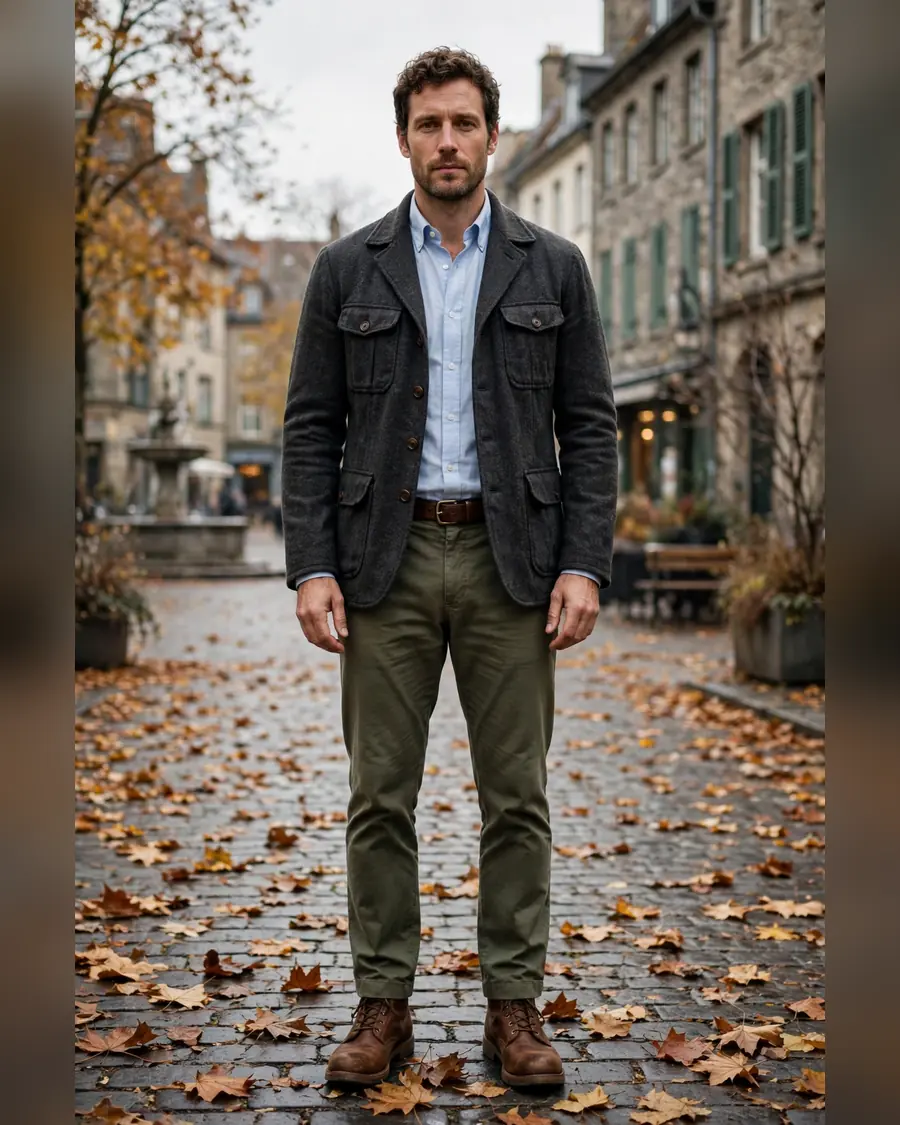
A boiled-wool chore blazer turns a blue Oxford into a proper cold-weather outfit without any of the stiffness of a suit jacket. Boiled wool has a dense, felted surface that blocks wind, and the chore silhouette — patch pockets, a straight hem, a shirt-style collar — keeps it casual. Wear a light blue Oxford underneath with the top button undone, and let the collar sit naturally over the blazer’s neckline. Charcoal or dark olive trousers and dark brown leather boots complete the palette.
The contrast between smooth cotton and textured wool is what makes it work. The Oxford’s crisp collar structures the soft blazer, and the blazer justifies the shirt in colder weather. It suits a casual office, a dinner out, or a weekend in the city. Choose a hip-length chore blazer, skip a tie, and add a matching brown leather watch strap.
4. Oxford with Fatigue Pants and Penny Loafers
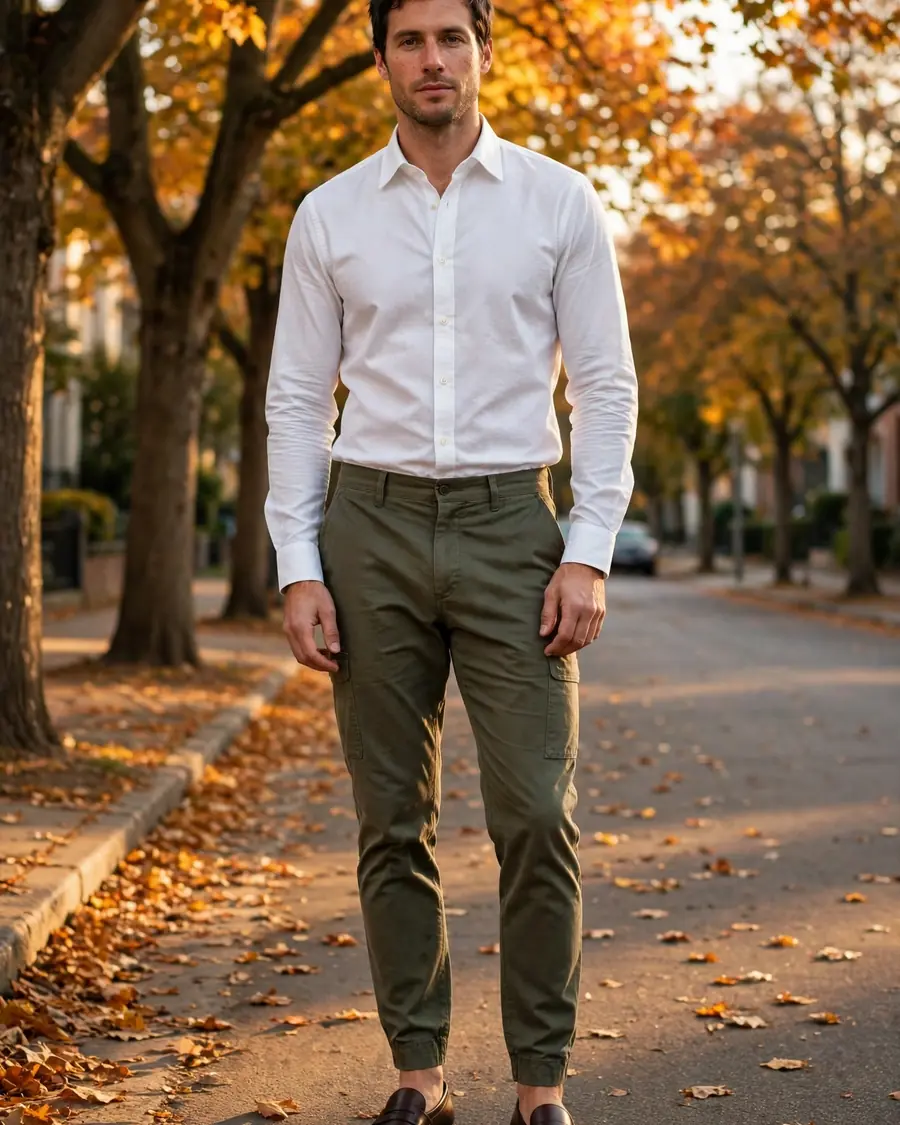
Fatigue pants bring a workwear edge to the Oxford, and penny loafers pull the outfit back toward smart-casual — that tension is what makes it interesting. Pick olive fatigue pants with a tapered leg and a clean, flat front; the military-inspired cut adds character without looking like a costume. A white or light blue Oxford, tucked in, keeps the top half neat against the utility styling below. The loafers should be polished dark brown leather, worn with no-show socks so the ankle stays clean.
Olive and white always looks considered, and the brown leather adds warmth. It suits a creative office, a gallery visit, or a long lunch. Keep the sleeves full-length and the collar buttoned down — the button-down collar holds its shape against the relaxed trousers. If the fatigue pants feel too utilitarian, olive chinos soften the outfit.
5. Striped Oxford with Chinos and Suede Chukkas
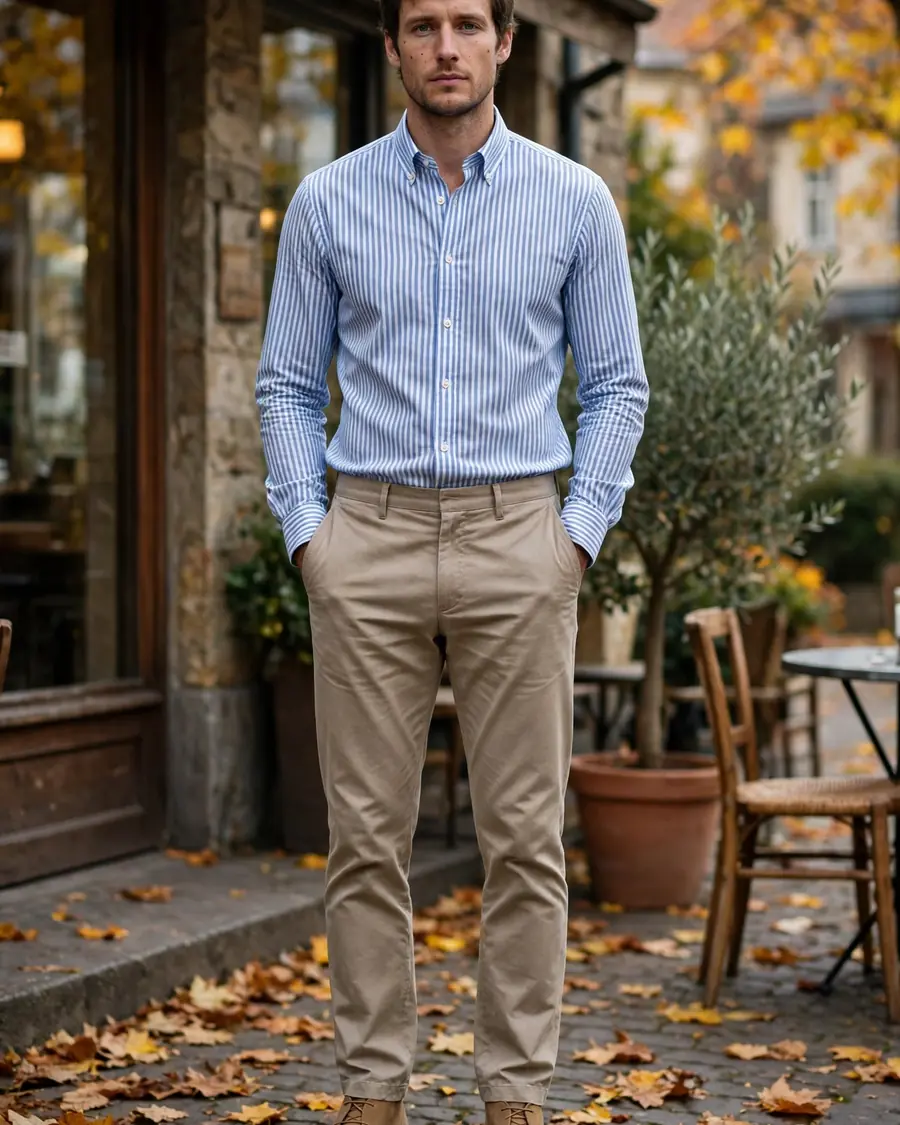
A striped Oxford adds pattern to the collection without making the outfit loud, and chinos keep it grounded. Choose a blue-and-white university stripe — wide enough to read as a pattern from a few feet away, narrow enough to stay refined. Pair it with stone or khaki chinos, tapered through the leg, and tan suede chukka boots. Suede softens the outfit, and the chukka’s ankle height suits a tapered chino ending just above the boot.
Stripes add interest to the torso and make the shirt the focal point, so the rest can stay simple. Keep the palette quiet — a brown belt, no loud accessories — and let the stripe carry the outfit. It works for a casual Friday, a date, or a weekend brunch. For colder weather, a navy crew-neck sweater over the top, collar peeking out, needs no other change.
6. Oxford Worn Open Over a Crew-Neck Tee
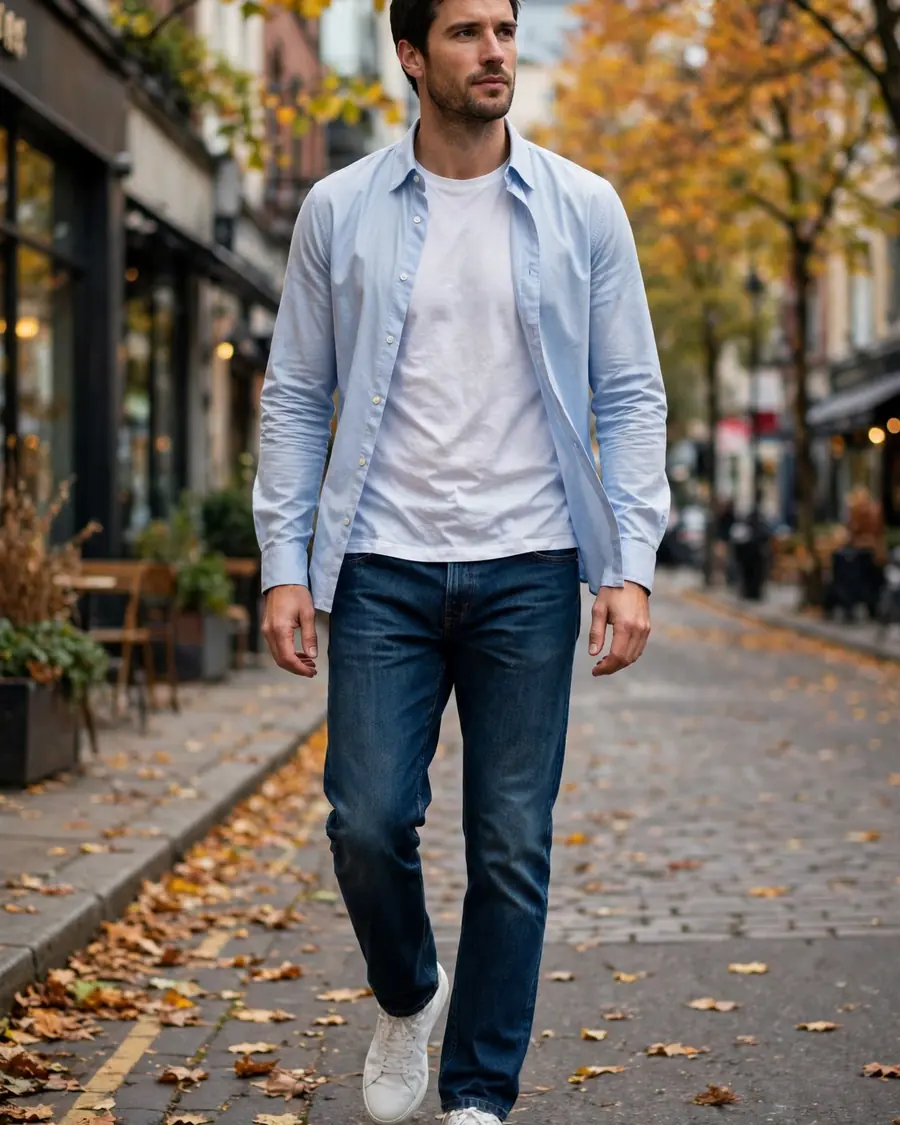
Wearing the Oxford open over a crew-neck tee turns it into a light overshirt, and it is the most relaxed look in this collection. Pick a slightly oversized Oxford — one size up from your usual fit works — in white, pale blue, or a muted sage, and wear it unbuttoned over a plain white or heather-grey tee. The tee should be a midweight cotton with a clean crew neckline that sits flat. Straight-leg jeans in a dark wash and white leather sneakers keep the outfit simple and coherent.
The open shirt frames the tee, and the contrast between the layers creates depth without extra pieces. It works on mild fall days when a jacket feels like too much — button up if the wind picks up. A front tuck adds structure if the shirt feels too loose. Avoid graphic tees: a plain tee lets the Oxford’s collar and placket do the talking.
7. Oxford with Grey Wool Trousers and a Navy Blazer
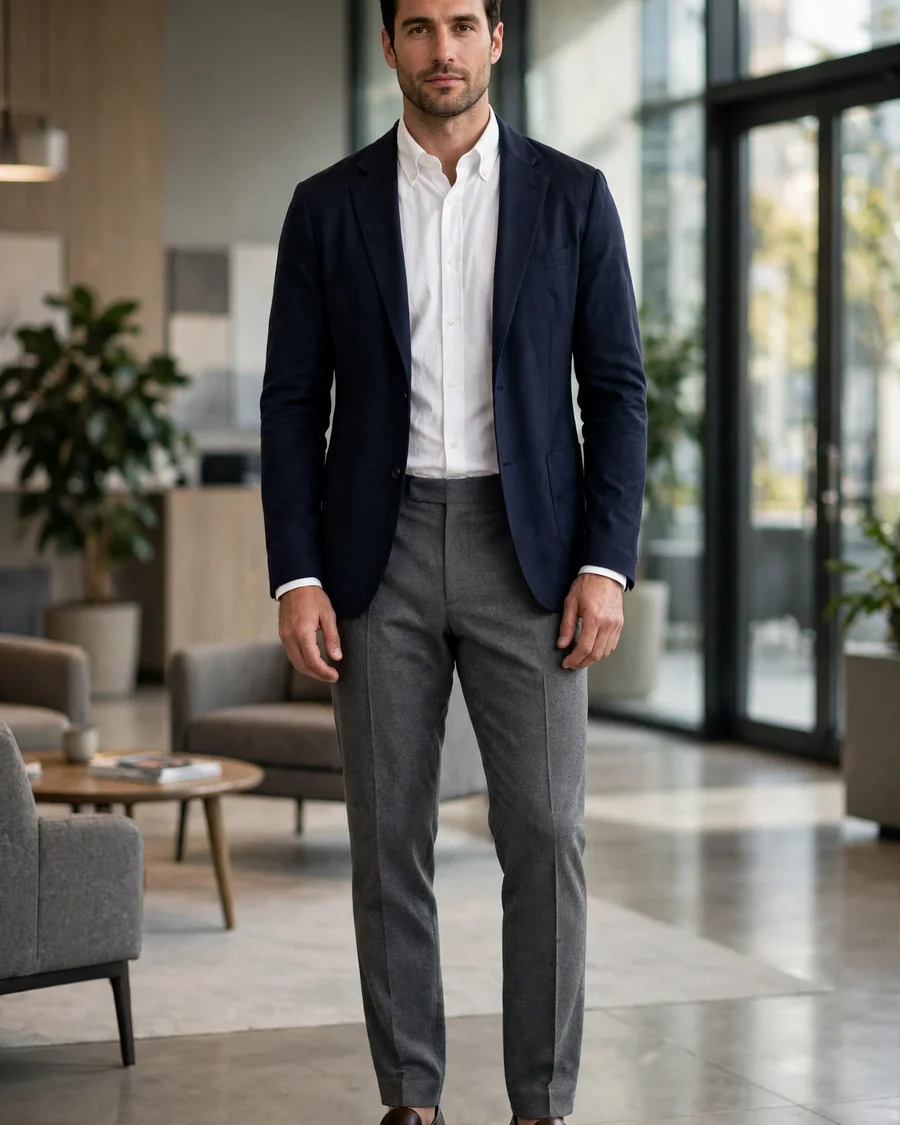
Grey wool trousers and a navy blazer give the Oxford its most polished outing in this collection, and it still reads as smart-casual rather than corporate. Start with a white Oxford — the highest-contrast choice against the navy — tucked into mid-grey wool trousers with a flat front and a tapered leg. The navy blazer should be soft-shouldered and unstructured, more knit blazer than suit jacket. Dark brown leather loafers or oxford shoes finish the look.
Navy and grey feel coordinated yet different enough to avoid looking like a mismatched suit. The button-down collar keeps it casual; a spread collar would tip it into boardroom territory. It fits a client lunch, a smart dinner, or any day you need to look sharp without a tie. Keep the shirt sleeves long and the jacket sleeves showing about a centimeter of cuff. A pocket square is optional — white cotton, folded flat.
8. Oxford with Corduroy Trousers and Desert Boots

Corduroy trousers are one of fall’s most useful textures, and an Oxford is the right shirt to wear with them. Choose wide-wale corduroy in rust, dark tan, or deep olive with a white or cream Oxford. The corduroy’s ridged surface adds visual weight to the lower half, so the crisp shirt balances it from above. Sand or beeswax leather desert boots continue the texture story, and a brown leather belt ties the waist together.
The textures do the work color usually does: ridged corduroy, smooth cotton, and leather each read differently at a glance. It is a strong weekend look, and it works for a casual office that allows texture. Keep the trousers tapered, so the corduroy does not overwhelm your frame. On cold days, a quilted vest’s smooth nylon contrasts nicely with the corduroy below.
9. Oxford Under a Quilted Gilet
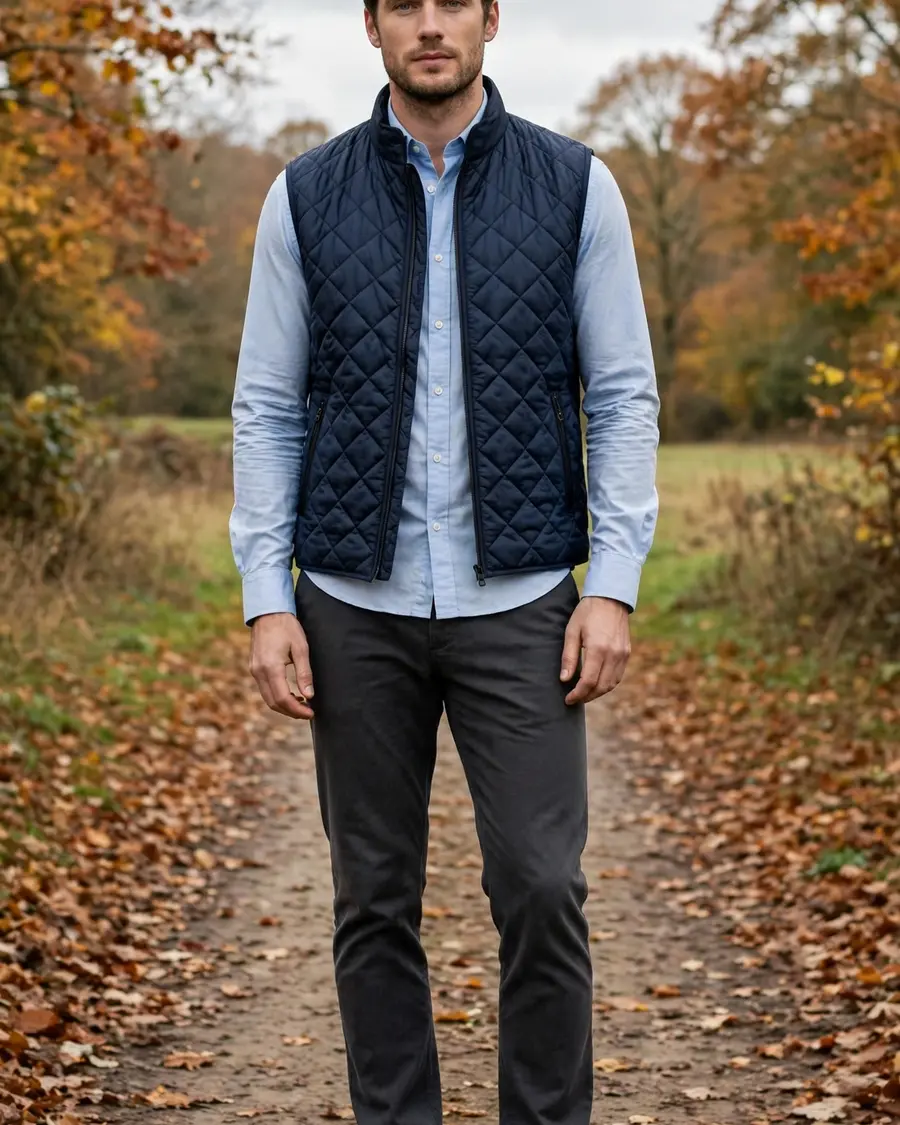
A quilted gilet over an Oxford is the practical fall layer for days that are cold but not cold enough for a coat. Choose a navy or olive gilet with a clean diamond quilt and a stand collar, worn over a white or light blue Oxford with the collar worn outside the gilet’s neckline. The shirt’s sleeves are the visible arm layer, so the Oxford must fit cleanly through the shoulder. Dark jeans or charcoal chinos and leather boots complete it.
The gilet warms the core while leaving the arms free, and the Oxford’s collar and cuffs finish the outfit better than a sweater would. It suits a walk, a market visit, or a casual outdoor lunch. On milder days, zip halfway so the shirt’s placket shows. Keep the palette to two or three tones: navy gilet, white shirt, dark jeans is the cleanest version.
10. Oxford with Olive Cargo Pants and White Sneakers

Olive cargo pants give the Oxford a relaxed, functional edge, and white sneakers keep the outfit feeling current rather than outdoorsy. Choose tapered cargo pants with low-profile pockets — a design detail, not storage. A white Oxford, untucked with a clean hem that ends mid-fly, softens the utilitarian trousers. White leather sneakers with a slim profile finish the look; bulky trainers would fight the shirt’s structure.
The balance comes from mixing one refined piece with one casual piece. The Oxford’s collar and placket bring order to the cargo’s relaxed shape, while the sneakers keep it from feeling dressed up. It suits travel days, a casual weekend, or a creative workplace. Roll the sleeves to the forearm, and skip a belt if the shirt is untucked — the clean hem is the detail that matters. If the cargos feel too casual, a half-tuck adds structure.
11. Oxford Layered Under a Quarter-Zip Sweater
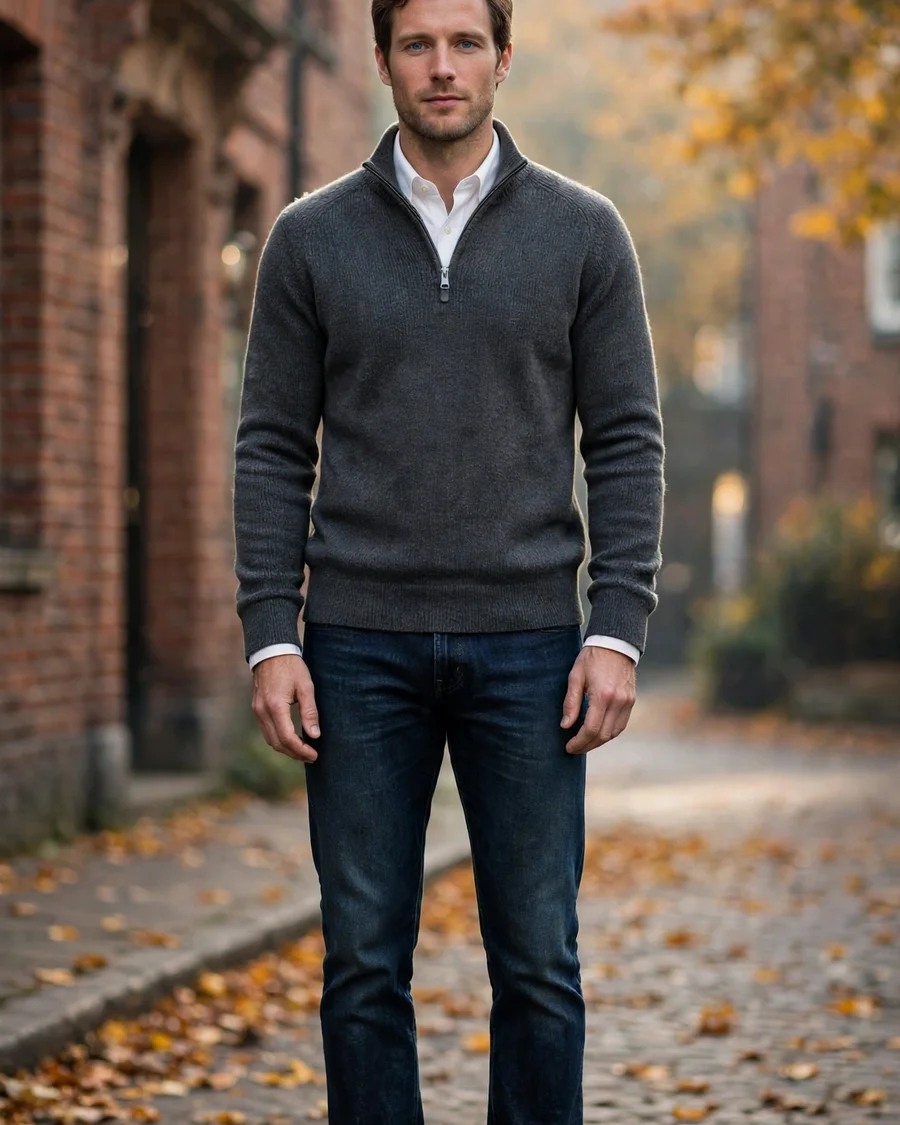
Layering an Oxford under a quarter-zip sweater is the classic cold-morning move, and it works because the shirt’s collar and cuffs add structure to soft knitwear. Choose a quarter-zip in navy, charcoal, or forest green, and wear a white or pale blue Oxford underneath with the collar peeking out at the neck and about a centimeter of cuff showing at the wrist. The sweater should fit close enough that the shirt never bunches. Dark jeans or navy chinos and suede boots or leather sneakers complete the outfit.
Each layer has a job: the Oxford crisps the neckline and cuffs, the quarter-zip provides warmth and color. It suits a casual office, a weekend errand run, or a fall evening out. Zip up fully for a cleaner silhouette, or leave it a quarter open to show the placket. Keep colors complementary, not matching — navy over blue blurs together, so a white shirt underneath is safer.
12. Oxford with Cream Chinos and a Camel Overcoat
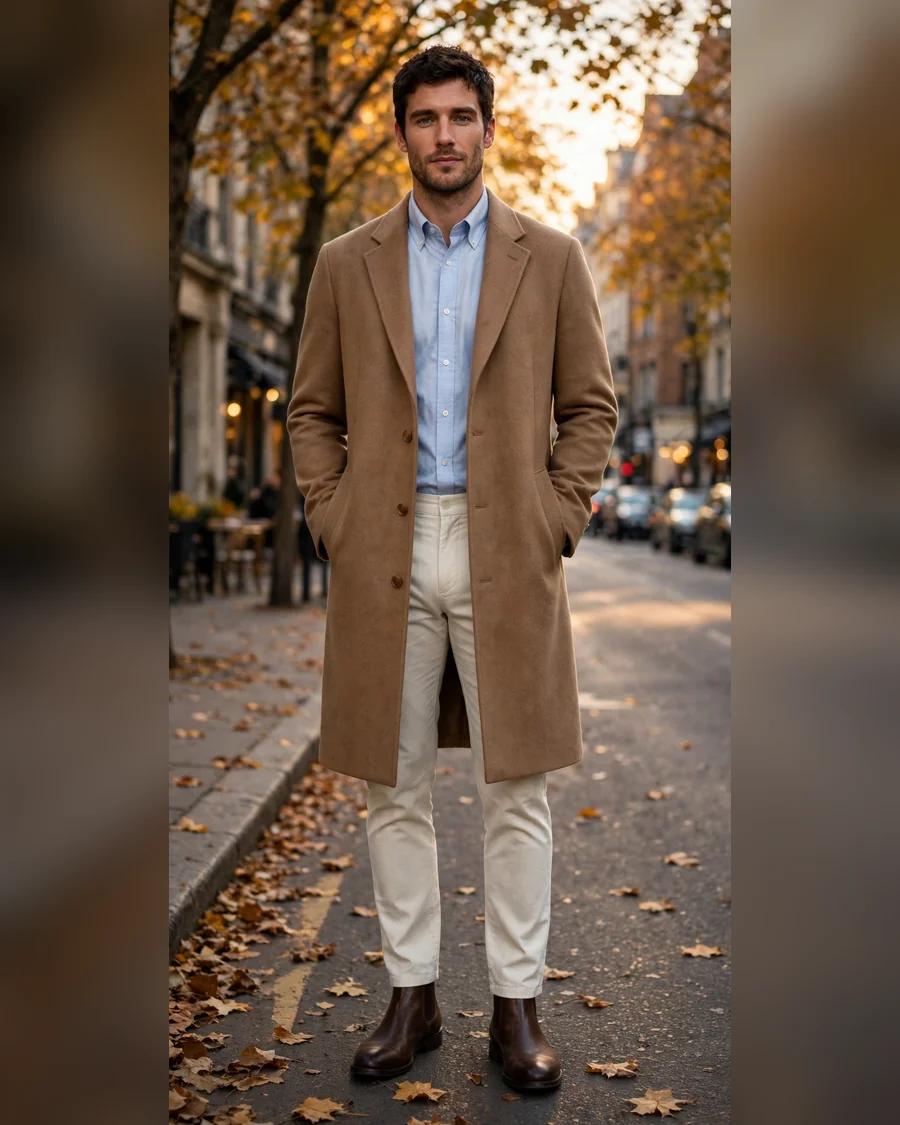
A camel overcoat over an Oxford is the most elegant outfit in this collection, and it proves the shirt can hold its own under real tailoring. Start with a pale blue Oxford tucked into cream chinos — the light tones make the camel coat glow. The overcoat should be a single-breasted wool style that ends just above the knee, with a clean lapel and no belt. Dark brown leather loafers or Chelsea boots ground the light palette, and a dark brown belt matches the shoes.
Cream and pale blue against camel creates a warm, tonal palette that looks expensive without loud details. The button-down collar sits neatly under the coat’s lapel, so nothing flaps when buttoned. It fits a smart dinner, a fall wedding guest look, or a day you want to look your best without a suit. Keep the chinos pressed with a crease, and carry a dark brown leather bag that echoes the shoes.
How to Apply These Oxford Shirt Outfits
Start with fit, because every outfit in this collection depends on it. The Oxford should sit cleanly at the shoulder seam, allow a flat hand between chest and fabric, and end long enough to stay tucked when you sit down. The collar should button down flat without pulling. Once the shirt fits, build outward: choose trousers or jeans that balance its structure, then add one outer layer at a time. Tuck or half-tuck deliberately — a full tuck suits blazers and smarter trousers, while a clean untucked hem works with cargos and open layers. For more fall outfit ideas built around the same layering logic, see our roundup of men’s fall outfits worth trying in 2026. Finally, match your leathers: belt, shoes, and watch strap in the same brown family pull an outfit together more reliably than any accessory.
Pro Tips
Buy midweight cotton with a touch of stretch — it holds its shape under layers and resists wrinkling. Own two — one white, one light blue — and you can build ten of these twelve outfits. Keep the collar buttons fastened; an unbuttoned collar flaps under jackets and ruins the lines. When layering, put the smoothest fabric closest to the body and the most textured fabric on the outside, so each layer reads clearly. Iron the collar and placket even when the rest of the shirt is fine — those are the parts people actually see. Wash Oxfords inside out in cold water and hang to dry; the basketweave keeps its texture far longer.
FAQ
Can you wear an Oxford shirt with jeans in fall? Yes — it is one of the most reliable combinations. Tuck a white or blue Oxford into straight-leg jeans, add a leather belt and loafers or clean sneakers, and it works for most casual and smart-casual settings.
What jacket goes best over an Oxford shirt? A denim jacket, a boiled-wool chore blazer, a quilted gilet, or an unstructured navy blazer all layer well over an Oxford. Choose by temperature: denim for mild days, boiled wool or a gilet when it turns cold.
Should an Oxford shirt be tucked in or untucked? Tuck it in with smarter trousers, blazers, and loafers. Leave it untucked with cargos, open over a tee, or with relaxed jeans — just keep the hem clean and ending around mid-fly.
What shoes work with Oxford shirt outfits? Leather loafers, suede chukkas, desert boots, Chelsea boots, and clean white sneakers all work. Match the shoe to the formality: loafers and Chelsea boots for smarter looks, sneakers and desert boots for relaxed ones.
Final Thoughts
The Oxford shirt earns its place in a fall wardrobe because it does quiet work: it sharpens jeans, softens tailored layers, and holds its shape under everything from a denim jacket to a camel overcoat. Pick the outfits that match the week you actually live, and build them around a white and a blue Oxford that fit properly. Small choices, like matching your leathers and buttoning the collar down, are what turn a good outfit into a polished one. Save the looks that feel most like you, and let the rest inspire the next version.