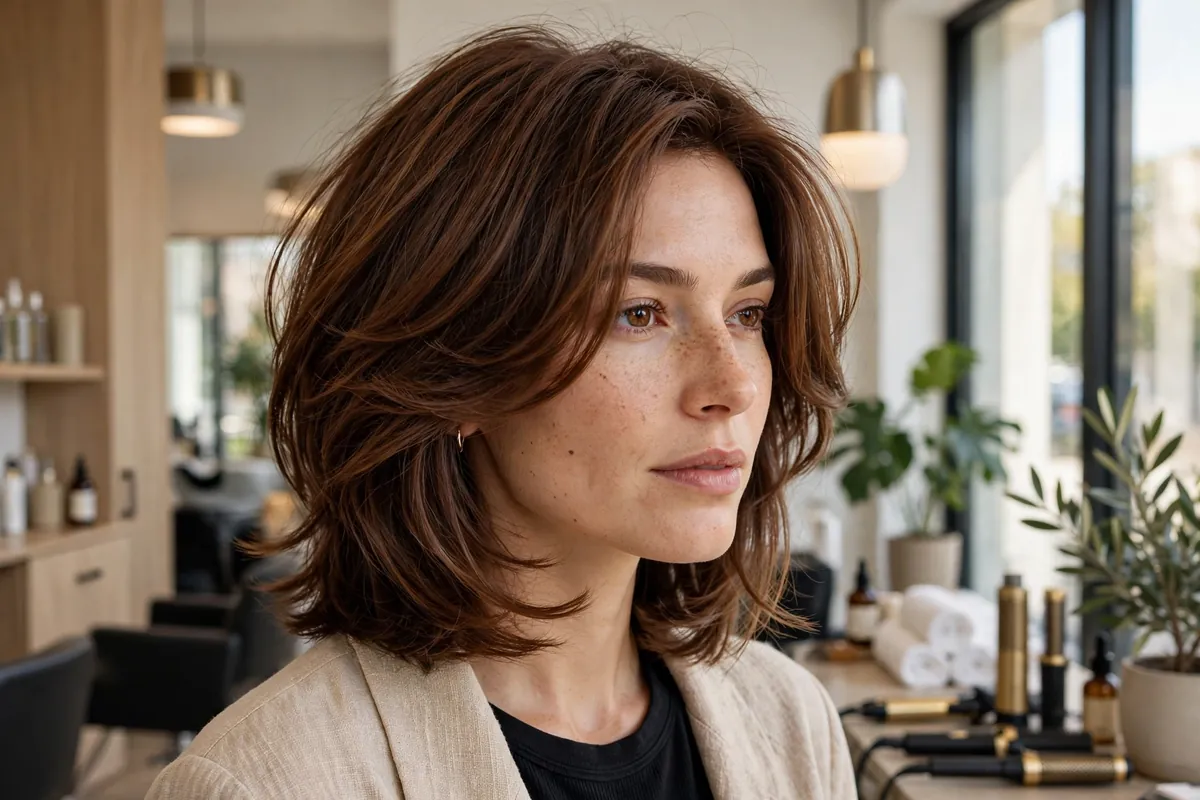
The kitty cut is the softer answer to the shaggy, high-drama layered cuts that have dominated the last few years. Where the wolf cut leans wild — long, choppy, heavily disconnected layers — the kitty cut keeps things refined: shorter, feathered layers that sit close to the face, a rounded silhouette, and just enough movement to feel alive without looking undone. It lands somewhere between a layered bob and a grown-out shag, which is exactly why it works for fall 2026. The length is practical under coats and scarves, the shape flatters nearly every face shape, and it grows out gracefully. Below are ten versions worth taking to your stylist, from a classic blowout to a curly take that proves layers and texture are a perfect match.
1. The Classic Soft-Layered Kitty Cut
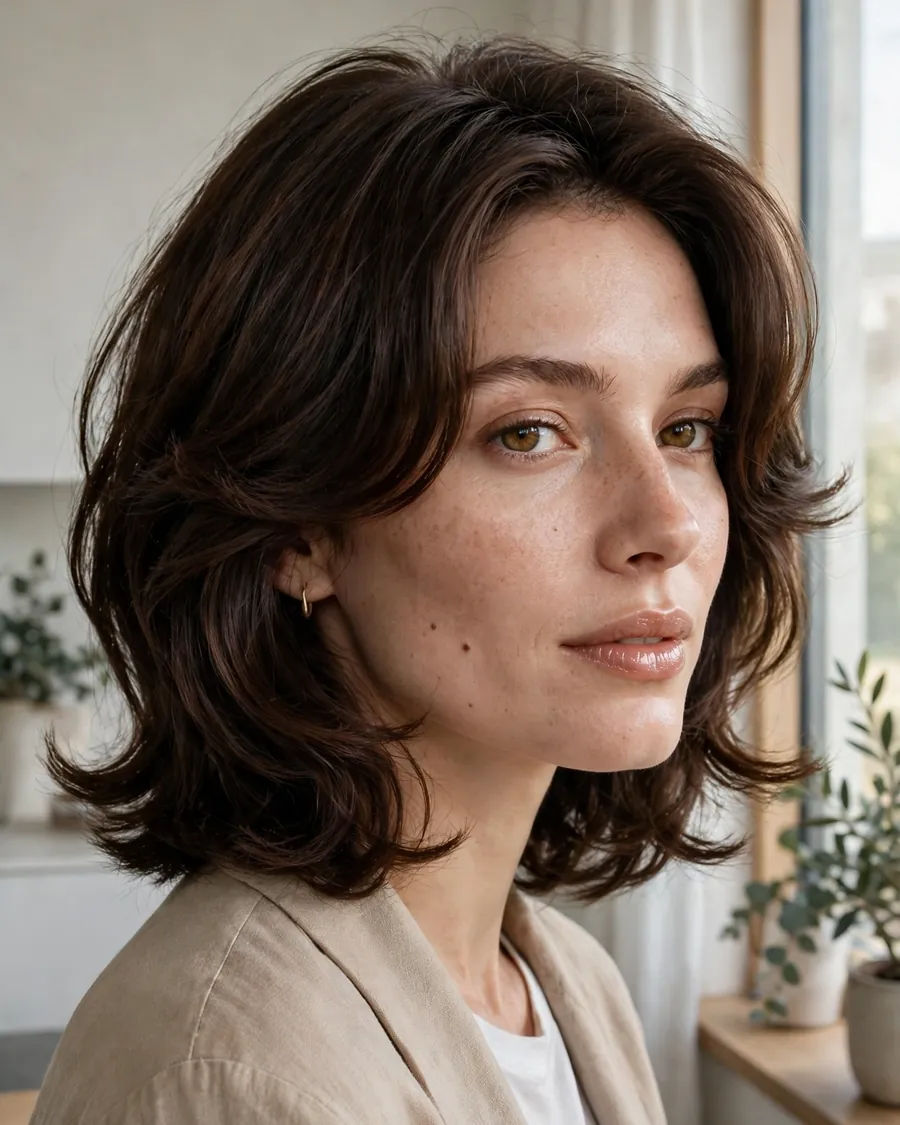
This is the version that defines the cut: shoulder-length hair with short, feathered layers that begin around the cheekbones and cascade gently downward, creating a rounded shape that hugs the head rather than exploding outward. The ends are blow-dried with a slight inward curve, so the silhouette reads polished from every angle, and the crown carries soft volume instead of flatness or height. It works because the layers are close together in length — the difference between the shortest face-framing piece and the longest back layer is small, which keeps the outline full and even. That restraint is what separates it from a shag. It suits oval, round, and heart-shaped faces particularly well, since the cheekbone layers draw attention to the eyes and cheekbones. Ask your stylist to keep the perimeter at the shoulders and the layers blended, not chunky, and style it with a round brush and a light smoothing cream such as Oribe Supershine or Kérastase L’Incroyable Blowdry for a finish that moves.
2. Kitty Cut with Curtain Bangs
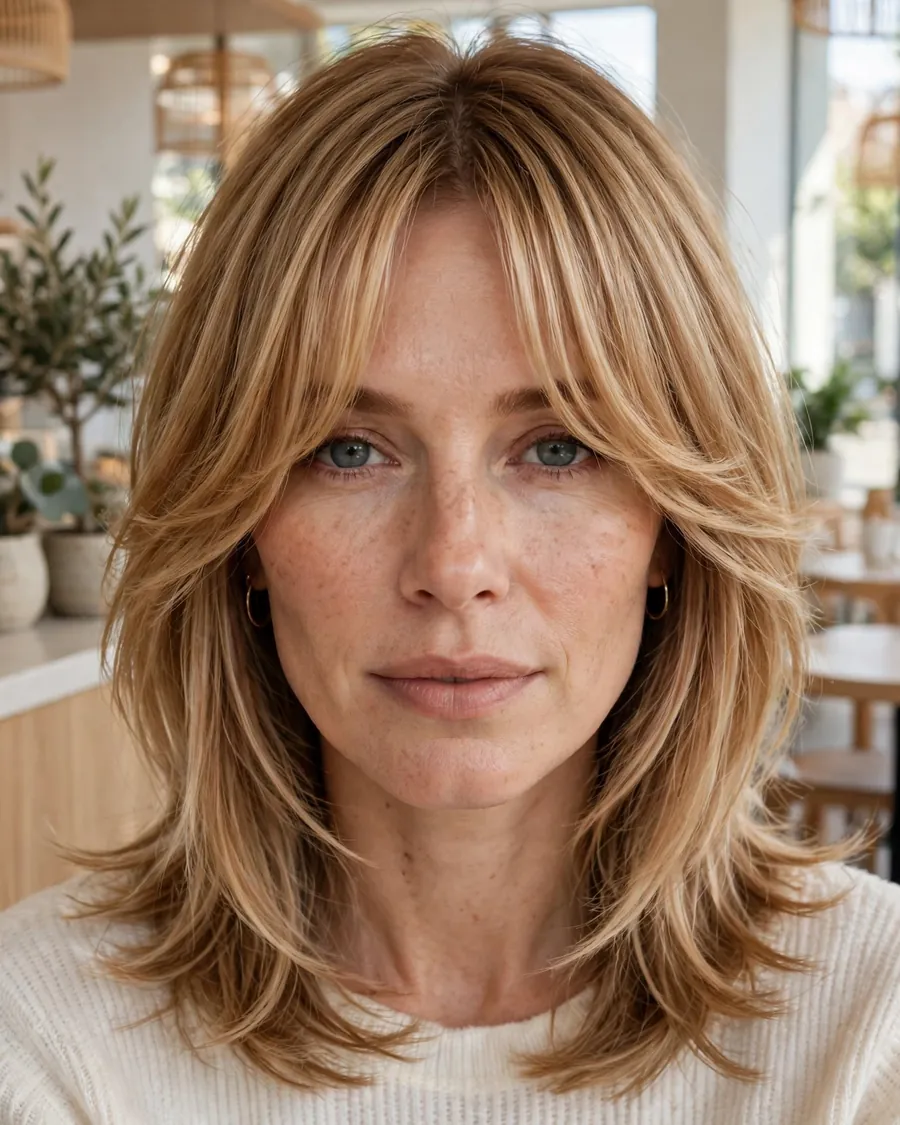
Pairing a kitty cut with curtain bangs is the easiest way to make the style feel deliberate rather than accidental. The bangs part in the middle and sweep to each side, melting directly into the face-framing layers so there is no harsh line where fringe ends and layers begin. On honey blonde hair, the effect is especially pretty: the lighter pieces around the face catch the light and make the whole cut look brighter without a full color change. The rest of the hair stays at shoulder length with soft feathering, so the look stays balanced — the bangs add interest up front while the back keeps its simple, rounded shape. This version is ideal if you want a change but are not ready to commit to a short fringe, since curtain bangs grow out into layers seamlessly. Style them by blow-drying with a round brush, rolling each side away from the face, and finishing with a flexible-hold spray like Living Proof Flex Hairspray.
3. The Flipped-End Kitty Cut
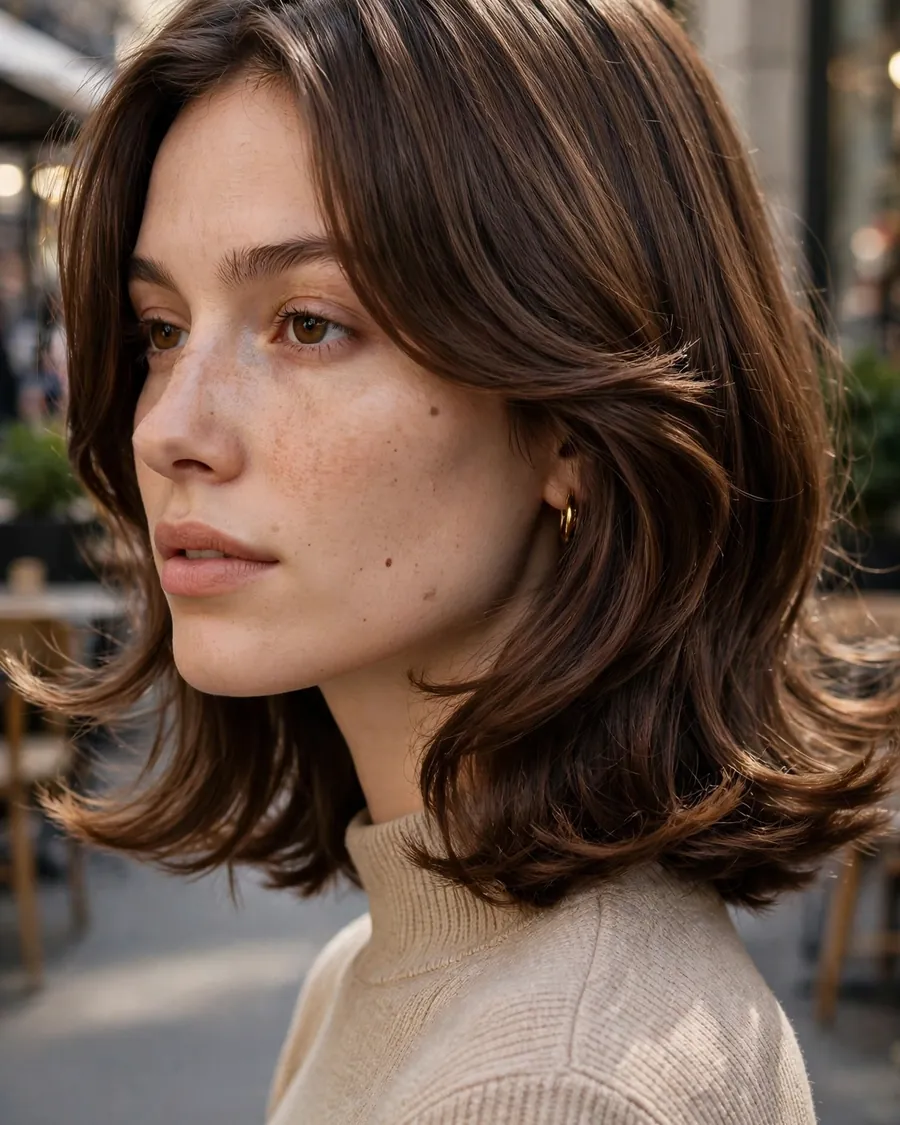
If the classic kitty cut reads polished, this version reads playful. The layers are the same short, feathered ones, but the ends are flicked outward with a round brush or a flat iron turned away from the face, giving the silhouette a light, bouncy kick. The movement is the whole point: every time you turn your head, the ends swing, and the cut looks full of energy without any teasing or heavy product. Medium brown hair shows the flick best, because the light catches each flipped piece separately. Keep the flip subtle — a gentle outward curve, not a full retro wing — and the result stays modern rather than costume-like. This is also a smart choice for hair that tends to fall flat, since flipped ends create the illusion of width and body at the bottom of the cut. To recreate it, blow-dry sections outward with a medium round brush, set the flip with a quick blast of cool air, and add a pea-sized amount of Davines OI All In One Milk for shine without weight.
4. The Short, Airy Kitty Cut for Fine Hair
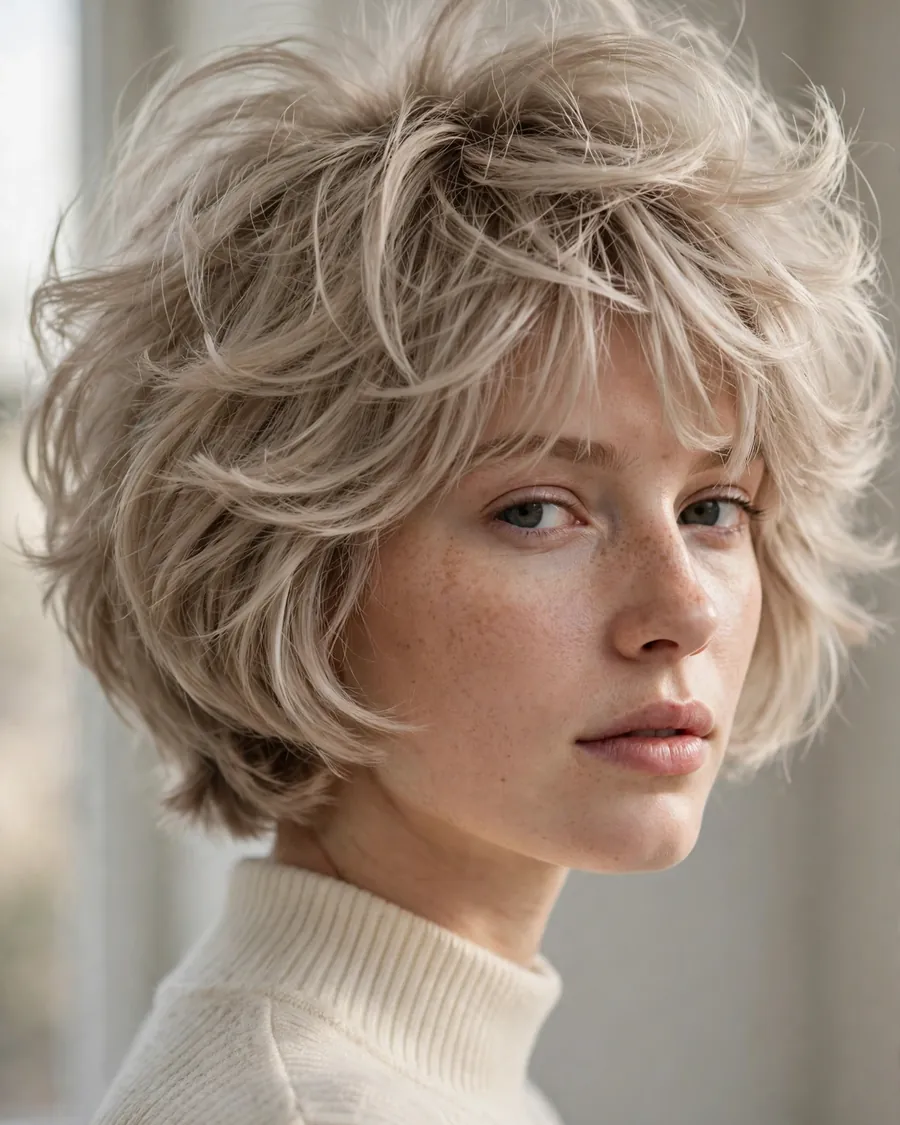
Fine hair is where the kitty cut earns its keep. Cut shorter — ending around the jaw and chin rather than the shoulders — with choppy, airy layers throughout, it creates volume that fine hair rarely manages on its own. The layers are deliberately piecey here, so the hair does not collapse into one thin sheet; instead, each layer supports the one above it, and the whole shape looks twice as thick as it is. The ash blonde in this version helps too, since lighter, multi-tonal color adds visual depth that flat, single-process color cannot. Keep the styling light: a volumizing mousse like Color Wow Raise the Root applied at the roots before blow-drying, then a quick tousle with the fingers rather than a brush, which would flatten everything you just built. Avoid heavy oils and serums, which drag fine layers down. With a trim every six weeks, this shorter kitty cut holds its shape and never reaches that awkward, stringy stage fine hair is prone to.
5. Kitty Cut with Caramel Face-Framing Balayage
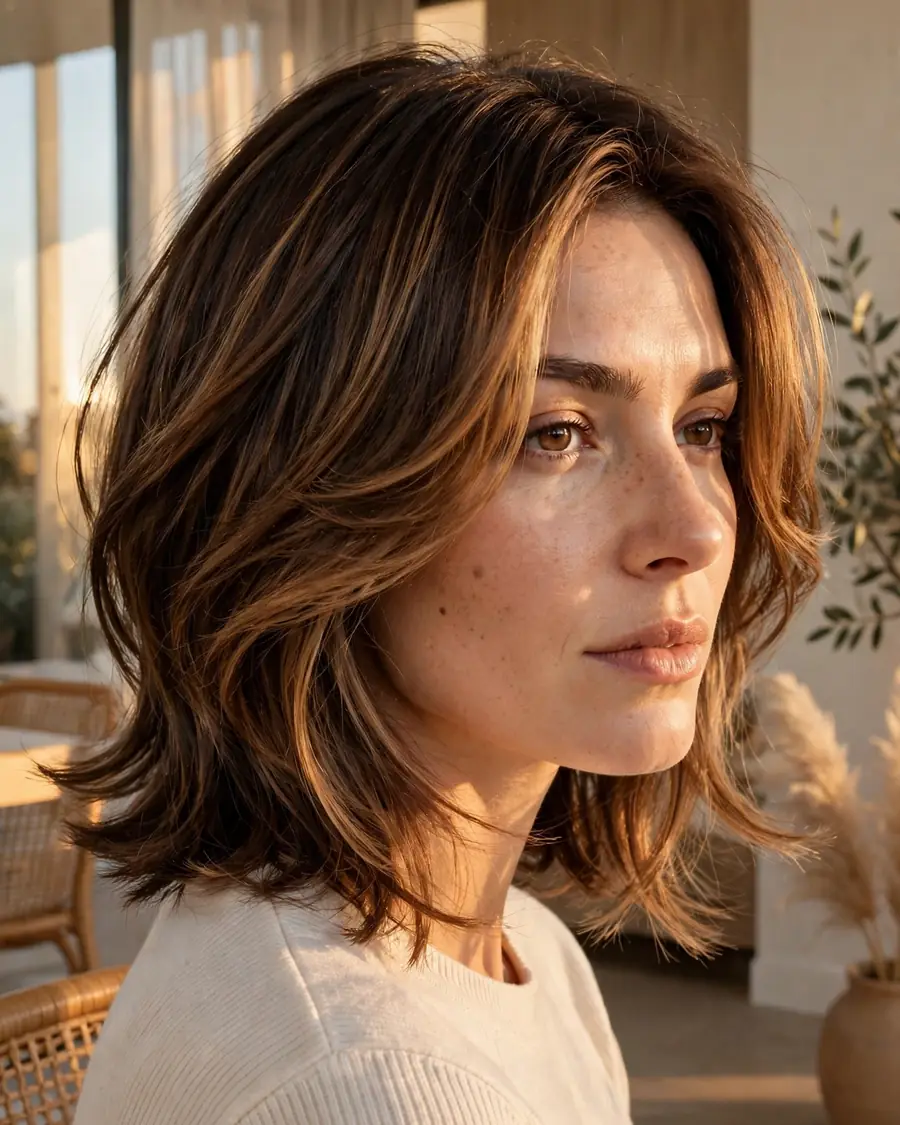
Color is the fastest way to make a kitty cut look custom, and caramel balayage placed around the face is the most flattering route. The base stays a rich dark brown, while hand-painted caramel pieces concentrate on the shortest face-framing layers, so the highlights follow the exact lines of the cut and make the layering visible from across the room. Unlike a full head of highlights, this placement grows out softly — there is no harsh regrowth line — which means fewer salon visits and a lower-maintenance color routine. The warmth of the caramel also suits fall perfectly, echoing the season’s palette without going full copper. Ask your colorist for a balayage or a “money piece” that is blended rather than striped, and keep the contrast to two or three shades lighter than your base so it reads sun-kissed, not streaky. At home, a purple-free color-safe shampoo and a weekly mask like Olaplex No. 8 keep the caramel glossy and prevent it from turning brassy.
6. The Textured Wavy Kitty Cut
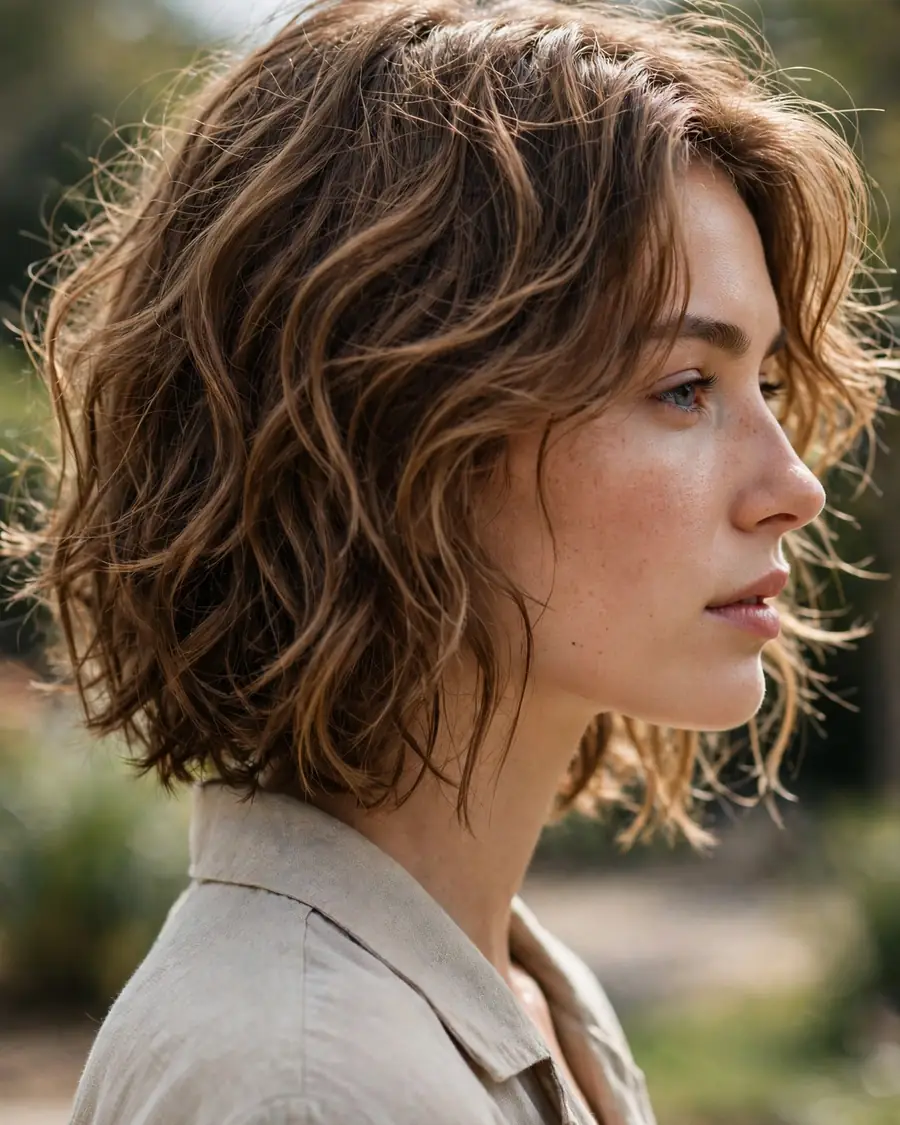
For naturally wavy hair, the kitty cut is less of a style and more of a shortcut to good hair days. Short layers remove the weight that pulls waves straight, so the natural bend springs up and the texture looks intentional instead of frizzy. The key is cutting the layers to follow your wave pattern rather than fighting it: your stylist should cut it dry or with your waves intact, so each layer lands where your hair actually bends. The result is a tousled, air-dried shape with soft movement through the mid-lengths and ends, no hot tools required. A curl cream or wave spray — Ouai Wave Spray or Bumble and bumble Surf Infusion — scrunched into damp hair is usually all the styling this version needs. If your waves are uneven, a large-barrel curling iron on just the flattest sections will even things out without turning the whole head into uniform curls. This is the lowest-effort kitty cut in the collection, and on the right texture it is also the most convincing.
7. Kitty Cut with Side-Swept Bangs
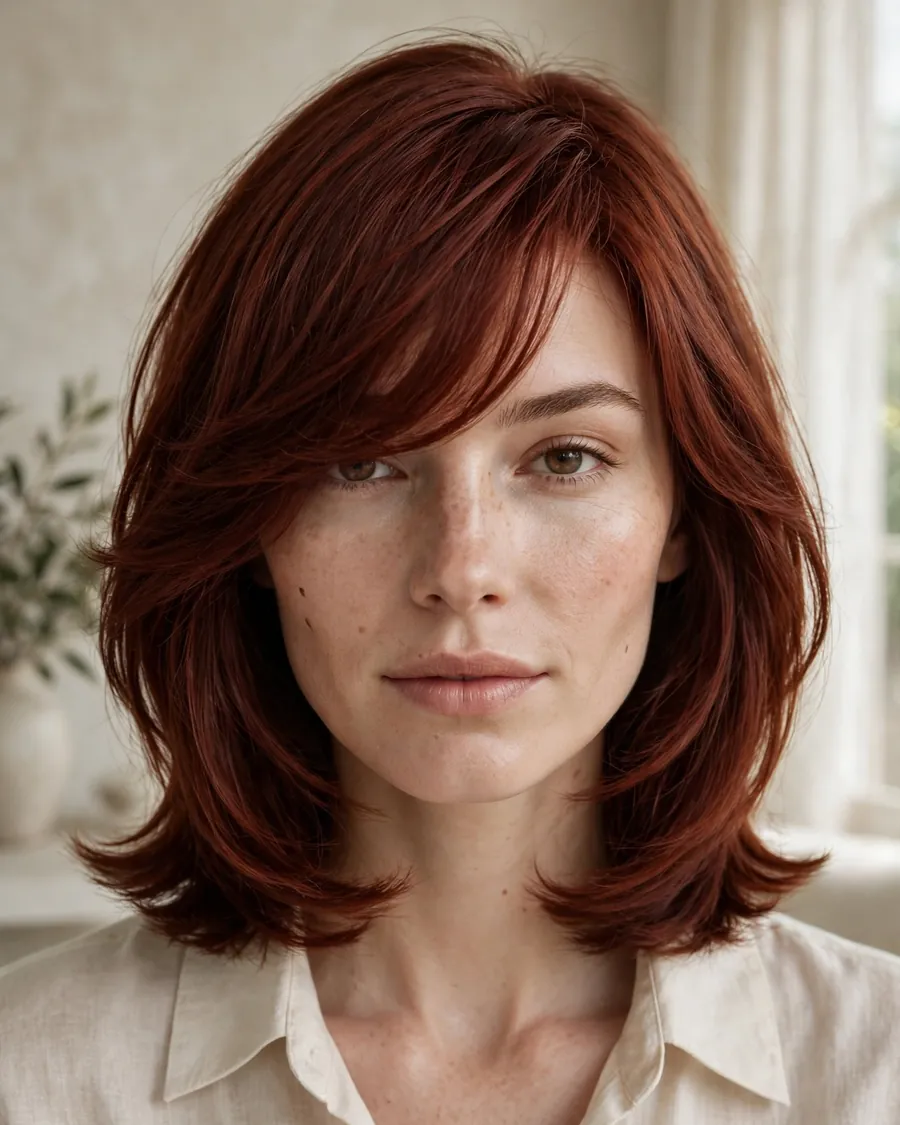
Side-swept bangs give the kitty cut a different personality: a little more drama, a little more evening-ready, without changing the length at all. The fringe is cut long — sweeping diagonally from a deep side part across the forehead and blending into the face-framing layers — so it softens the forehead and draws a diagonal line across the face that is flattering on square and round face shapes in particular. Deep auburn makes this version feel especially autumnal, and the richness of the color pairs well with the cut’s softness. Styling is simple: blow-dry the bangs with a round brush in the direction of the sweep, then let them fall naturally rather than pinning them into place. The trick is not to overwork them — a side-swept bang looks best slightly imperfect, with a few pieces breaking free. If you are deciding between this and curtain bangs, choose side-swept when you want more coverage across the forehead, and curtain bangs when you want your face more open.
8. The Sleek Glassy Kitty Cut
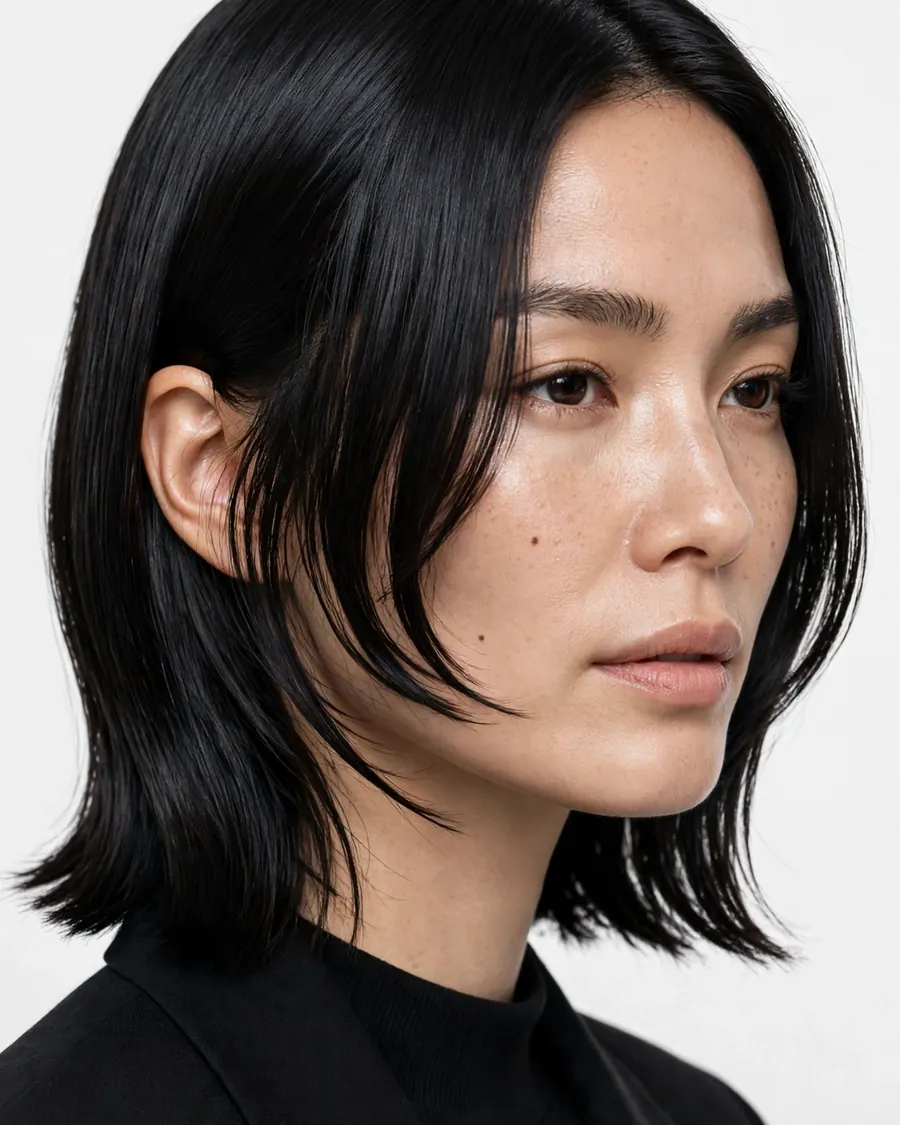
Not every kitty cut has to be tousled. Cut with the same short face-framing layers but styled pin-straight with a glass-like shine, it becomes a sharp, minimal look that works beautifully for the office and for evenings. The layers here are the secret: on straight hair they show up as clean, feathered edges around the face rather than blunt lines, so the cut keeps its softness even when the finish is severe. Jet black hair takes this to its most striking, since the shine reads almost mirror-like. Achieving it takes a flat iron — GHD Platinum+ or Dyson Corrale — run in slow, even passes, plus a heat protectant and a tiny amount of shine serum on the ends only, never the roots, where it would flatten the crown. If your hair is naturally straight, this is the lowest-maintenance version of all: the cut does the shaping, and the iron just polishes it. Readers who love this shorter, sharper length may also like our roundup of bob haircuts trending this fall, which explores even shorter takes on the same idea.
9. The Curly Kitty Cut
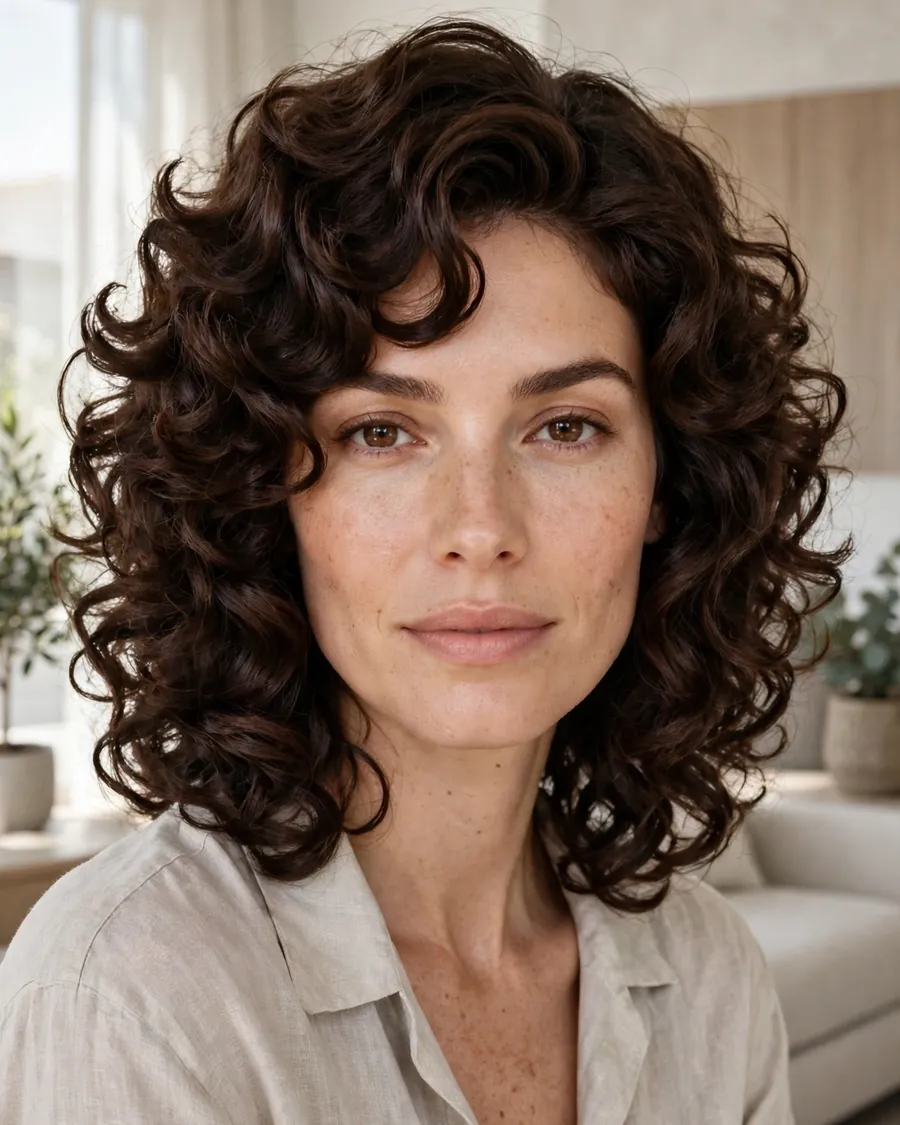
Curly hair and short layers used to be a risky combination, but the kitty cut’s rounded, blended layering is exactly what curls need. Instead of one heavy triangle shape, the layers are stacked so the volume sits evenly around the head, and the face-framing pieces are cut slightly longer to account for shrinkage — a detail a curl-experienced stylist will handle by cutting your hair dry, curl by curl. The result is a defined, bouncy shape with curls that spring at different lengths, which reads as intentional texture rather than bulk. Dark brown curls show the shape beautifully because the light and shadow between curls define each layer. Styling is about definition, not control: a curl cream like Pattern Curl Gel or Ouidad Advanced Climate Control, scrunched into soaking-wet hair and either diffused or air-dried, then gently shaken out at the roots once fully dry. Never brush curly layers dry — that is how the shape turns to frizz. With the right cut, curls do most of the work themselves.
10. The Bouncy Blowout Kitty Cut
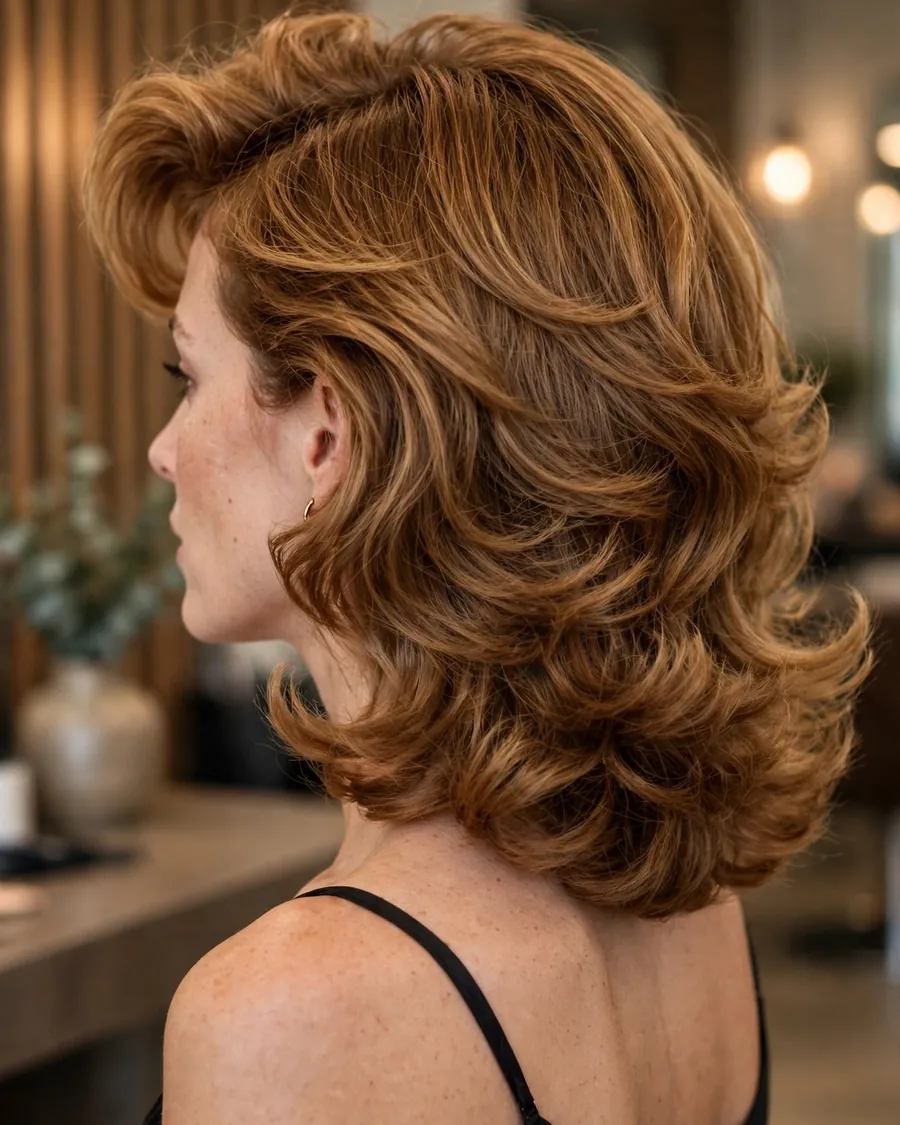
This is the kitty cut at its most glamorous: the same feathered layers, blown out with big volume, soft curl at the ends, and a swing that feels straight out of a salon chair. The layers are what make the blowout work — without them, the hair would be one heavy mass; with them, each section lifts and turns independently, building height at the crown and movement through the ends. Warm golden brown is a natural partner for this finish, since the dimension in the color catches the light as the hair moves. A large round brush, a blow-dryer with a concentrator nozzle, and Velcro rollers set at the crown while the hair cools will get you most of the way there at home. If you love this high-volume finish, our guide to 90s blowout hairstyles making a comeback breaks down the technique in full. For the kitty cut specifically, keep the blowout’s volume soft rather than teased — the cut’s charm is that it looks full without looking forced.
How to Ask Your Stylist for a Kitty Cut
Bring two or three photos of the exact version you want, and use the cut’s own language: “short, feathered, face-framing layers,” a length that ends at the shoulders or just above, and a rounded silhouette with blended — not choppy — layers. Point out where you want the shortest layer to start: cheekbone for a face-framing effect, chin if you want it softer. Tell your stylist how you actually style your hair day to day — air-dried waves need different layering than a daily round-brush blowout. Ask whether your hair should be cut dry or wet — dry cutting suits curls and waves, wet cutting suits straight hair. Most kitty cuts need a trim every six to eight weeks to keep the layers from collapsing into one length, though curly versions can stretch to ten. At home, the daily routine is simple: a heat protectant before any hot tool, a round brush for smoothness or a diffuser for texture, and a light finishing product rather than anything heavy that would weigh the layers down.
Pro Tips
- Cut it slightly longer than you think you want it — layers spring up as they dry, especially on wavy and curly hair, and you can always take more off at the next visit.
- Use a texturizing spray instead of hairspray for hold: it keeps the feathered layers separated and touchable rather than glued together.
- Sleep on a silk pillowcase to protect the blowout’s shape overnight, and refresh the layers in the morning with a quick round-brush pass on the front sections only.
- If your ends start to look thin, that is your trim signal — the kitty cut depends on full, healthy ends to hold its rounded outline.
Frequently Asked Questions
What is the difference between a kitty cut and a wolf cut? The wolf cut is longer, choppier and deliberately wild, with disconnected layers and a mullet-like shape at the back. The kitty cut is its softer, shorter, more refined counterpart: the layers are feathered and blended, the length stays around the shoulders, and the silhouette is rounded rather than spiky.
Will a kitty cut work on fine hair? Yes — it is one of the best layered cuts for fine hair, as long as the layers stay short and the length stays above the shoulders. Longer layers just remove weight without adding shape, while the kitty cut’s close, feathered layers build volume.
How often should I get a kitty cut trimmed? Every six to eight weeks for straight and wavy hair, and every eight to ten weeks for curly hair. Letting the layers grow out too long loses the feathered outline that defines the cut.
Can I style a kitty cut without heat? Absolutely, especially on wavy or curly hair: scrunch wave spray or curl cream into damp hair and let it air-dry. On straight hair, braiding damp hair overnight gives soft bends that mimic a blowout without hot tools.
Final Thoughts
The kitty cut works because it refuses to choose between polish and personality — it gives you the movement of a shag with the manners of a classic layered cut. Pick the version that matches your texture and your real morning routine, and take the specifics from this guide to your stylist. Save the looks that feel like you, adapt the details, and let the cut settle for a week before judging it. The best version is the one you actually enjoy styling.