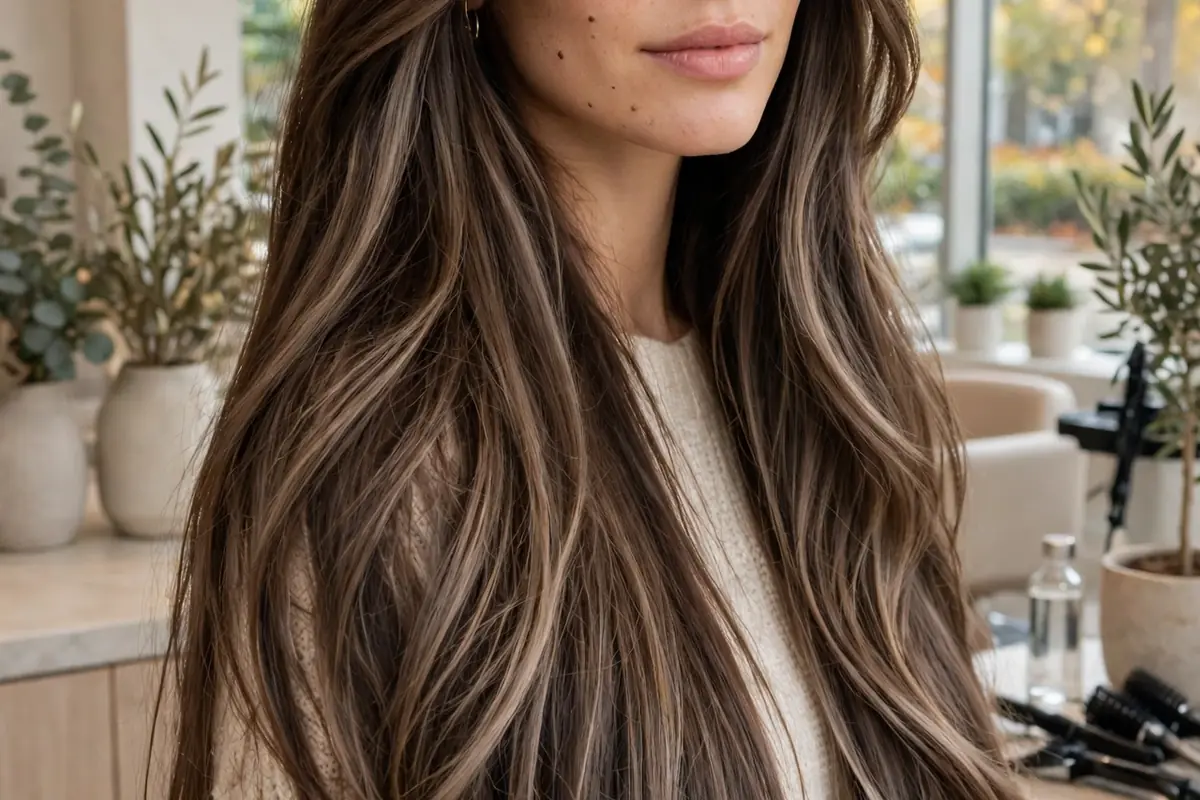
Mocha balayage has quietly become fall’s most wearable brunette colour. Instead of a flat, single-process brown, it paints soft mocha ribbons through the mid-lengths and ends, leaving the roots darker and the grow-out gentle. The result reads rich in low autumn light, dimensional outdoors, and easy to live with between appointments. This collection covers long layers, lobs, curls, sleek finishes, and low-maintenance grow-outs, all built around cool-neutral mocha rather than warm copper or red tones. Each idea below explains the placement, the finish, and how to ask for it, so you can walk into the salon with a clear picture in mind.
1. Classic Mocha Ribbon Balayage on Long Layers

This is the version most people picture when they hear mocha balayage: long hair, softly layered ends, and ribbons of mocha painted freehand through the lower two-thirds. The colourist keeps the root area close to your natural brunette, then weaves lighter mocha pieces in varying widths so the dimension looks organic rather than striped. Long layers are essential here because they let the lighter ribbons fall at different points, which stops the colour from forming one harsh horizontal line. Ask for a cool-neutral mocha, not a golden brown, and a gloss to seal the tone. It suits straight, wavy, and lightly textured hair, and it works especially well if you want visible change without committing to an all-over lighter shade. For the cut itself, long layered haircuts give this colour the movement it needs. Keep the ends healthy with regular trims, since split ends break up the ribbon effect. A wide-tooth comb after washing keeps the layers separating cleanly.
2. Lived-In Root Melt Mocha

A root melt takes the lived-in idea further. Your colourist blends your natural root colour down a few inches, melting it into mocha so there is no visible line where the dark root ends and the lighter hair begins. The mocha then opens up gradually toward the ends, which keeps the overall look grounded and soft. This is a strong choice if you stretch appointments to three or four months, because regrowth simply looks like part of the blend. It also suits anyone who dislikes the high-contrast root look of traditional highlights. The finish should stay muted and smoky rather than bright: think coffee with cream, not caramel. A toner or gloss after painting keeps the mocha cool and prevents it from warming up as it fades. Style it with a loose blowout or air-dried waves, and the melt will do most of the visual work on its own. Even a simple centre part keeps the melt looking balanced.
3. Soft Mocha Dimension on a Dark Brown Base

If your base is already dark brown, you do not need much lift to get mocha dimension. Here the painted pieces sit only one or two levels lighter than the base, creating depth you notice in sunlight without a dramatic colour change. That restraint is the point: the hair looks thicker, glossier, and more expensive, but nobody can quite pinpoint why. Ask your colourist to concentrate the lighter ribbons around the mid-lengths and to keep the pieces fine and varied, rather than chunky. A cool mocha gloss ties everything together and adds shine, which matters more than brightness on dark hair. This version is ideal for a first balayage, for office-friendly colour, or for anyone returning to brunette after a lighter phase. It also grows out almost invisibly, making it one of the lowest-commitment options in this collection. It also suits first-time colour clients nervous about visible change. Ask for a patch test first if unsure.
4. Mocha Balayage with a Soft Face Frame

A face frame concentrates the lightest mocha pieces around the hairline, brightening the face without lightening the whole head. The key word is soft: the pieces should start a little below the root, feather upward, and stay in the mocha family rather than jumping to blonde. When it is done well, the frame catches light when you turn your head and makes the rest of the balayage feel intentional. Pair it with a middle or slightly off-centre part so the frame falls evenly on both sides, and keep the back a touch deeper so the contrast reads as dimension, not as two different colours. This idea suits most face shapes because the colourist can adjust where the lightest pieces sit: higher for brightness near the cheekbones, lower for a gentler effect. Finish with a gloss to keep the frame cool and blended. Avoid over-lightening the front, which quickly turns a soft frame harsh.
5. Cool-Toned Mocha on Sleek Straight Hair

Balayage is often shown on waves, but it can look striking on sleek, straight hair too. On a straight finish, every ribbon is visible, so placement has to be precise: fine, evenly distributed mocha pieces that read as a smooth gradient from dark root to softly lightened ends. The cool tone is what keeps this version modern. Warm browns can turn brassy on straight hair under indoor light, while a cool-neutral mocha stays smoky and clean. Blow-dry with a round brush or flat brush for a polished finish, and use a lightweight shine serum rather than heavy oil, which can darken the lighter pieces. This is a good pick if you wear your hair straight most days and want colour that still shows up in a simple style. It also photographs beautifully, which is part of why it performs so well on Pinterest. A smoothing cream tames flyaways without weighing the ribbons down.
6. Mocha Balayage with Loose Neutral Waves

Loose waves are the easiest way to show off mocha dimension, because the bends in the hair catch light at different points and reveal both the dark base and the lighter ribbons. Keep the wave pattern relaxed: large-barrel curls brushed out, or braids left overnight, rather than tight ringlets. The mocha should stay cool-neutral throughout, with no copper or golden pieces mixed in, so the overall effect reads as a rich brunette rather than a warm brown. This styling also forgives a slightly grown-out balayage, since the waves break up any line of demarcation. Use a light texturising spray for grip and a flexible hold spray to finish, and avoid heavy waxes that clump the waves together. It is a practical everyday style that still looks finished, and it transitions easily from daytime errands to an evening out. Finger-combing the waves keeps them soft rather than structured. Avoid brushing them out completely.
7. Mocha Balayage on a Long Bob
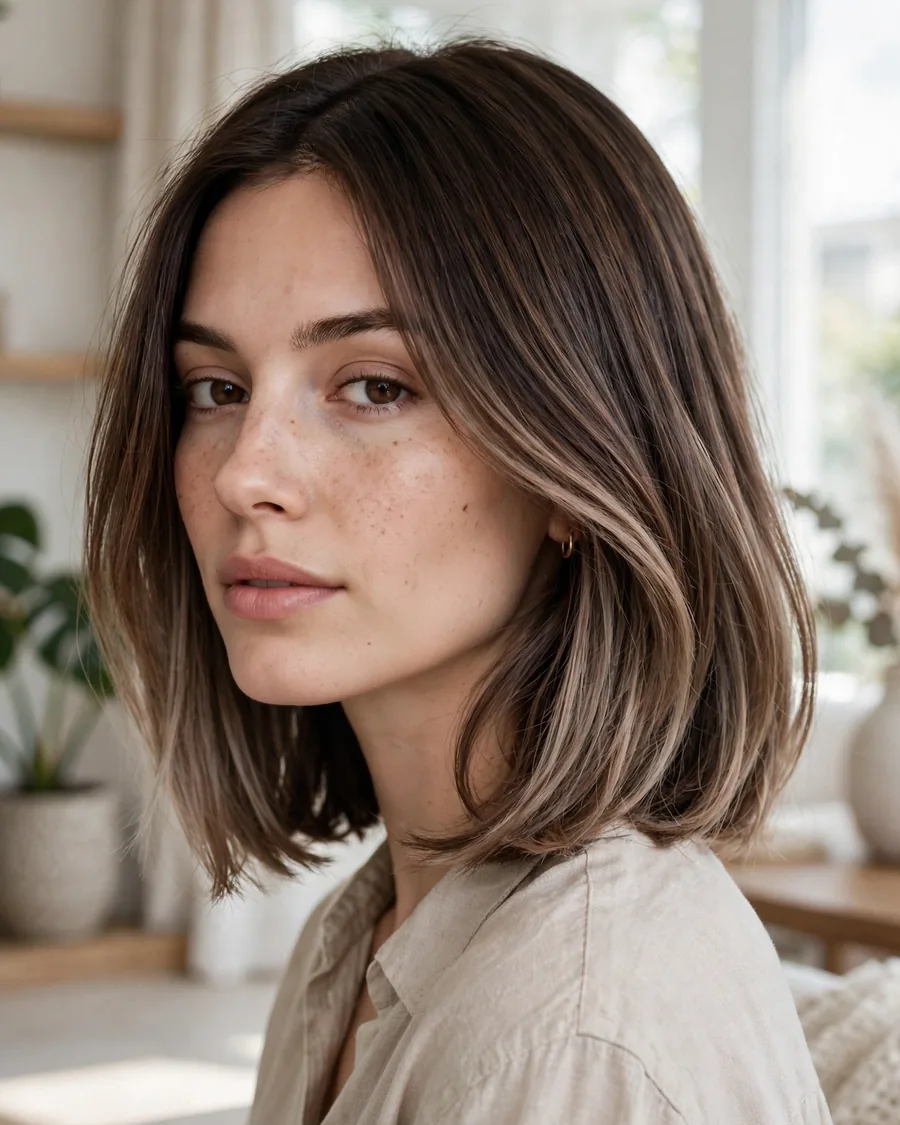
A long bob, or lob, gives mocha balayage a sharper frame. With less length to work with, the colourist paints the mocha through the lower half and concentrates brightness near the ends, which makes the cut look fuller and more deliberate. Keep the base dark and the mocha cool, and ask for the lightest pieces to sit just above the ends rather than at the very tips, so the lob does not look dipped in colour. A slight inward bend at the ends, done with a flat iron or round brush, shows the dimension without extra effort. For cut inspiration, bob haircuts trending this fall pair naturally with this placement. This version suits fine to medium hair especially well, because the dimension adds visual thickness. It is also easy to maintain: the shorter length means less fading, less breakage, and quicker styling. The shorter length also means the gloss refreshes faster at each appointment.
8. Fine Mocha Babylights Blend

Babylights are very fine, delicate highlights, and when they are painted in mocha instead of blonde, the result is a soft, sun-kissed brunette rather than a highlighted look. The colourist weaves tiny sections throughout the mid-lengths and ends, keeping each piece close to the base colour, so the dimension builds gradually instead of announcing itself. This is the most subtle idea in the collection, and it is best for anyone who wants change they can feel more than see, or who works in a setting where obvious colour would feel like too much. Because the pieces are fine, the grow-out is exceptionally gentle, and a gloss every couple of months is often enough to refresh the tone. Style it straight for a clean, dimensional finish, or with a soft wave to let the fine pieces catch the light. Either way, the hair should read as naturally dimensional brunette. This restraint is exactly what makes the result look expensive.
9. Mocha Balayage with Curtain Bangs

Curtain bangs change how balayage is read, because the shorter front pieces frame the face and draw the eye upward. Keep the bangs themselves close to the base colour, with only the faintest mocha feathering at their ends, so they blend into the longer layers instead of looking like a separate coloured section. The main mocha ribbons then start just behind the bangs and build through the lengths. This balance matters: too much lightness in the bangs can look harsh, while too little makes the front feel disconnected from the rest of the colour. Blow-dry the bangs with a round brush, sweeping them outward and away from the face, and let the longer layers fall softly around the shoulders. The combination suits oval, round, and heart-shaped faces, and it gives long hair a styled finish even on days when the rest is simply air-dried. Keep the bang length at cheekbone level or below for easy styling.
10. Rich Mocha Dimension on Curly Hair

Curly hair takes balayage differently, because each curl reflects light on its own. Rather than painting continuous ribbons, the colourist places mocha on selected curls and on the outer layer, so the dimension appears as the curls move and separate. The mocha should be a rich, cool-neutral brown that adds depth without flattening the curl pattern or creating a halo of lighter frizz. A gloss or toner after colour helps seal the cuticle, which is especially important for curls, since a rough cuticle scatters light and dulls the tone. Style with a curl cream and diffuser, scrunching gently so the mocha pieces stay distributed through the shape. This idea works across curl types, from loose waves to tighter coils, as long as the placement follows the curl pattern rather than fighting it. The result is dimensional, defined, and unmistakably brunette. Diffusing on low heat protects both curl definition and colour longevity.
11. Low-Maintenance Mocha Grow-Out

This idea is designed for the person who wants balayage once and then mostly forgets about it. The colourist keeps the top six inches almost untouched, paints mocha sparingly through the mid-lengths, and lets the ends carry the most lightness. Because the darkest area is so deep, regrowth blends in for months, and the only maintenance is a gloss every eight to twelve weeks to keep the mocha cool. It is also a forgiving choice if your hair is fine or fragile, since less of it is lightened. Between appointments, use a colour-safe shampoo, wash in cooler water, and limit heat styling where you can. When you do return to the salon, the colourist can simply refresh the gloss and add a few new ribbons, rather than redoing the whole balayage. That is the appeal: the colour keeps looking deliberate long after the appointment, without constant upkeep. That slow fade is why this version suits busy schedules so well.
12. Glossy Mocha Ends on Medium Layers

Here the drama sits at the ends. Medium layers keep the shape bouncy and full, while the mocha concentrates in the lower third, building to a glossy, softly lightened finish at the tips. The transition should be gradual, not a hard block: fine ribbons increase in density as they travel down, so the ends look sun-warmed rather than dipped. A clear or mocha gloss is non-negotiable for this version, because shine is what sells the ends. Without it, lightened tips can look dry, even when they are healthy. Blow-dry with a round brush and turn the ends slightly under or out, depending on the layer shape, to show the gradient. This idea suits medium-length hair that has started to feel flat, since the lighter ends draw the eye downward and give the cut a clear focal point. A light shine spray finishes the ends without making them look oily. It also pairs well with a centre part and minimal styling.
How to Ask Your Colourist
Bring two or three photos of the exact idea you want, not a mix of different colours, and name the tone clearly: cool-neutral mocha balayage, painted freehand, with a dark root and a lived-in grow-out. Mention your base colour, how often you want appointments, and whether you prefer subtle or visible dimension, because those answers change the placement. Ask for a gloss or toner to lock in the cool tone, and ask what maintenance the colourist expects between visits. If you use Olaplex or a similar bond builder during lightening, say so at booking, since it affects timing. Finally, confirm the finish: sleek, wavy, or natural, so the colourist can check the placement in the style you actually wear.
Pro Tips
- Use a colour-safe, sulphate-free shampoo and wash in cooler water to slow fading.
- Book a mocha gloss every eight to twelve weeks to keep the tone cool, not warm.
- Protect lightened ends with a leave-in treatment such as Olaplex No. 6 or Color Wow Dream Coat before heat styling.
- Limit high heat and always use a heat protectant, since damage dulls balayage dimension fast.
- Trim every eight to ten weeks so split ends do not break up the ribbon effect.
FAQ
How long does mocha balayage last?
With a dark root and a gloss refresh, mocha balayage usually looks good for three to four months, and many people stretch it longer.
Will mocha balayage turn brassy?
It can warm up as it fades, but a cool toner, a gloss refresh, and cooler wash water keep it neutral for much longer.
Is mocha balayage good for dark brown hair?
Yes. On dark brown hair it adds depth with only gentle lift, so it looks dimensional without a dramatic or high-maintenance change.
Can I get mocha balayage without blonde pieces?
Yes. True mocha balayage stays in the brown family, with no blonde sections, which is what keeps it soft and lived-in.
Final Thoughts
Mocha balayage works because it respects brunette hair instead of fighting it: dark roots, soft ribbons, and a grow-out that still looks deliberate months later. Choose the placement that fits your length, texture, and routine, from a subtle babylights blend to glossy ends, and keep the tone cool-neutral. Save the ideas that feel closest to your hair, take them to your colourist, and adapt the details rather than copying one look exactly. The best version is the one your colourist tailors to your base, texture, and routine.