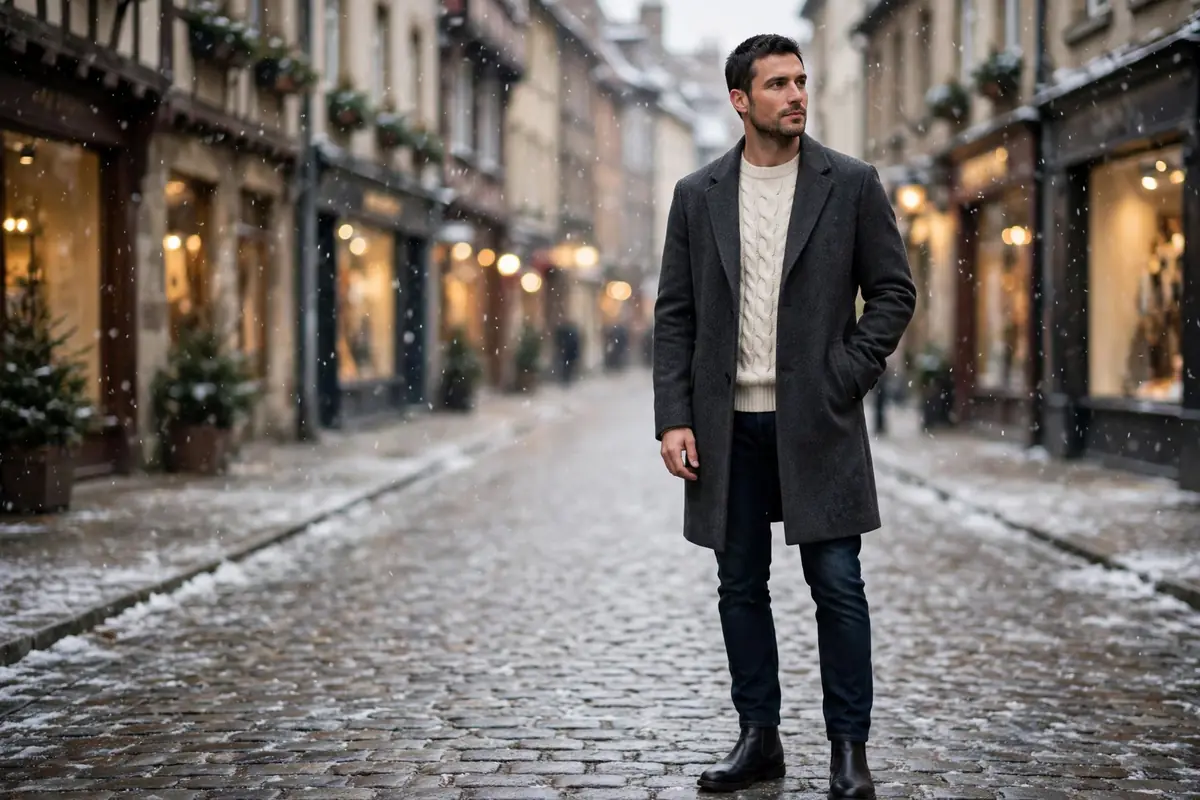
A great winter coat earns its place in two ways: it carries you through the coldest months without a second thought, and it makes everything underneath it look sharper. The ten coats in this guide are chosen as investments rather than one-season experiments — pieces with proven silhouettes, honest materials, and construction that holds up year after year. The math behind them is simple cost-per-wear: a well-made wool overcoat or shearling jacket worn 60 days a winter for a decade costs less per wear than three cheap replacements. Inside you'll find tailored classics like the charcoal overcoat and camel double-breasted, heritage workhorses like the waxed barn jacket and toggle duffle, and technical protection in the form of the longline puffer and expedition-style parka. Each one is broken down by fabric, fit, and how to actually wear it.
1. The Charcoal Wool Overcoat
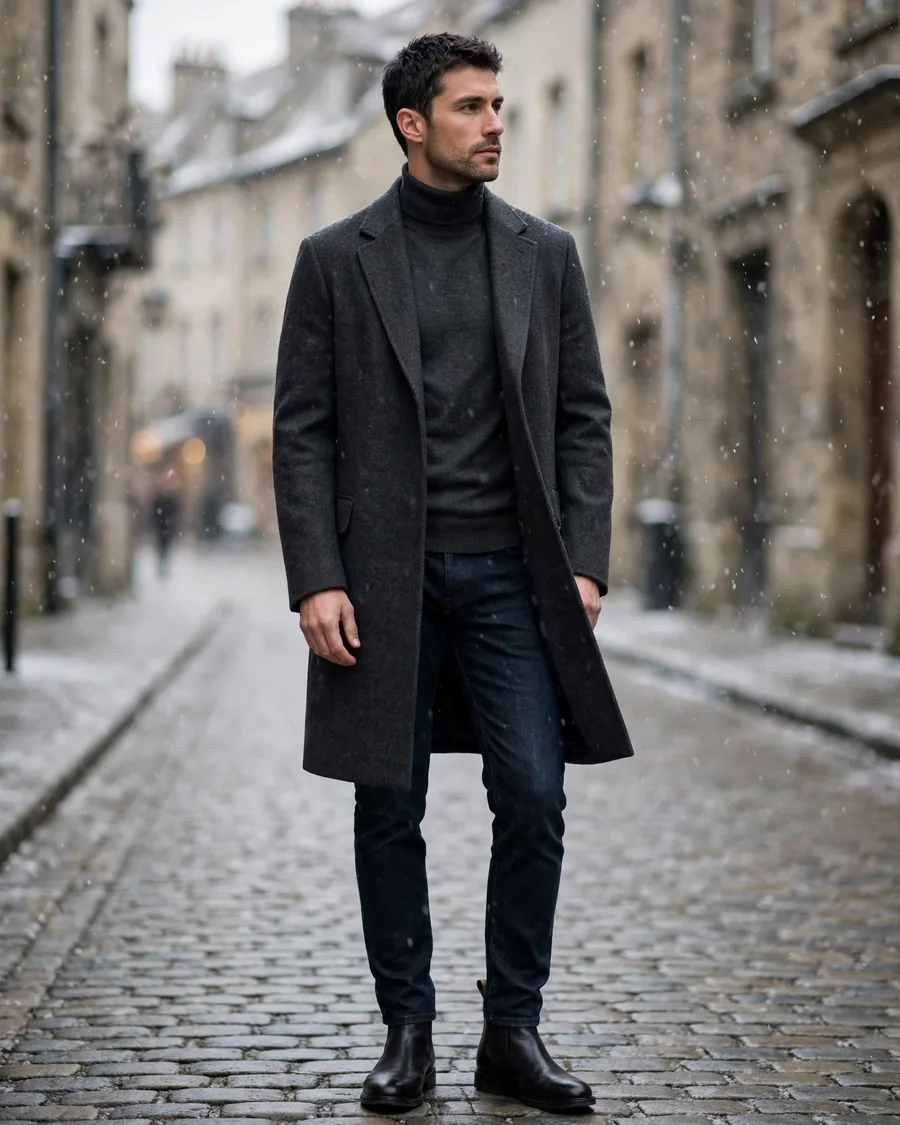
The single-breasted charcoal overcoat is the hardest-working tailored coat a man can own. Cut to the knee with a notch lapel and a clean front, it sits over a suit without bunching and over a chunky turtleneck without looking overdressed. Charcoal is the strategic color: dark enough for evening formality, soft enough not to read as severe in daylight, and forgiving of lint.
Fabric is where the investment pays off. Look for wool or wool-cashmere melton in the 500 to 700 grams-per-square-meter range — heavy enough to drape in a clean column, dense enough to block a draft on its own. A half-canvas chest keeps the lapels rolling properly after years of wear, and a deep vent lets you sit and stride without the skirt riding up.
This coat suits nearly every build. If you are under 5'9", keep the length at or just above the knee — longer cuts shorten the leg line. Swap standard plastic buttons for matte horn; it is a small change that reads as expensive. Worn open over dark denim and boots, it does quiet, confident work.
2. The Camel Double-Breasted Coat
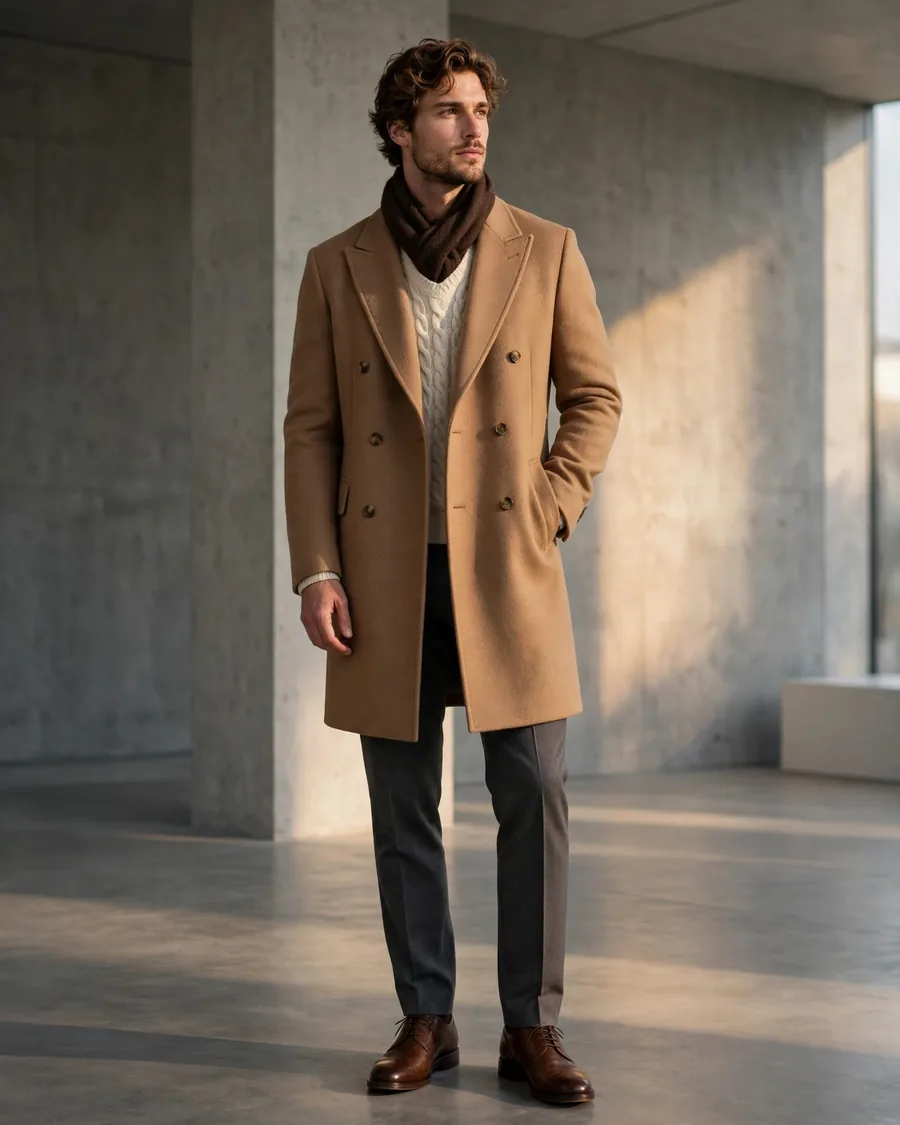
Few coats telegraph polish like a camel double-breasted. The warm tan — somewhere between sand and cognac — lifts a winter wardrobe in a way charcoal cannot. Against the gray palette most men default to from November to March, a camel coat catches light and looks deliberate. The 6×2 buttoning with peaked lapels builds a strong shoulder line even on relaxed frames.
The look works through contrast. Camel sits opposite navy, charcoal, and black on the warmth scale, so every dark piece you own suddenly looks styled rather than assembled. The double-breasted front adds formality — pair it with tailored trousers, a crisp knit, and leather shoes. Treat it as the dressier sibling of the charcoal overcoat, not a duplicate.
Camel shows wear faster than dark wool; that is the honest trade-off. Brush it after wearing, steam rather than press, and spot-clean promptly — most marks lift from quality wool before they set. A dark chocolate or forest-green scarf tucked at the neck plays beautifully against the tan. Keep the rest simple and let the coat carry the conversation.
3. The Shearling-Lined Aviator Jacket
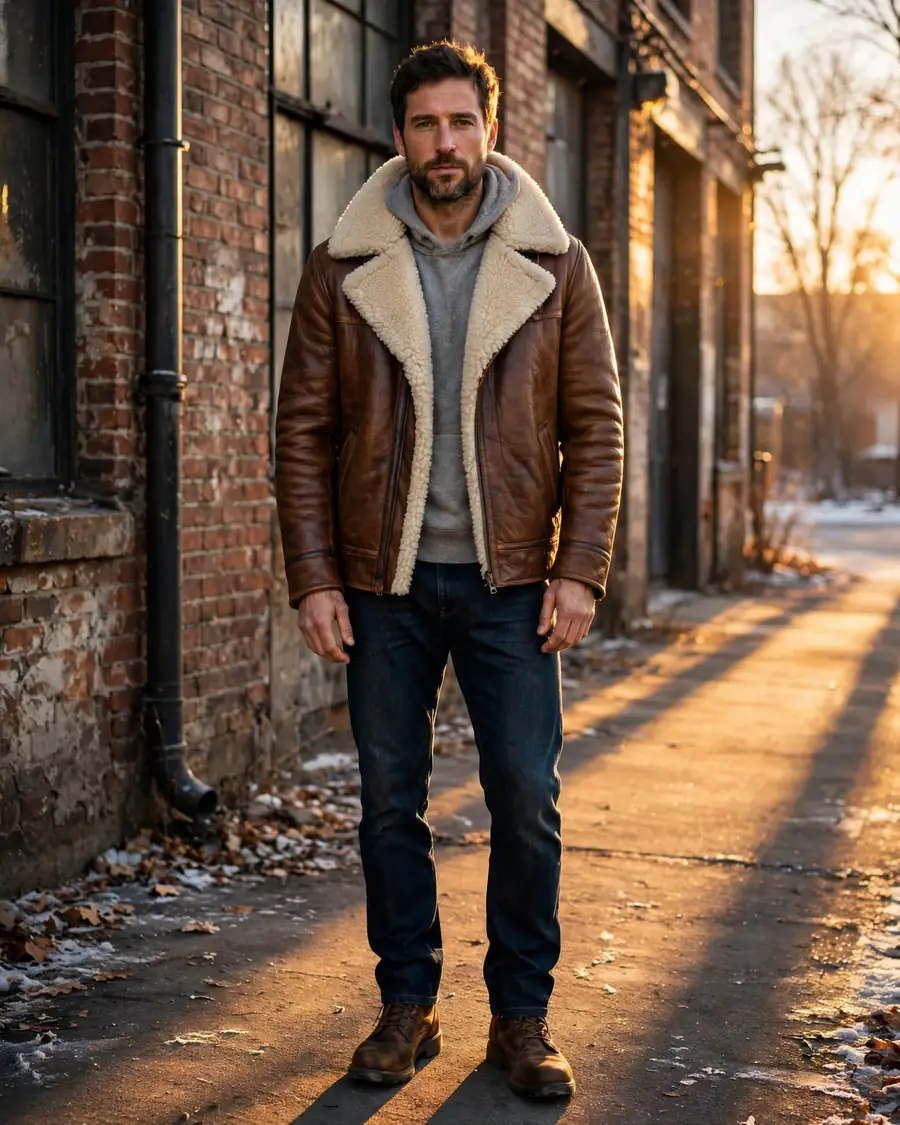
The aviator jacket earns its investment status through texture and warmth synthetics cannot quite fake. A leather or suede shell with a dense shearling collar, cuffs, and full lining delivers serious insulation in a cropped silhouette that layers over hoodies and thick knits without the bulk of a long coat. The wide collar, worn popped or flat, frames the face and keeps the jacket heritage rather than costume.
Fit is everything. The body should end at the belt line — long enough to cover a tucked shirt, short enough to keep cropped proportions. Sleeves should show a half-inch of shearling at the cuff. Real shearling regulates temperature well; dense faux versions are a fair entry point if the pile is thick.
Care decides whether this jacket lasts five years or twenty. Condition the leather once a season, never machine-wash shearling, and hang it on a wide wooden hanger in a breathable bag through summer. Wear it open over a plain hoodie and dark jeans — the contrast between the plush collar and simple layers is the whole point.
4. The Longline Down Puffer
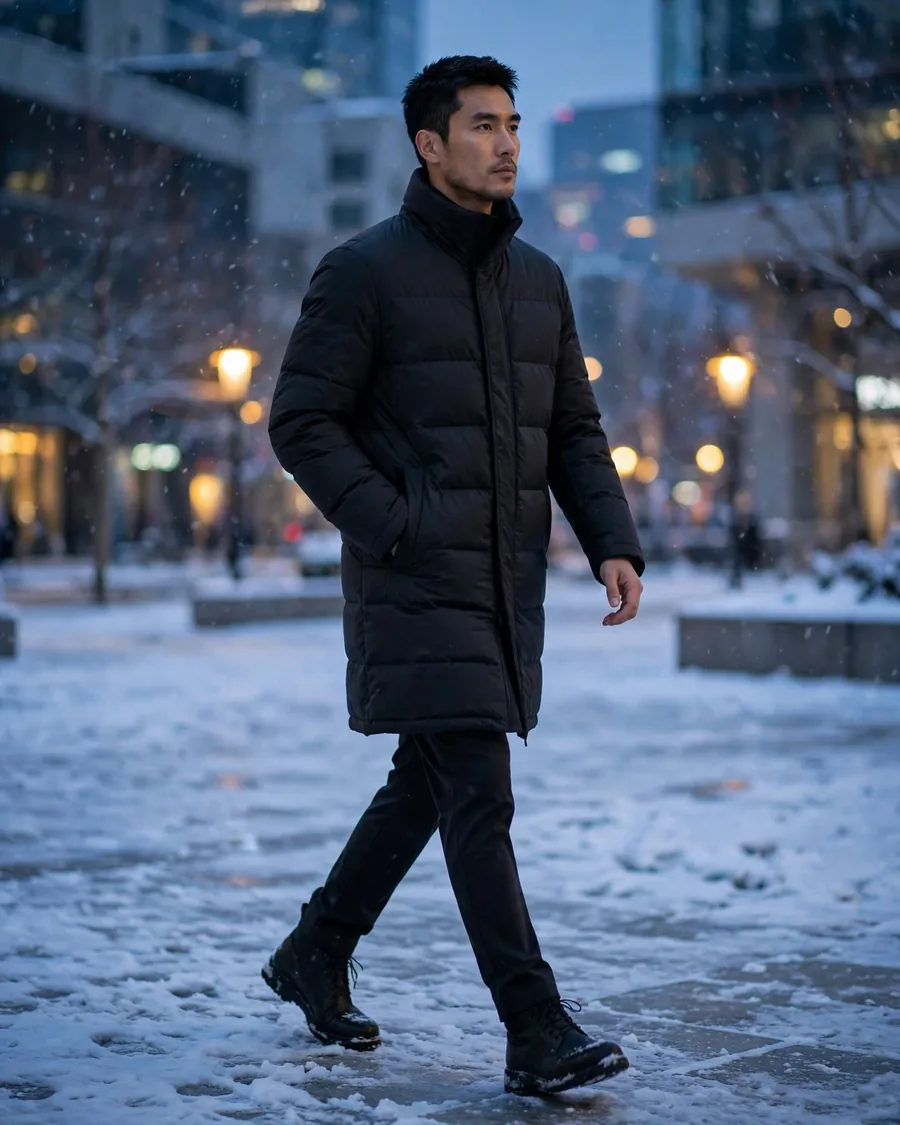
When the temperature drops past the point where wool alone cuts it, the longline down puffer keeps you outside comfortably. Cut to the knee with a high collar and a matte, tightly woven shell, it traps heat around the torso and thighs — the zones where cold actually defeats you — while horizontal baffles distribute the fill evenly. A fill power of 600 to 800 with a high down-to-feather ratio separates a genuinely warm puffer from a fashion one.
Styling keeps this technical piece from reading as ski gear. Choose matte over shiny shells, skip oversized logos, and stay monochrome — black, navy, or deep olive reads urban rather than alpine. A knee-length cut creates one continuous column that flatters; cropped puffers chop the silhouette. Wear it as the seal over layered winter outfits: thermal base, sweater, boots.
Wash once a season with down-specific detergent and tumble dry on low with clean tennis balls to re-loft the fill. Never store it compressed. A drawcord hem you can cinch on windy days is the small feature that proves the design was thought through.
5. The Navy Peacoat
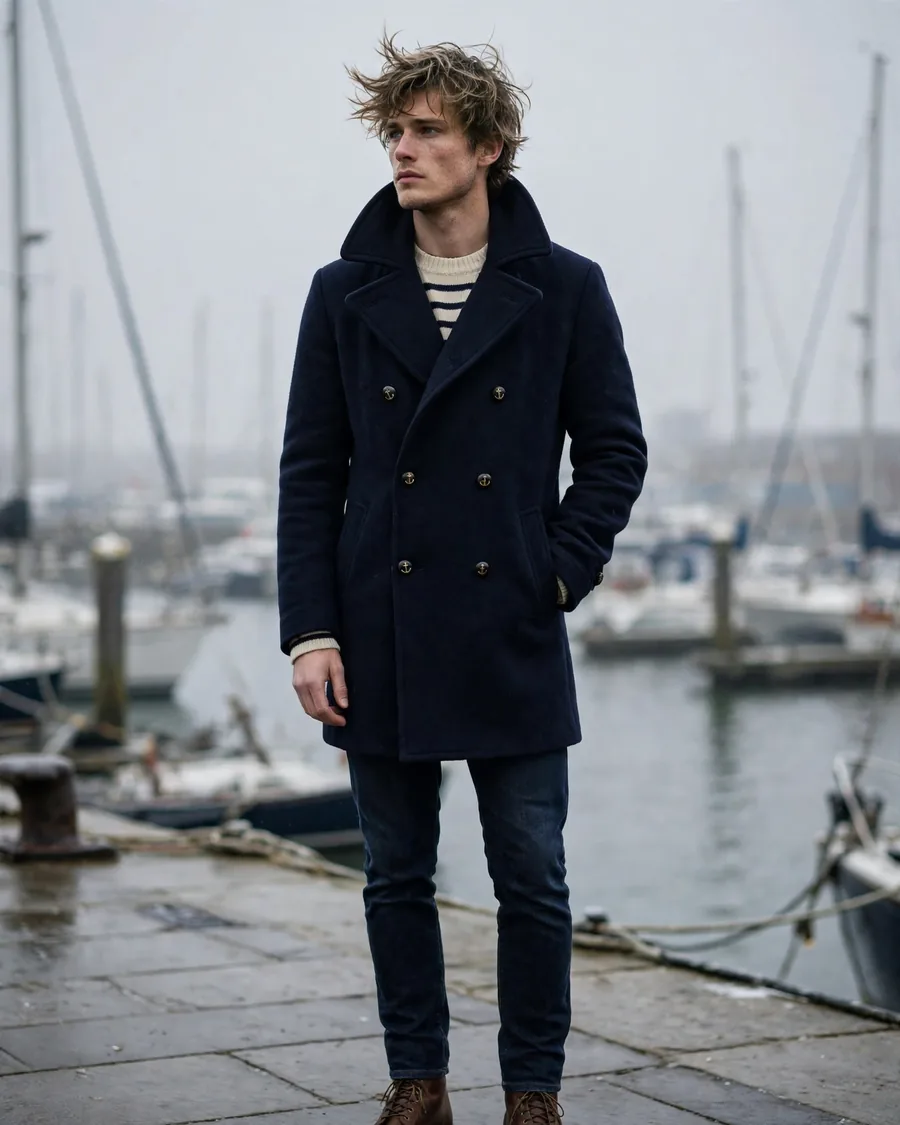
The peacoat is the tailored coat for men who find full-length overcoats too formal. Born as naval outerwear, its double-breasted front, broad notched lapels, and cropped hip-length cut create a compact silhouette that adds width at the shoulders — genuinely useful for slimmer builds. Navy is the definitive color, pairing with everything from raw denim to gray flannel.
Construction tells you what you are paying for. A proper peacoat uses dense wool melton with a quilted or flannel lining and hand-set collars that stand up against wind. The broad lapel is functional: flipped up, it seals the neck on brutal days. The short, boxy cut flatters shorter men especially well, keeping the leg line long instead of burying it.
Swap the standard anchor buttons for matte black horn to mute the nautical signal — or keep them, since the heritage detail is the charm. Wear it over a Breton stripe or crew-neck sweater, dark jeans, and leather boots. The peacoat looks finished with almost no effort, which is exactly why the cut has barely changed in a century.
6. The Olive Quilted Field Jacket
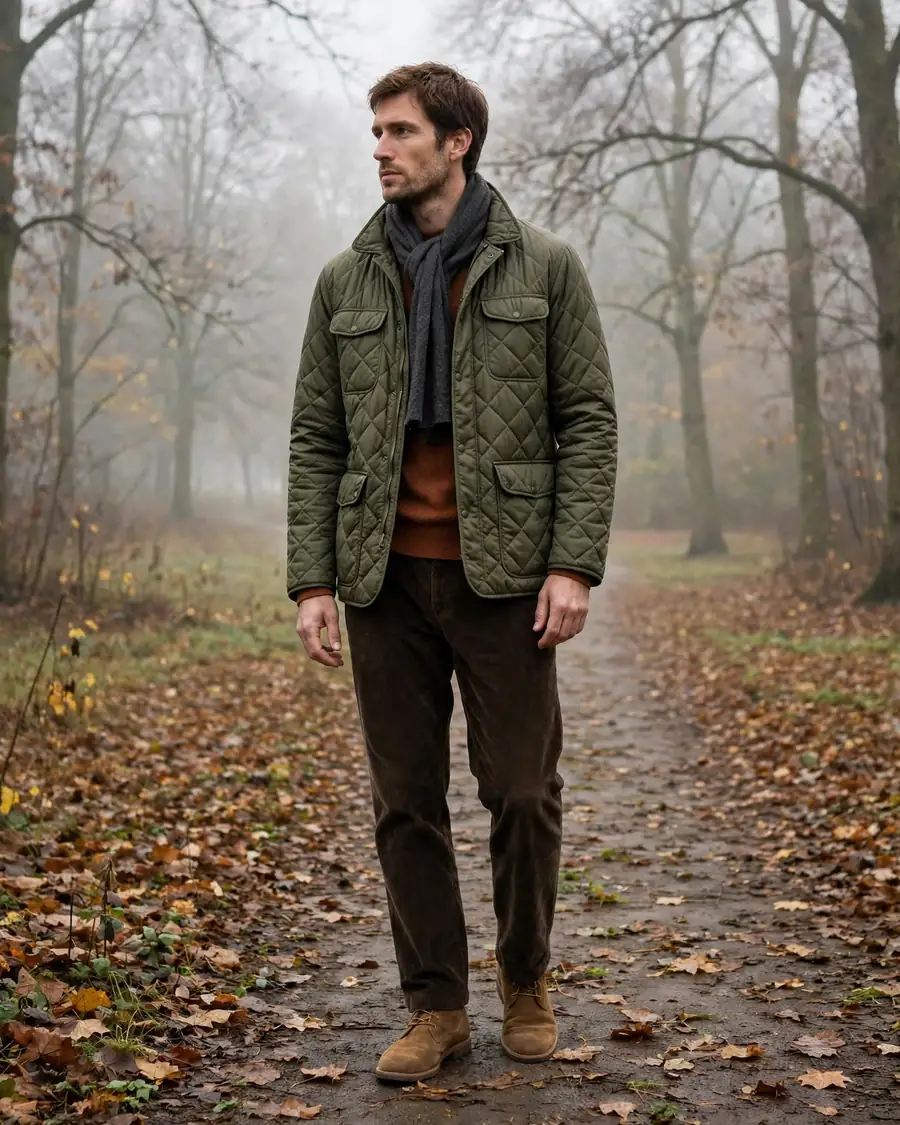
The quilted field jacket is the coat for men who want polish without stiffness. Diamond-quilted through the body with four bellows pockets and a stand collar, it borrows military utility and softens it into something that works over a blazer as easily as over a sweatshirt. Olive is the color that makes it: earthy enough for browns and tans, neutral enough for navy and gray.
Its real strength is layering. The cut takes a sweater underneath without straining the quilting, and the stand collar frames a scarf, hoodie, or shirt collar. That versatility is why it anchors so many cold-weather combinations; our guide to men's winter layering outfits for 2026 styles the same olive jacket across a week of real outfits. Treat it as the outer layer that ties a layered look together.
Look for quilting stitched through rather than printed on, a two-way zip under a snap placket, and a DWR-treated shell you can reproof with spray once a season. Pop the collar and let a knit scarf spill over it, or zip to the neck on raw days. The quilting softens and the olive deepens with wear — exactly what an investment casual coat should do.
7. The Waxed Canvas Barn Jacket
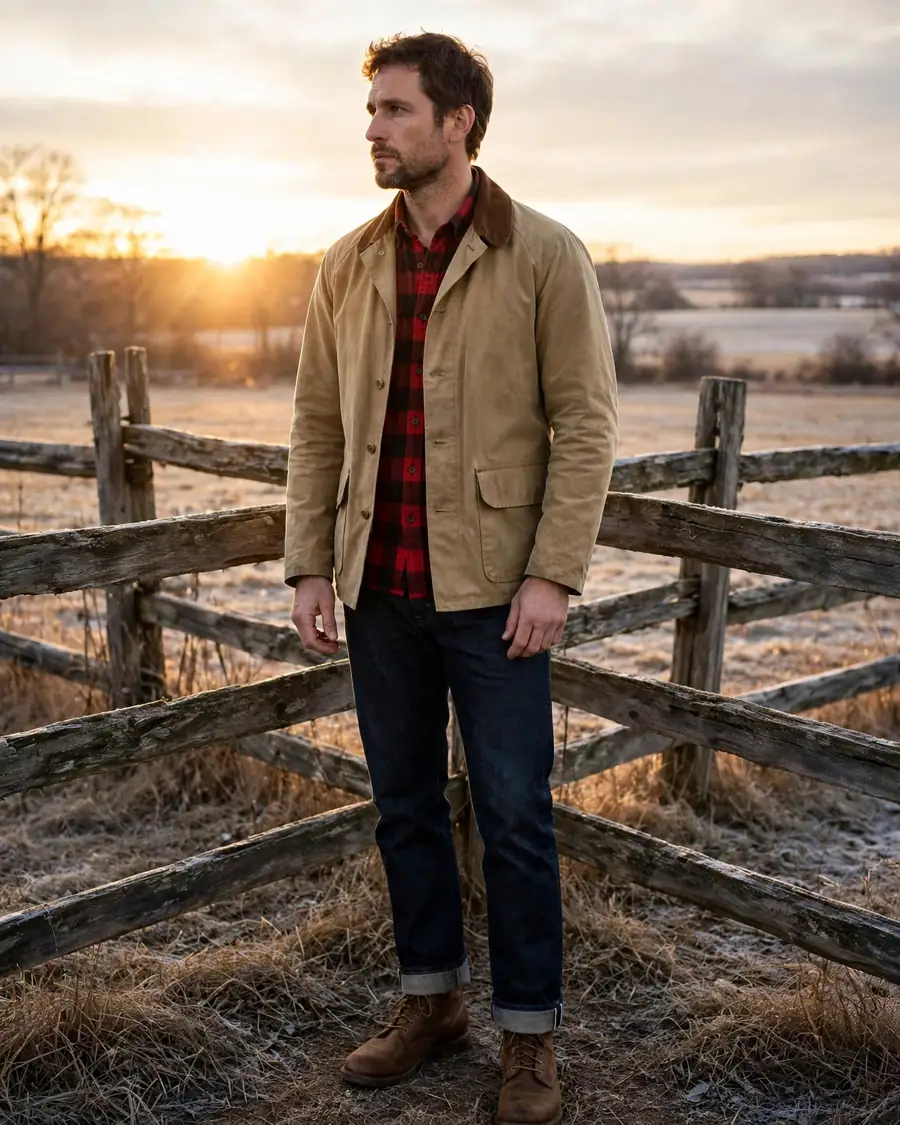
Few coats reward ownership like a waxed canvas barn jacket. Cut boxy with a corduroy collar, roomy chore pockets, and a slightly cropped body, it is workwear refined just enough for daily life. The waxed cotton shell shrugs off drizzle and wind, and unlike most technical fabrics, it gets better looking every season as creases and wear marks build a patina entirely yours.
The investment logic is durability and repairability. Waxed canvas resists abrasion far better than fashion-weight cotton, the simple construction means a tailor can fix almost anything, and the jacket never dates because it was never trendy. Rewax once a year, hang to dry away from heat, never machine wash — the wax is the waterproofing. A flannel lining adds real warmth for deep winter.
Fit should be relaxed through the shoulders with room for a flannel or sweater underneath. Roll the cuffs once to show the lining, leave the corduroy collar up on windy days, and pair it with raw denim and work boots. For a personal twist, the wide front pockets take a folded bandana well — a small signal that this jacket has a life, not just a look.
8. The Toggle-Front Duffle Coat
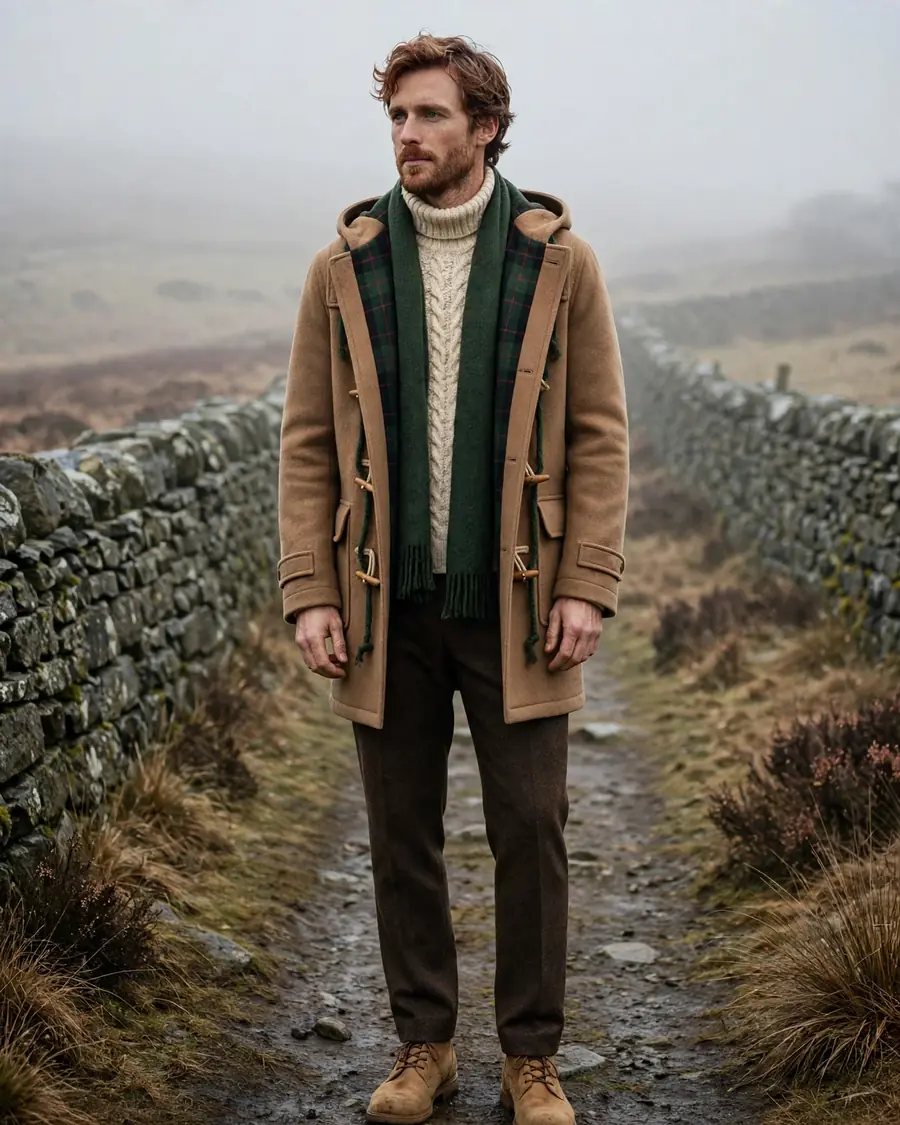
The duffle coat is the most characterful tailored-casual coat on this list, and its signature wooden toggles and rope loops are also its most practical. Toggles fasten easily with gloves on — a genuine advantage on freezing mornings. The roomy cut, generous hood, and often tartan lining trace back to British military issue, giving the coat a heritage weight fashion cycles cannot shake.
What makes it an investment is warmth plus distinctiveness. The heavy woolen cloth, usually camel, navy, or charcoal, insulates well on its own, while the relaxed silhouette swallows thick knitwear without looking bulky. Taller men carry the volume best — if you are under 5'10", look for a trimmer modern cut rather than the traditional boxy one.
Style it with the heritage in mind: chunky roll-neck, dark trousers or jeans, sturdy boots. A long scarf threaded loosely through the open toggles is the classic personalization, adding color against plain wool. Brush after wearing, spot-clean, and air it rather than washing. Check the rope loops yearly; a quick repair keeps them sound for decades.
9. The Hooded Winter Parka
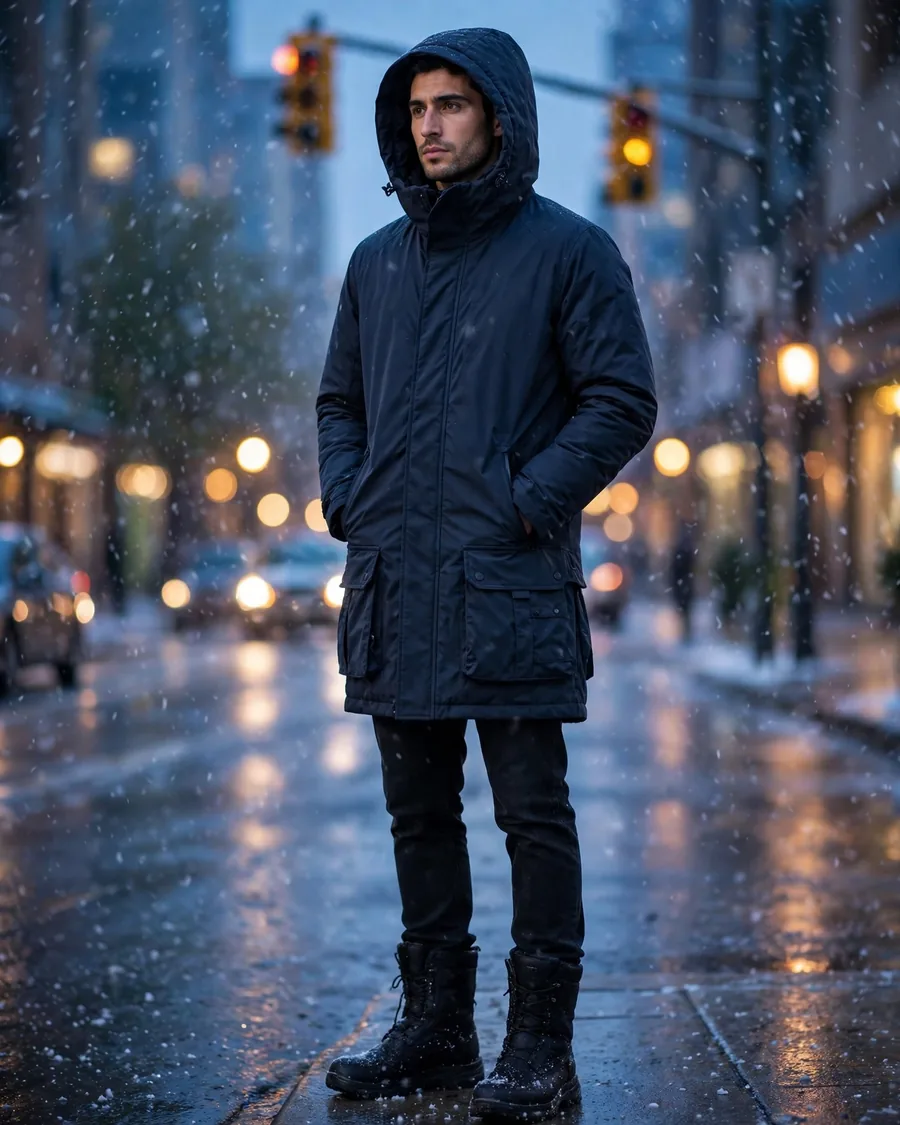
For the coldest weeks of the year — wind, sleet, the cold that finds every gap — the hooded parka simply does not quit. Cut to the thigh or knee with a storm placket, a deep insulated hood, and large cargo pockets, it is engineered around one idea: sealing warmth in and weather out. Sealed or taped seams, a DWR-treated shell, and high-loft insulation are the specs that matter; they separate a parka that survives a blizzard from one that only looks like it could.
The silhouette has come far from shapeless expedition originals. Modern parkas taper slightly at the waist, sit cleanly at the shoulder, and come in matte blacks, navies, and olives that work in a city. The hood is make-or-break: deep enough to cover the head, adjustable with drawcords, ideally removable.
Wear it as the outermost seal over everything — the coat for days when styling takes a back seat to survival, though monochrome underneath keeps it sharp. Cinch the waist drawcord to recover shape, and use interior pockets for phone and wallet where body heat keeps batteries alive. Wash sparingly, reproof yearly, and it will serve every January for a decade.
10. The Belted Wool Trench Coat
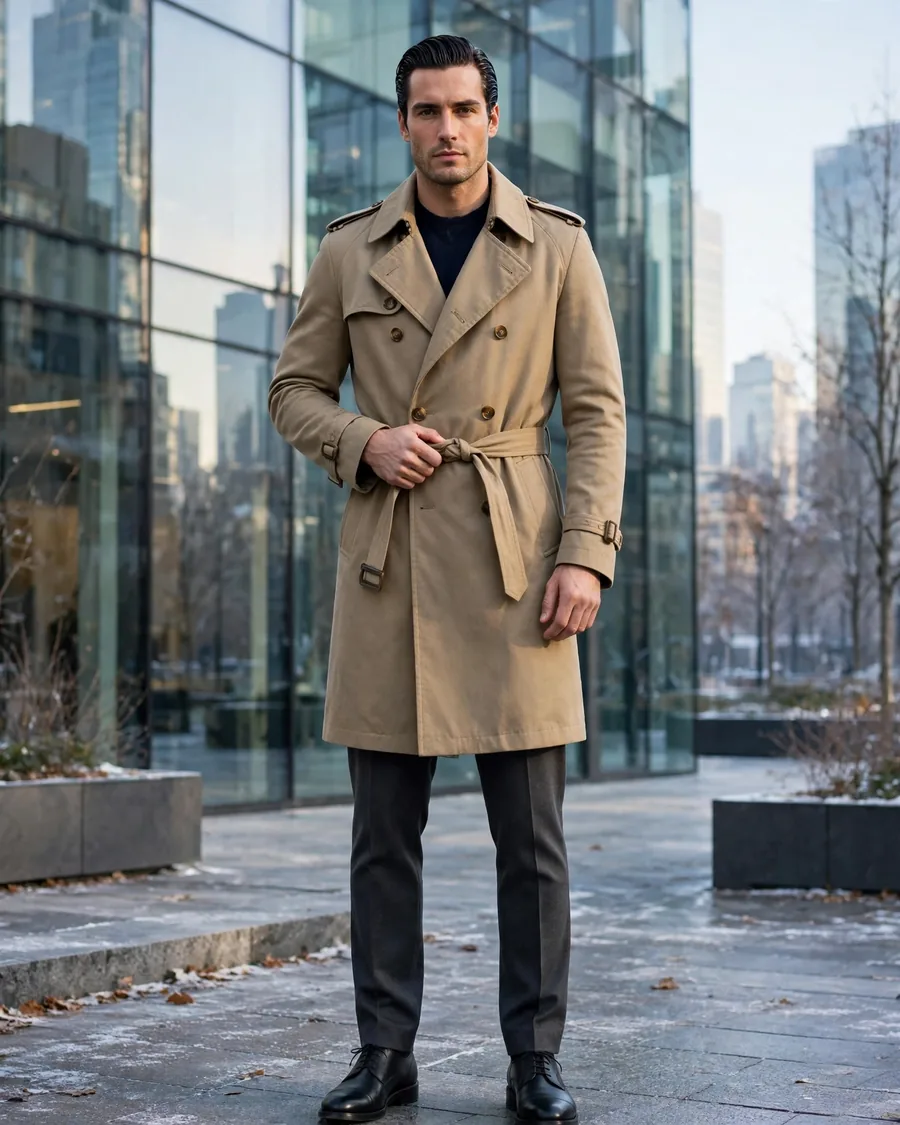
The belted trench is the sharpest silhouette in winter outerwear, and in wool or wool-blend gabardine it becomes a true cold-weather coat rather than a rain shell. The double-breasted front, storm flap, epaulettes, and the self belt define the waist and create a structured line that flatters nearly every build. Where the overcoat is a column, the trench is architecture: it gives shape to whatever is underneath.
This is the coat that elevates the simplest outfit. A belted trench over a sweater and dark trousers reads as intentional in a way few pieces manage — our roundup of trench coat outfits for fall 2026 styles the same belted silhouette a dozen ways across the season. The belt is the styling tool: cinched at the back for a relaxed drape, tied at the front for definition, or left open for a longer, looser line.
Buy for the long term: horn or matte buttons, a throat latch for windy days, a gabardine weave tight enough to bead water. Tie the belt rather than buckling it to protect the leather. In black, navy, or classic khaki, this is the coat that never needs replacing — only rewearing.
FAQ
How many winter coats does a man actually need?
Three archetypes cover nearly every situation: one tailored coat (a wool overcoat or belted trench) for dressier days, one casual heritage coat (a barn jacket, field jacket, or peacoat) for daily wear, and one extreme-weather coat (a down puffer or parka) for the coldest weeks. Anything beyond that is preference, not necessity.
What separates a quality wool coat from a cheap one?
Fabric weight and construction. Quality coats use dense wool (500+ grams per square meter) with a cupro or viscose lining, horn or corozo buttons, clean interior seams, and a structured chest that holds the lapel roll. Cheap coats use thin wool blends, polyester linings that cling to sweaters, and fused fronts that bubble after a few dry cleans. Check the inside of the coat — the lining and seam finishing tell you more than the price tag.
How do I keep a down puffer warm year after year?
Wash it once a season with down-specific detergent, then tumble dry on low heat with clean tennis balls to break up clumps and re-loft the fill. Never store it compressed for months — hang it or keep it in a large breathable bag. A well-maintained puffer holds its warmth for many winters.
Wool overcoat or puffer — which is actually warmer?
It depends on the conditions. A quality down puffer wins in wind, wet snow, and extreme cold because it seals heat in. A heavy wool overcoat with proper layering underneath wins in dry, moderate cold and looks far sharper doing it. Most men in real winter climates end up owning both and choosing by the thermometer: wool down to about freezing, puffer below it.
Is a camel coat worth it if it shows every mark?
For most men, yes — the color's payoff outweighs the maintenance. Brush it after each wear, steam out wrinkles instead of pressing, and spot-clean promptly; quality camel wool releases most marks easily. The real risk is rain spotting, so reach for the charcoal overcoat on wet days.
Final Thoughts
Choose by the life you actually live: the commuter who walks to the train needs the parka or puffer first, while the man who drives between office and dinner gets more from the charcoal overcoat or belted trench. Spend where construction shows — fabric weight, lining, and hardware — and let cost-per-wear justify the price of the coat you'll reach for 60 mornings a winter. None of these ten silhouettes is going anywhere; that is the point of buying them. Save the looks that match your climate and wardrobe, adapt the details to your build, and wear them hard — a great coat only gets better with seasons on it.