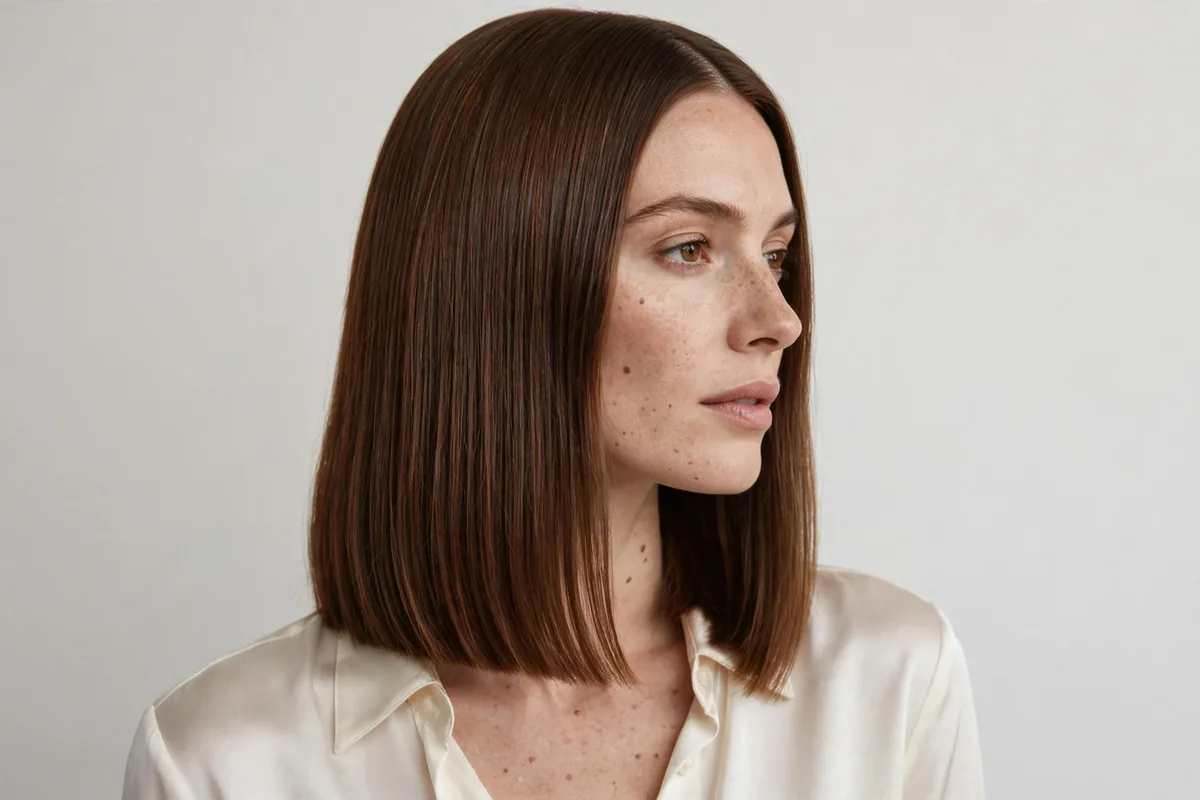
The lob is having its biggest year yet. Part bob, part long hair, the collarbone-grazing long bob has settled into 2026 as the cut for women who want movement and versatility without committing to either extreme. It flatters nearly every face shape, grows out gracefully, and shifts easily from wash-and-go texture to a polished blowout.
What keeps it interesting is how many directions one length can go. This collection covers ten distinct versions — from a razor-sharp blunt cut to undone shaggy texture, a dramatic asymmetrical line to soft face-framing layers. You will find options for straight, wavy, curly, and coily hair. If you have been on the fence about cutting, consider this your sign.
1. The Blunt Collarbone Lob
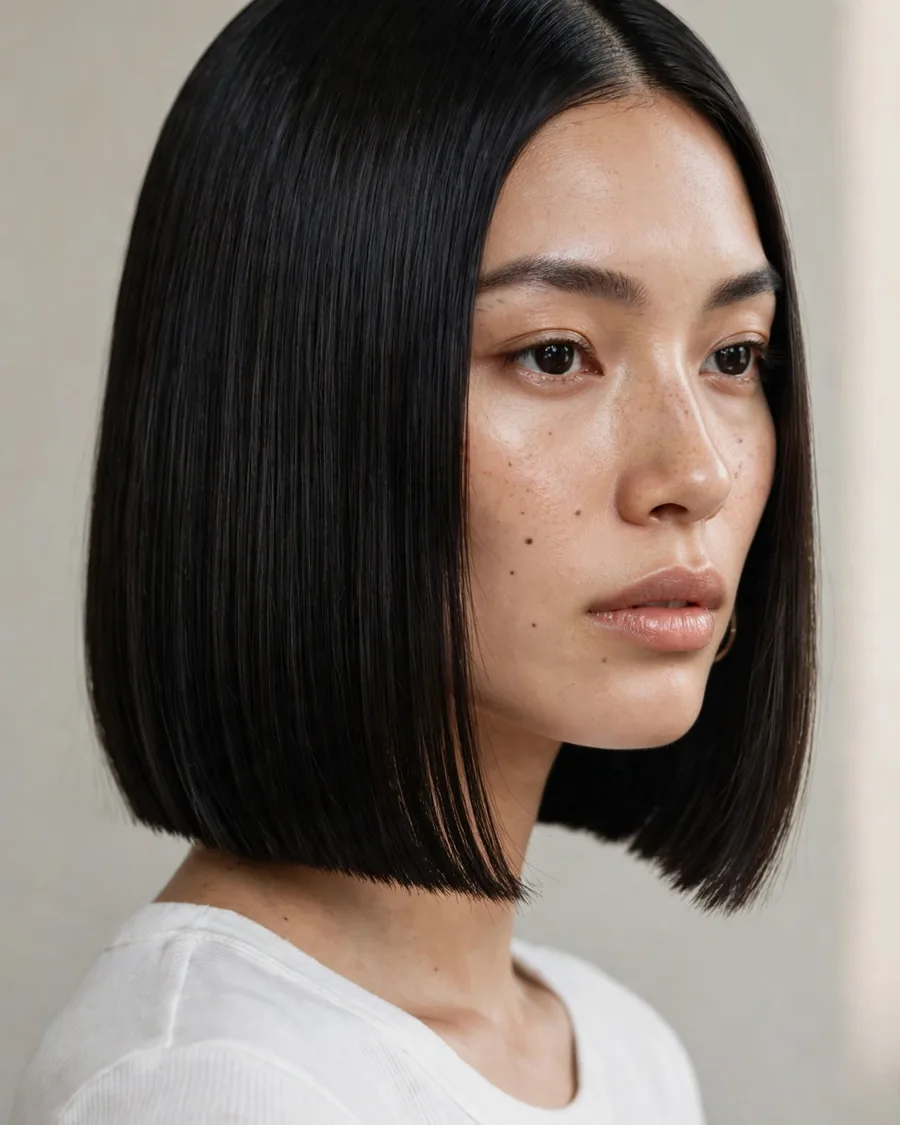
The blunt lob is the purest version of the cut: one clean perimeter line, zero layers, hair that lands in a single straight row at the collarbone. It reads confident and architectural, and it quietly solves a common problem for fine-haired women. Without layers to diffuse density, a blunt edge creates the illusion of thickness; hair looks heavier and healthier than it is.
Why it works comes down to geometry. A single uninterrupted line draws the eye horizontally, which balances a long face and adds visual weight to a narrow one. Light reflects off the smooth, unbroken surface, so shine registers in a way layered cuts rarely achieve — this is the cut that makes a single-process color look expensive.
Ask for the ends cut scissor-dry with zero elevation, and plan on upkeep: blunt perimeters lose their crispness within six weeks. If you are torn between this and a shorter crop, our roundup of bob haircuts trending this fall maps out exactly where a bob ends and a lob begins.
2. The Textured Wavy Lob

The textured wavy lob is the cut’s relaxed alter ego. Same collarbone length, but broken up with soft point-cut texture and styled in loose, undone waves that read effortlessly lived-in. The wave pattern does most of the visual work here — it widens the silhouette through the mid-lengths, which is flattering on heart-shaped and oval faces, and it hides grown-out layers better than any straight style.
This version suits naturally wavy or wavy-curly hair (type 2A to 2C) almost better than a blowout can fake. Air-dry with a curl cream, scrunch, and go. If your hair is pin-straight, the Dyson Airwrap with the 1.2-inch barrel creates this exact bend pattern in about fifteen minutes — wrap sections in alternating directions and leave the last two inches straight for that modern, unfussy finish.
To keep the waves from collapsing, skip heavy oils and use a salt-free texture mist. Give it shape honestly: ask for invisible internal layering rather than surface layers, so the waves form naturally instead of flipping outward at the perimeter.
3. The Asymmetrical Lob
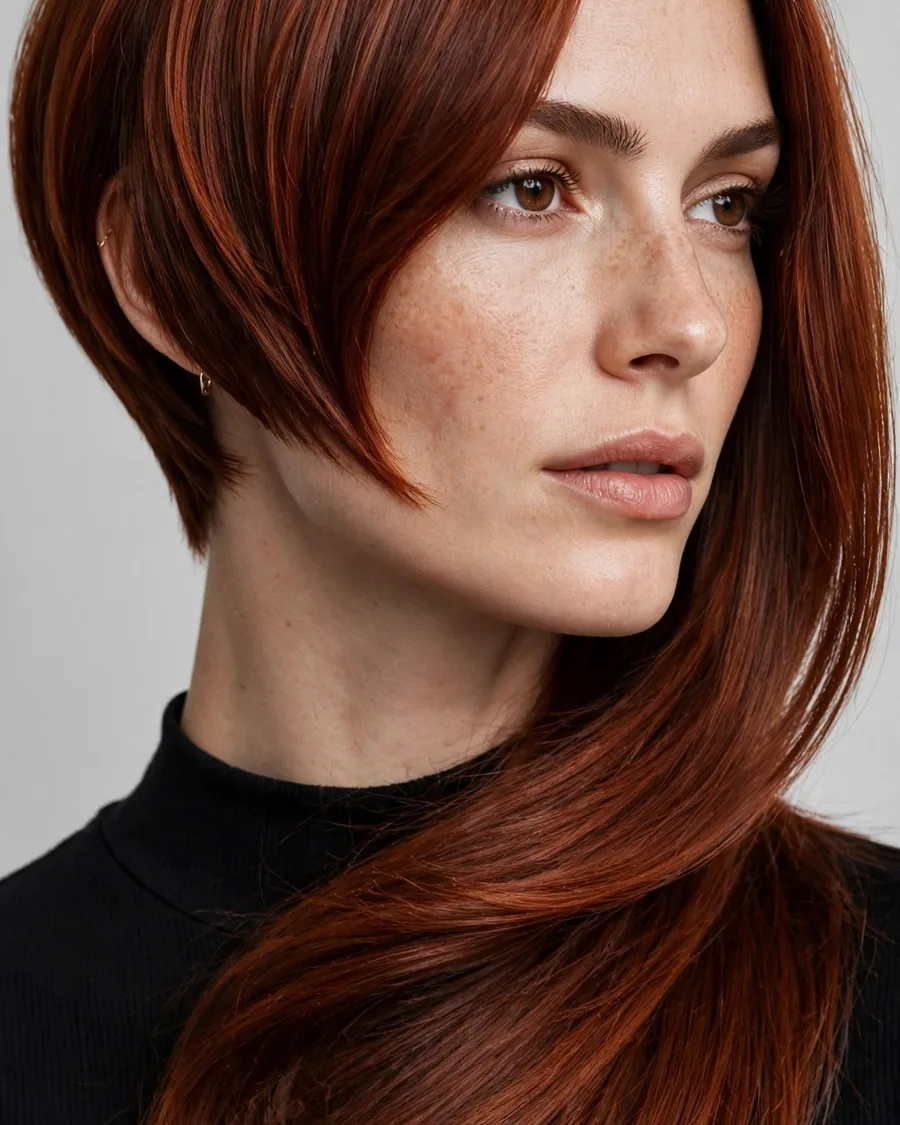
The asymmetrical lob is the drama option: one side cut near the jawline while the other sweeps longer, grazing the collarbone. The diagonal line it creates is one of the most flattering optical tricks in haircutting — it cuts across the cheekbone, breaking up fullness in a round face and adding edge to a soft one. Pinterest’s own trend data flagged the asymmetrical lob as a standout for 2026, and salons report it as one of their most-requested cuts this season.
Precision is everything here. The shorter side should angle cleanly from the back forward, with no more than about two inches of difference between the sides — anything steeper tips from fashion into novelty. It styles best sleek, since frizz blurs the line that makes the cut work; a flat iron pass and a humidity-blocking sealant finish it.
This is not the cut for someone who changes their part daily. Commit to one side. Wear the longer sweep forward over the shoulder to show the difference, and keep the short side tucked behind the ear for balance.
4. The Lob with Curtain Bangs

Curtain bangs have refused to leave, and paired with a lob they finally feel grown up. The bangs part in the center and sweep to either side at cheekbone length, softening the hairline, while the lob itself sits at the collarbone with subtle layers and a bouncy blowout. Together they frame the entire face — the bangs handle the forehead and eyes, the lob handles the jaw and neck.
This combination suits women who want fringe without the commitment of a straight-across bang. Curtain bangs grow into the rest of the cut seamlessly, so there is no awkward phase. They are especially kind to high foreheads and long faces, where they break up vertical space.
Styling is a two-minute job with a round brush: sweep the bangs away from the face in alternating sections. Avoid loading them with dry shampoo — it kills the airy separation that defines the look. Ask for the bangs to be cut dry, since fringe shrinks as it dries and a wet cut almost always comes up short.
5. The Sleek Straight Lob
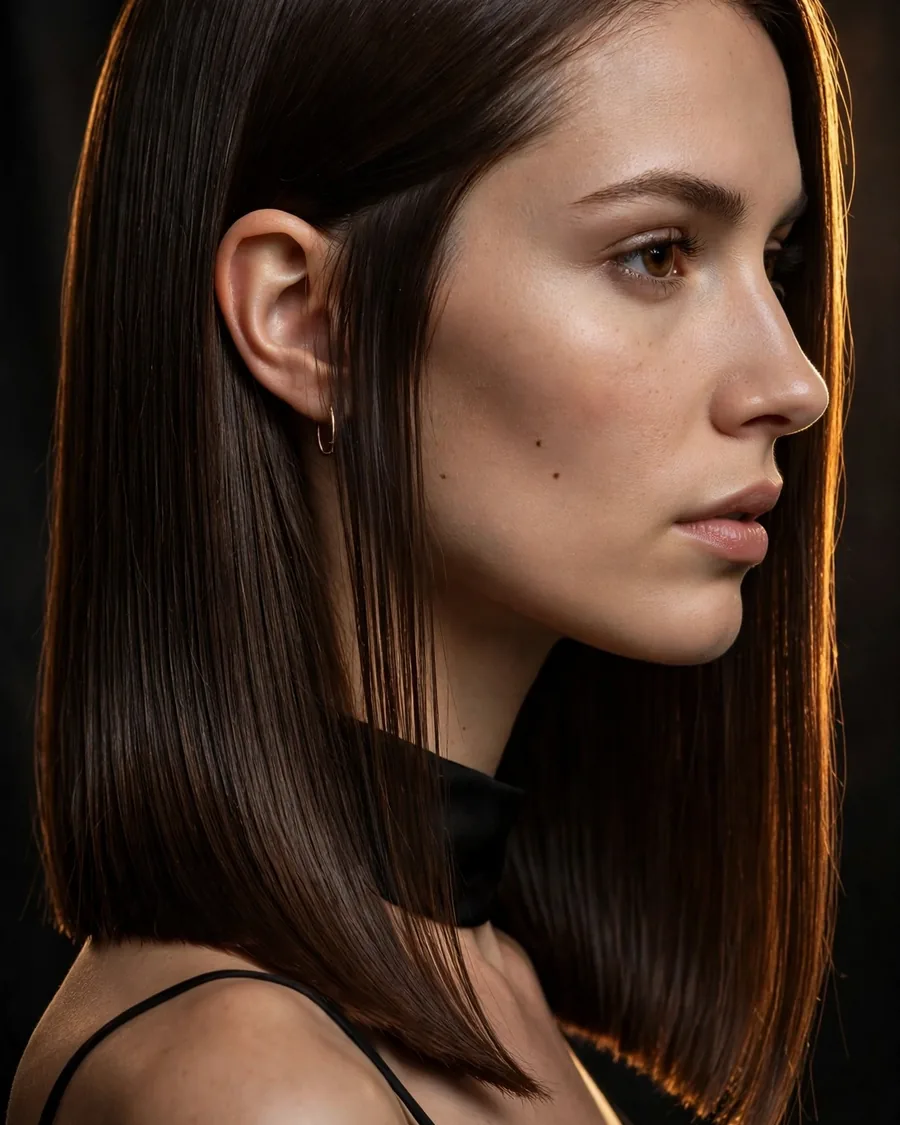
The sleek straight lob is restraint as a style statement: one-length hair, a deep side part, and a finish so smooth it borders on glass. Where the blunt lob draws attention with its sharp line, this version seduces with surface — the mirror shine and liquid movement of healthy, well-kept hair.
This cut favors medium to coarse straight hair; very fine hair can look stringy without the visual weight of a blunt line. Build the finish in layers: a smoothing serum on damp hair, blow-dry with a paddle brush for tension, then a single slow pass with a flat iron. Finish with two drops of oil only on the very ends — mid-shaft oil flattens the shine you just built.
Personalize it with the part. A deep side part adds asymmetry and evening polish; a center part reads more minimal and modern. And protect the investment: Olaplex No. 3 once a week keeps bleached or highlighted lobs from snapping at the point where hair meets shoulder friction.
6. The Curly Lob
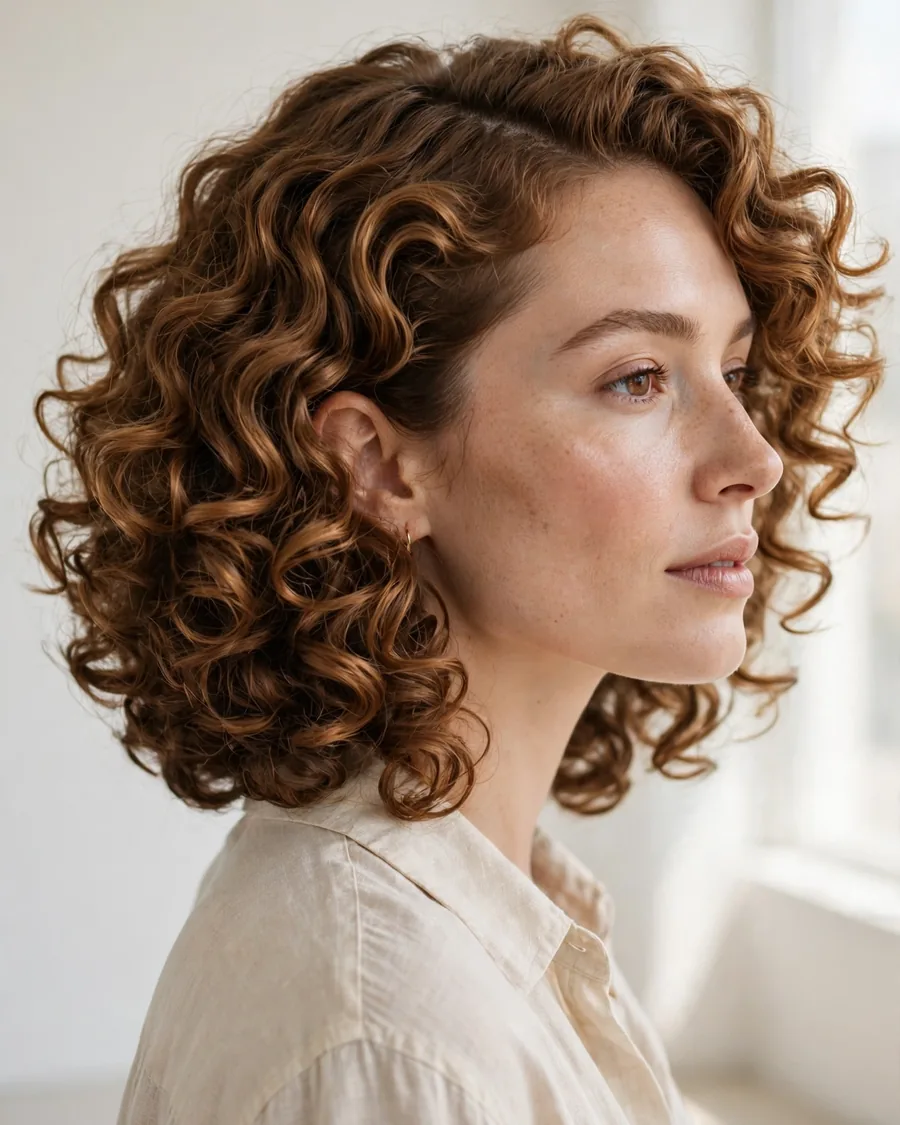
The curly lob proves that this length belongs to every texture. Cut with curls in mind — dry-cut, curl by curl — it lands as a rounded, collarbone-grazing shape with springy definition instead of the triangle silhouette that haunts poorly planned curly cuts. The length matters: at the collarbone, curls have room to form their pattern without collapsing into width.
What makes it work is shape control through layering. Long layers cut into the crown lift the roots, while a slightly shorter perimeter in back prevents the bottom from spreading. Diffuse on medium heat with a curl-defining cream, then rake a pea-sized amount of gel through the very ends once dry to seal frizz.
Account for shrinkage when you book: curls spring up two to four inches depending on pattern, so the cut must be planned on dry, styled hair. Ask for long internal layers rather than surface chops, and skip the thinning shears entirely — they create the exact frizz a curly lob is trying to avoid.
7. The Choppy Shaggy Lob
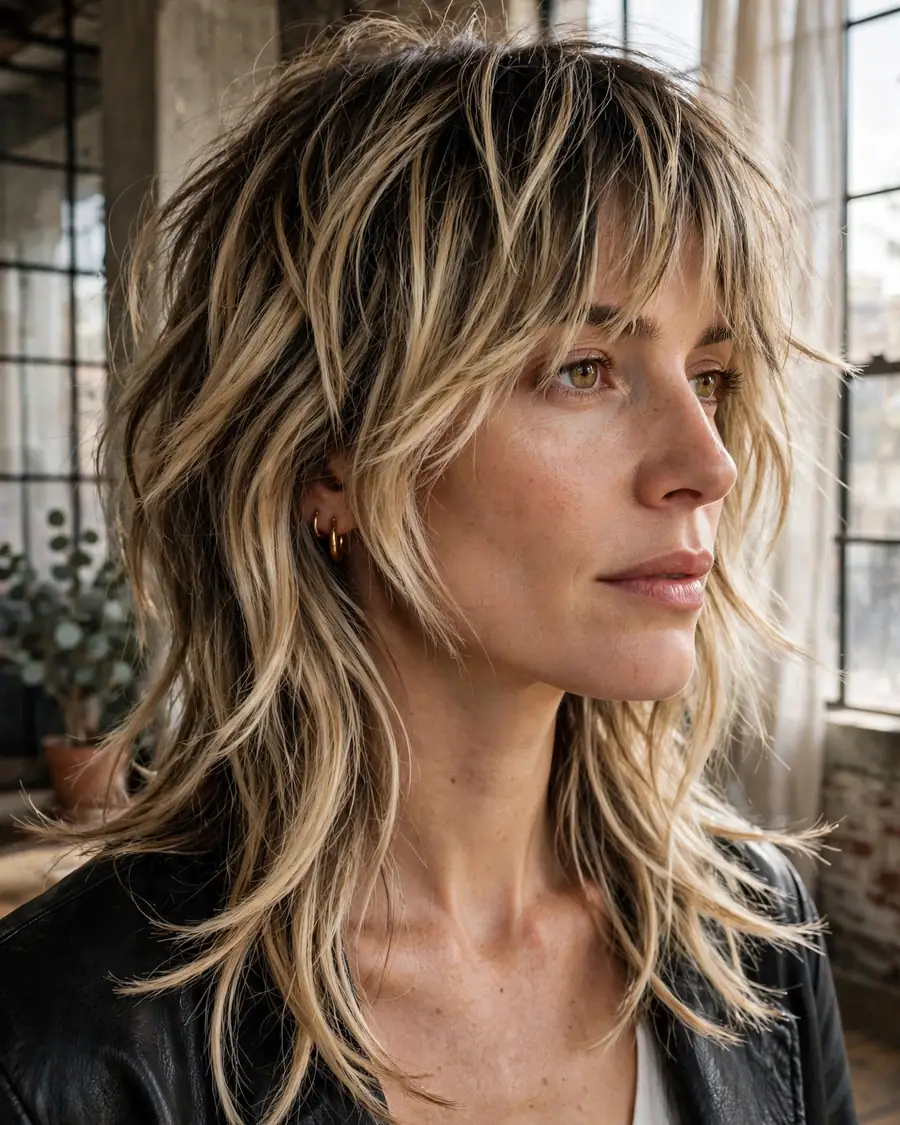
The choppy shaggy lob is the cut for anyone who finds polish boring. Heavy razor texture, piecey layers, and ends that flick outward in an undone, lived-in way — it borrows the shag’s rock-and-roll DNA and domesticates it at collarbone length. The shagginess removes weight through the interior, so thick hair moves instead of sitting, and fine hair gains artificial texture it would never have on its own.
Razor versus scissor texturizing is the decision that defines this cut. A razor creates soft, feathered edges that flick and separate; scissors leave a chunkier, more deliberate chop. Bring photos and ask which your stylist recommends for your density — razors can fray fragile, highlighted hair.
Styling should be minimal to the point of laziness: air-dry or diffuse, add a matte texture paste to the ends, done. This cut looks better slightly messy, which makes it the lowest-maintenance option in this collection.
8. The Deep Side-Part Lob

The deep side part is the fastest way to make a lob feel like evening hair. Sweeping the part far over changes the cut’s entire proportion — one side falls in a heavy curtain across the forehead while the other tucks neatly behind the ear, creating asymmetry without scissors. Styled with soft vintage-inspired waves, it channels old Hollywood glamour at a modern, wearable length.
This version is a styling choice more than a cut, which makes it ideal for commitment-phobes: any collarbone lob can become this lob. The waves should be smooth and uniform rather than beachy — wrap two-inch sections around a 1.25-inch iron in the same direction, let them cool, then brush through for that liquid S-pattern.
It suits formal occasions and photographs beautifully, but it has a maintenance truth: deep parts slide back toward center by midday on silky hair. A few hidden bobby pins along the part line, crossed for grip, hold it through the night.
9. The Face-Framing Layered Lob
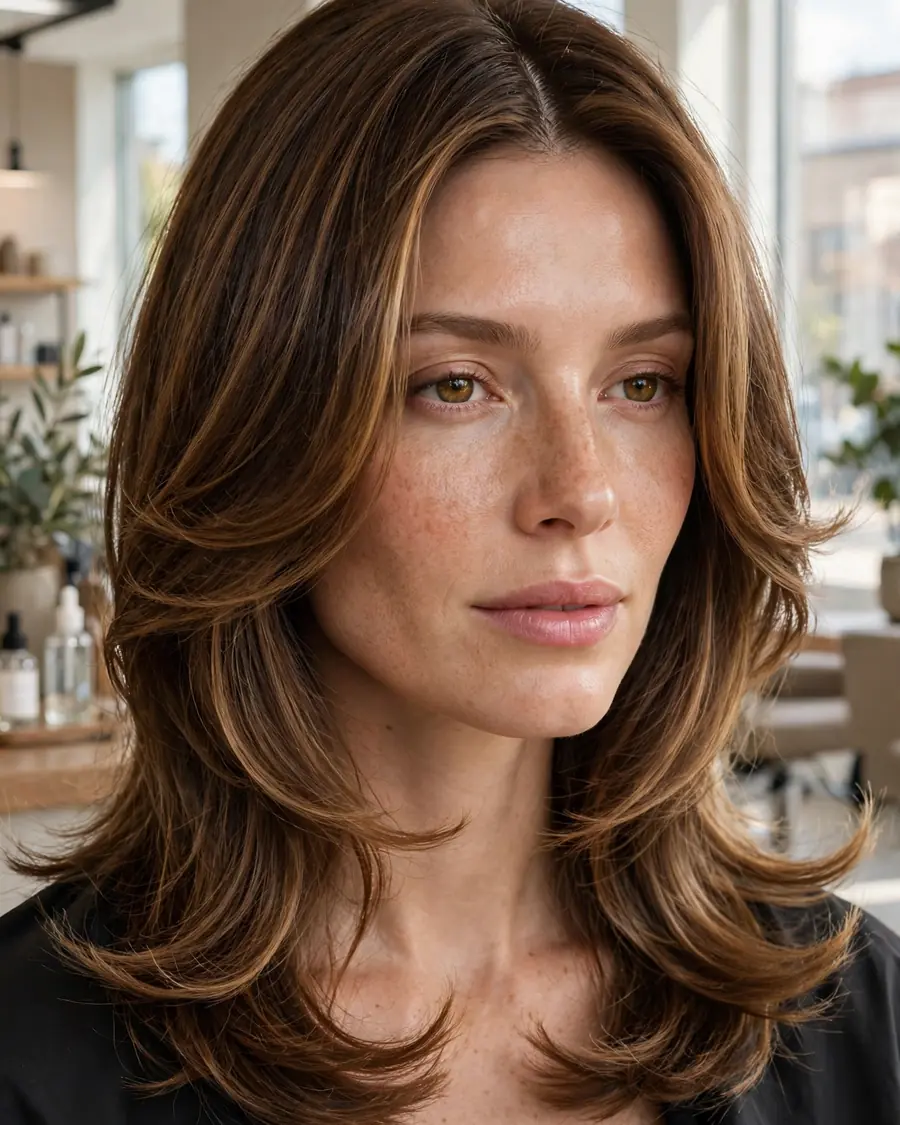
The face-framing layered lob is the contouring of haircuts. Long layers angle from the cheekbones down to the collarbone-grazing ends, so the shortest pieces sit right at the face and everything else stays one length. It gives the movement of a layered cut without sacrificing the lob’s signature weight at the bottom — the reason so many women choose this length in the first place.
This is the most universally flattering version here. The angled pieces break up a wide jaw, soften a square hairline, and slim a round face, while the one-length back keeps the cut modern. It also takes color beautifully: balayage painted onto the face-framing pieces brightens the eyes without a full head of highlights. If layered cuts are your love language, our guide to long layered haircuts shows how this idea scales to longer lengths.
Ask for long layers that start no higher than the chin — shorter and you lose the lob’s clean silhouette. Blow-dry the face pieces forward and under with a round brush so they curve toward the jaw instead of flipping away.
10. The Grown-Out Effortless Lob

The grown-out effortless lob is not a salon appointment — it is a philosophy. This is the lob three months after the cut: roots softened, ends slightly uneven, texture from air-drying rather than tools. It looks like the hair of someone who has better things to do, and that ease is precisely why it photographs so well in 2026. Imperfection, worn confidently, reads as luxury.
To get here on purpose, start with a long-layered lob and then simply stop fussing. Let your balayage grow out instead of touching it up. Trade the flat iron for a silk pillowcase, which cuts overnight frizz without heat. On wash days, rake in a leave-in conditioner and twist sections away from the face while damp — the twists unravel into natural, uneven waves.
The honest caveat: effortless still needs a trim every ten to twelve weeks — or those uneven ends cross the line from intentional to neglected. But this is the lowest-effort version of the lob, and the one most likely to survive real life.
How to Ask Your Stylist for a Lob
Bring two or three reference photos — including at least one profile shot, since the silhouette matters as much as the front. Speak in landmarks, not inches: “collarbone” tells a stylist more than “fourteen inches,” because hair falls differently on every neck. Be specific about the perimeter: blunt and one-length, point-cut texture, or razor-feathered. Discuss layering honestly — internal layering removes bulk without visible steps, while surface layers create the flip of a shag.
Mention your parting, because every idea in this collection behaves differently with a center versus side part, and a stylist cuts to the part you wear. Talk about your styling reality, not your fantasy: if you will never pick up a round brush, say so, and the cut can be designed to air-dry.
Pro Tips for Living With a Lob
The collarbone is a high-friction zone — hair rubs against shoulders, jackets, and seatbelts all day, so ends need more protection than long hair does. A weekly Olaplex No. 3 treatment keeps the oldest hair (your ends) from snapping, and a silk or satin pillowcase cuts overnight friction to nearly zero.
Wash less than you think. Most lobs look better on day two, when natural oils add grip and texture; Living Proof Perfect Hair Day dry shampoo extends that window without the gritty buildup of cheaper formulas.
Book trims every six to eight weeks. Blunt lobs need the shorter end of that range to keep their line; textured and grown-out versions can stretch to ten. And sleep in a loose low braid if your ends crease overnight — it takes thirty seconds and saves ten minutes of restyling.
Frequently Asked Questions
What exactly is a lob haircut? A lob is a long bob — a haircut that ends between the jawline and the collarbone. The classic version grazes the collarbone, giving you the polish of a bob with enough length for ponytails, braids, and waves.
How is a lob different from a bob? Length and versatility. A traditional bob ends at the chin or jaw; a lob sits two to four inches longer. That extra length is what makes the lob more forgiving as it grows out and easier to style in more ways.
How often does a lob need trimming? Every six to eight weeks to hold its shape. Blunt, precise versions need a trim closer to six weeks, while textured, layered, or grown-out lobs can comfortably stretch to eight or ten.
Will a lob work on curly or very thick hair? Yes — with the right technique. Curly lobs should be dry-cut to account for shrinkage, and thick hair needs internal layering to remove bulk without visible steps.
Final Thoughts
The lob earns its 2026 moment because it refuses to be precious. Pick the version that matches your real life — the blunt cut if you love polish, the shaggy or grown-out versions if you never want to think about your hair, the curly or layered options if texture is your thing. Save your favorites from this collection, show them to your stylist, and ask what each one would need to work with your hair specifically. The best lob is never the trendiest one. It is the one you will still love six weeks later, when the salon shine has faded and the cut has to stand on its own.